
Willamette Valley Pinot Trail: A Food Lover’s Guide to Oregon’s Cool-Climate Reds

Why the Valley Eats So Well
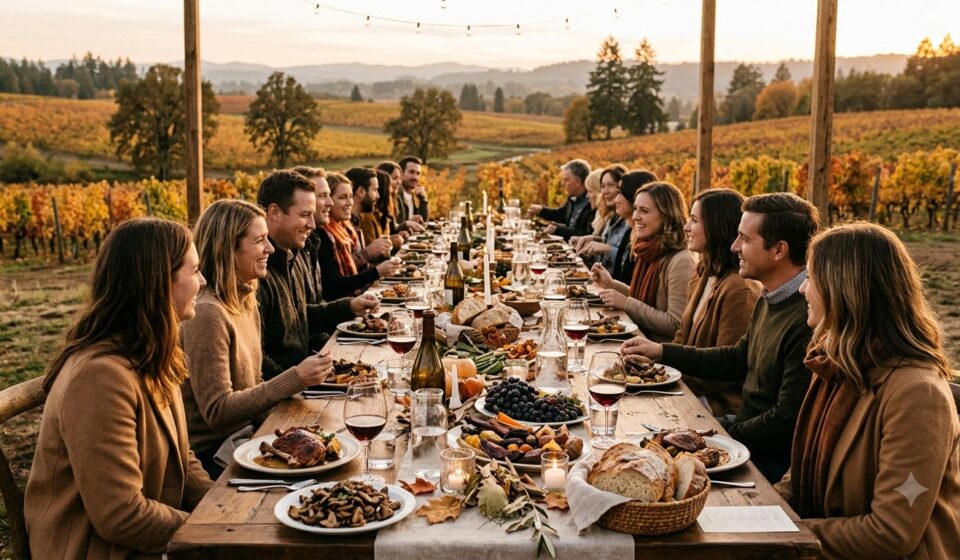
Pinot Noir is a wine that wants to be eaten with something. It is light in body, high in acidity, gentle in tannin and savoury at the core, and it behaves like a seasoning at the table. That quality shaped the Willamette Valley’s food culture. Winemakers here have always cooked and eaten alongside their wines, and the region’s farmers, foragers, cheesemakers and chefs have grown up in the same hills as the vines.
The result is one of the most coherent food-and-wine regions in the United States. The menus follow the seasons and the same dozen ingredients appear on tasting-room cheese plates, farmhouse dinners and white-tablecloth tasting menus: wild mushrooms, hazelnuts, salmon, duck, lamb, heritage pork, berries, pears and good bread. This guide covers what grows here, what to eat in each season, where to eat in each wine town, and how to build a trail around meals instead of tasting rooms.
The Pantry, What the Valley Grows
Hazelnuts
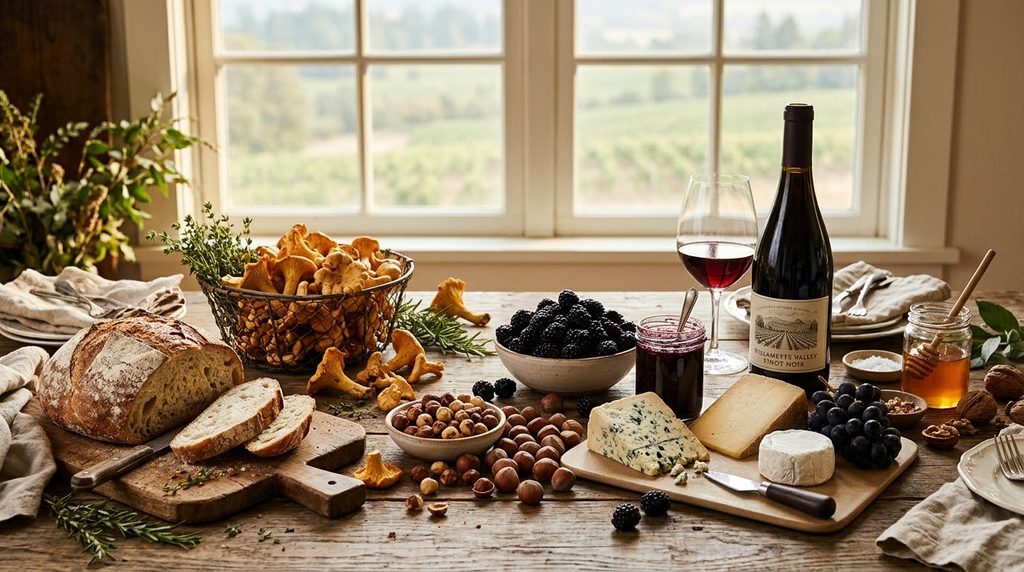
Oregon grows nearly all of the hazelnuts produced commercially in the United States, and most of the orchards are in the Willamette Valley. Harvest happens in autumn, when the nuts fall and are swept from the orchard floor. You will meet hazelnuts in many forms:
- Toasted and scattered over salads, roasted squash and goat cheese
- Ground into crusts for salmon or chicken
- In pastries, brittles, tortes and chocolate
- Pressed into oil, or as paste for sauces and spreads
Their sweet, toasty character is a natural match for Pinot Noir, and a bowl of warm roasted hazelnuts is a surprisingly good tasting-room snack.
Wild and cultivated mushrooms
The valley’s Douglas fir forests and damp autumns produce excellent wild mushrooms. The main ones to look for are:
- Chanterelles, golden and apricot-scented, abundant in autumn
- Morels, in spring
- Porcini (king boletes), in the wetter months
- Matsutake and hedgehog mushrooms, on menus where the chef forages
- Oregon truffles, both white and black, harvested mainly in winter and early spring
The truffle story is one of the region’s most interesting. Native Oregon truffles are celebrated at an annual festival, usually held in winter, with dinners, foraging events and cooking demonstrations. Check the current schedule, as dates change each year.
Seafood and meat
- Pacific Northwest salmon, especially Chinook and coho, grilled over alder or cedar
- Dungeness crab from the nearby coast, usually in winter
- Oysters from coastal bays, a short drive over the Coast Range
- Duck, the classic Pinot pairing, often with cherry or fruit sauces
- Lamb, heritage pork and grass-fed beef from valley farms
- Charcuterie, an artisan craft in the region
Dairy and cheese
Oregon has a strong artisan-cheese tradition, from creamy bloomy-rind cheeses to blue cheese and aged cheddar. Look for local creameries, farm stands and shops, and ask for cheeses made close to where you are staying. A cheese board is a standard part of a tasting-room visit, and a good one tells you a lot about the area.
Fruit and berries
The valley is a berry basket. Marionberries (a blackberry cultivar developed in Oregon), raspberries, blueberries, strawberries and boysenberries are in markets and on dessert menus in summer. Pears, apples and cherries appear later, and many are made into jams, pies, ciders and brandies.
Honey, bread and chocolate
Local honey, sourdough and craft chocolate are all part of the picture, and a bakery stop in the morning is one of the valley’s easiest pleasures.
The Pairing Playbook Why Pinot Noir is so food-friendly
Three qualities explain it:
- High acidity cuts through fat and keeps rich food from feeling heavy.
- Low to moderate tannin means it will not clash with delicate flavours or turn bitter with fish.
- Earthy, savoury character echoes mushrooms, herbs, roasted meat and root vegetables.
Classic pairings and why they work
| Dish | Why it works |
|---|---|
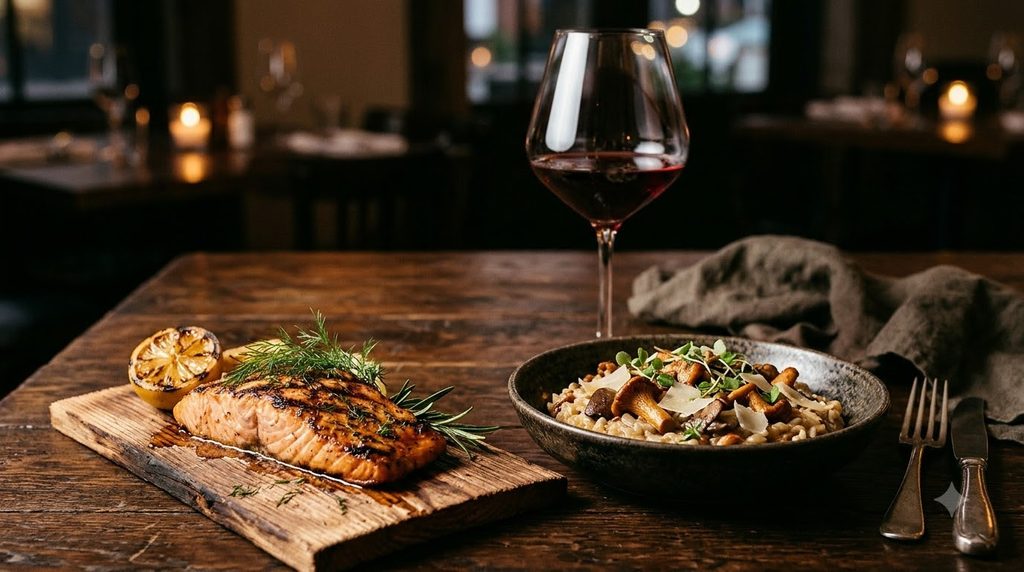
| Wild mushroom risotto or pasta | The earthy notes in the dish and the wine mirror each other |
| Roast duck breast with cherries | Acidity and red fruit balance the richness |
| Cedar-planked or grilled salmon | Pinot is one of the few reds light enough for fish |
| Roast chicken or turkey | Versatile and gentle, a safe pairing for almost any sauce |
| Pork tenderloin or belly | The fruit in the wine complements the sweetness of the meat |
| Lamb with herbs | Pairs especially well with structured, darker-fruited Pinots |
| Soft cheeses, brie and camembert | Creamy texture and acidity are a natural fit |
| Charcuterie and pâté | Salt and fat are softened by the wine’s brightness |
| Roasted beets, squash and root vegetables | Sweetness and earthiness line up |
| Hazelnut desserts and dark chocolate | Use lighter, fruitier wines to avoid bitterness |
Pairings to approach carefully
- Very spicy food can make a delicate Pinot taste thin or hot. Choose an off-dry Riesling or a chilled rosé instead.
- Heavy, tomato-rich dishes can overpower a light Pinot, so use a more structured bottle.
- Strong blue cheeses can flatten the wine. Try them with something sweet instead.
- Big, charred steaks can swamp a light style. Pick a darker, more structured Pinot from a warmer site.
Matching wine style to the plate
Different parts of the valley produce different styles, which helps when choosing a bottle:
- Dundee Hills (volcanic soils): Elegant, perfumed, silky. Excellent with salmon, roast chicken and mushroom dishes.
- Eola-Amity Hills: More structure and spice. A good match for duck, pork and lamb.
- Yamhill-Carlton and Ribbon Ridge (marine sediment): Darker fruit and savoury depth. Suits richer dishes and game.
- Chehalem Mountains and McMinnville: A range of styles, many with freshness and tension, good with lighter and more acidic food.
White wines and bubbles at the table
Do not skip the valley’s other wines. Chardonnay is superb with crab, roast chicken and creamy sauces. Pinot Gris suits shellfish and light starters. Sparkling Pinot Noir and Chardonnay go with oysters, fried chicken, popcorn and almost everything salty. A dry rosé of Pinot Noir is a very good partner for summer salads and charcuterie.
Eating by Town
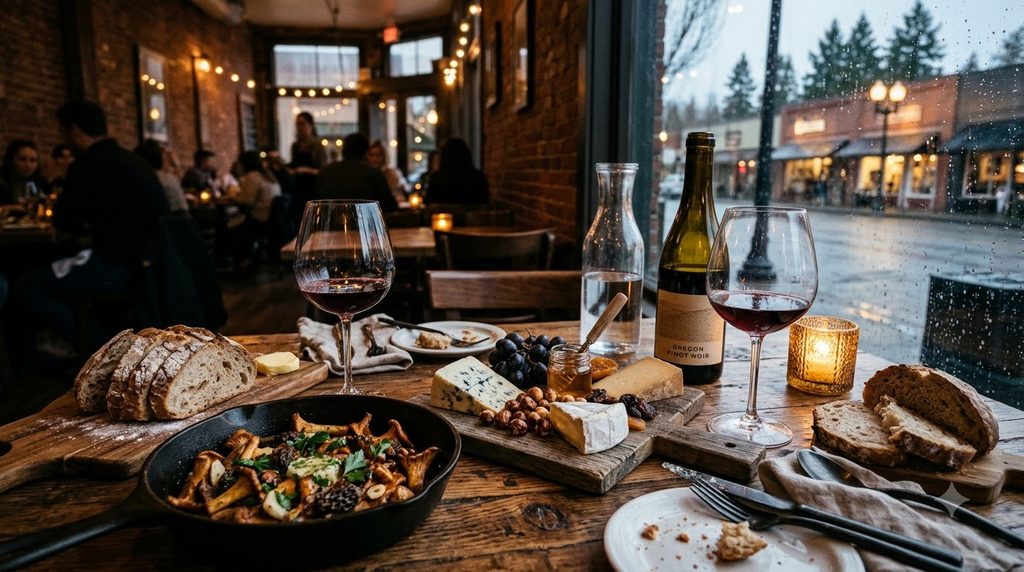
Restaurants open, close and change chefs often, so treat the names below as a starting point and check recent reviews and booking details.
Dundee and the Dundee Hills
Dundee is the valley’s culinary hub, with a mix of casual and special-occasion places. It is a good first stop for visitors who want to eat well close to many of the famous wineries.
- Wine-country bistros here tend to serve seasonal plates like roasted chicken, salmon and local greens with deep Pinot lists.
- Fine-dining options are often connected to estates and lodgings, with tasting menus built on local produce.
- Casual stops include delis, market-style cafes and pizza places that cater to hungry tasting-room visitors.
- A mushroom-focused destination in the nearby town of Dayton has been well known for decades for its cooking built around wild fungi. Check whether it is currently open and what format it offers.
McMinnville
McMinnville has a walkable, lively downtown, a bustling evening scene and a good reputation for dining. It is probably the best base for travellers who want to walk between restaurants and tasting rooms.
- Italian, French and Northwest bistros sit alongside casual spots like brewpubs and ramen shops.
- Wine bars and cheese shops let you taste in the evening after the estates close.
- Bakeries and coffee roasters make breakfast easy.
- Rooftop and patio bars are good for a sunset drink in warm months.
Carlton
Carlton is a small town with a big tasting-room footprint. It is compact, and a number of tasting rooms and casual restaurants sit within a few blocks of each other.
- A farm-to-table restaurant and a couple of casual cafes cover most needs.
- A bakery and market are useful for picnic supplies.
- Walking between tasting rooms makes it a good choice if you want to avoid driving.
Newberg and the Chehalem Mountains
Newberg is the gateway from Portland and has some of the area’s more ambitious restaurants, plus casual breakfast spots, brewpubs and a small but notable fine-dining scene. Many of the surrounding wineries have excellent views, and some serve lunch on their terraces.
Salem, Eola-Amity and the south
Salem is the state capital and offers a wider range of casual dining, farmers’ markets and local producers. The Eola-Amity Hills area has fewer restaurants, so plan lunch ahead or bring a picnic.
Estate restaurants and winery lunches
An increasing number of wineries serve food, from simple cheese plates to full lunches. These are often the most memorable meals because the wines are matched to the dishes, the views are part of the experience, and the staff are well versed in both.

Farm-to-Table Beyond the Restaurant
Farmers’ markets
Weekend farmers’ markets in McMinnville, Salem, Newberg and nearby towns sell produce, cheese, bread, honey, jams and prepared food. Summer and early autumn are the best times, when stalls overflow with berries, stone fruit, tomatoes and squash. Buying a picnic here is one of the cheapest and most enjoyable ways to eat.
Farm stands and U-pick
Roadside farm stands sell seasonal fruit, nuts, cider and baked goods. Many farms offer U-pick berries, orchards and pumpkin patches in season. Check opening hours, as they vary with the harvest.
Cheese and charcuterie shops
A quick stop at a local cheesemonger or deli is the best way to assemble a picnic. Ask for a wedge each of a soft cheese, a firm cheese and a blue, with cured meat, bread, pickles and hazelnuts.
Craft beer, cider and spirits
Wine is only one part of Oregon’s drinks scene. Brewpubs, cideries and distilleries are scattered across the valley, and they make a welcome break after a day of Pinot. Hazelnut-forward beers, dry ciders and fruit brandies suit the region’s food.
Cooking classes, foraging and farm dinners
Several operators run cooking classes, mushroom-foraging walks, and long-table farm dinners that pair local food with local wine. These tend to book up in autumn, so reserve early. They are a good way to meet growers and chefs.
The Seasonal Table
Spring (March to May)
- On the plate: Asparagus, morels, spring greens, rhubarb, lamb, early strawberries
- Mood: Fresh, green, light. Pair with crisp whites, rosé and lighter Pinot Noirs.
Summer (June to August)
- On the plate: Berries, stone fruit, tomatoes, corn, grilled salmon, fresh salads
- Mood: Alfresco lunches, picnics, long evenings. Try chilled rosé, sparkling wine and Chardonnay.
Autumn (September to November)
- On the plate: Chanterelles, porcini, hazelnuts, pears, apples, squash, duck, pork
- Mood: The harvest season. This is the peak time for food-and-wine travellers, since the valley is busy with the grape harvest and the kitchens are using the best produce of the year. Since you are travelling in late October, you are right in the middle of it. Expect busy weekends and book restaurants and tastings in advance.
Winter (December to February)
- On the plate: Truffles, root vegetables, braised meats, Dungeness crab, hearty stews
- Mood: Cosy fireside dining, quieter tasting rooms and winter menus. The truffle season brings special dinners and events.
A Food-First Itinerary
Three days, eating well
Day 1: Dundee Hills
- Morning: Bakery breakfast, then a seated tasting at a Dundee Hills estate, ideally with a cheese-and-charcuterie pairing.
- Lunch: A bistro in Dundee, with salmon, a seasonal salad or roast chicken and a glass of local Pinot.
- Afternoon: One more estate, then a walk through the vineyards.
- Dinner: A special-occasion restaurant, preferably with a tasting menu focused on local ingredients.
Day 2: McMinnville and Carlton
- Morning: Coffee and pastries in McMinnville, then a visit to a farmers’ market or cheese shop for picnic supplies.
- Lunch: Picnic at an estate, or a long lunch at a winery restaurant.
- Afternoon: Walk through Carlton’s tasting rooms.
- Dinner: A casual evening of wood-fired pizza, a pub meal or a wine-bar flight in McMinnville.
Day 3: Chehalem Mountains and Newberg
- Morning: Brunch in Newberg, then an estate with views.
- Lunch: A farm-to-table meal or a winery terrace lunch.
- Afternoon: A cooking class, brewery stop or a farm stand visit.
- Dinner: A farewell meal back in Portland, or a final bistro dinner.
A one-day version
If you only have one day, choose one wine town and eat three meals there. A good plan is bakery breakfast, a seated tasting with food, a long lunch, a market stop and an early dinner. Do not try to cover the whole valley.
Adding extra days
Add a coast trip for oysters and crab, a day in Salem for markets and a southern-valley detour, or a mushroom-foraging workshop.
Eating on Different Budgets
Budget
- Picnic from a market, with bread, cheese, charcuterie, fruit and a bottle of valley Pinot.
- Look for tasting rooms with lower fees, and for happy-hour and lunch specials.
- Share plates and split tastings.
Mid-range
- Mix casual lunches with one sit-down dinner a day.
- Choose an estate with a food pairing option.
- Visit brewpubs and wine bars in the evening.
Splurge
- Book a tasting menu at a destination restaurant with wine pairings.
- Reserve a winemaker dinner or a private tasting.
- Stay at a lodge where the restaurant is on site.
Money-saving tips
- Tasting fees are sometimes waived with a bottle purchase.
- Weekdays are quieter and often cheaper than weekends.
- Lodging and dining prices rise at harvest and on holiday weekends.
- Pack a cooler for cheese and cold items so you can picnic without constraint.
Practical Tips for the Food Trail
- Reserve early. Popular restaurants and tastings fill quickly, especially at harvest and on weekends.
- Eat before you taste. A good breakfast makes the day more enjoyable.
- Pace yourself. Two or three tastings a day, plus a long lunch, is plenty.
- Drink water. Alternate wine and water between tastings.
- Do not drink and drive. Hire a driver, join a guided tour, stay in a walkable town or appoint a designated driver.
- Mention allergies and dietary needs. Hazelnuts, dairy and shellfish are common ingredients. Many kitchens can adapt, especially vegetarian and gluten-free requests, but tell them when you book.
- Ask for recommendations. Winemakers and tasting-room staff are an excellent source of local advice about where to eat.
- Respect the farms. Stay on marked paths and follow the rules on private land, especially if you go foraging. Never pick wild mushrooms without expert guidance, because some are dangerous.
- Pack layers. Valley weather can change quickly, and cellars are cool.
- Mind wildfire season. Late summer and early autumn can bring smoke, so check air-quality and local conditions.
A Valley You Taste Twice
The Willamette Valley rewards a trip planned around the plate. A Pinot Noir poured with roast duck or a bowl of chanterelles tells you more about the place than any tasting note, because the wine and the food come from the same soil and the same people. In a good meal here, the cool-climate acidity, the earthy depth of the soil and the generosity of the farms all arrive together.
Plan around a few meals you will remember: a market picnic among the vines, a long lunch on an estate terrace, a late dinner built around the season’s mushrooms. Then leave room for the unplanned stops, such as a roadside stand with the last pears of autumn or a bakery with a queue. In this valley, those usually turn out to be the best parts of the trip.
A note on accuracy: Restaurants, chefs, opening hours, tasting fees, festival dates, harvest timing and seasonal availability change often, and I have not looked up live listings for this article. Please confirm current details with the restaurants, wineries and official tourism sources before you go.