
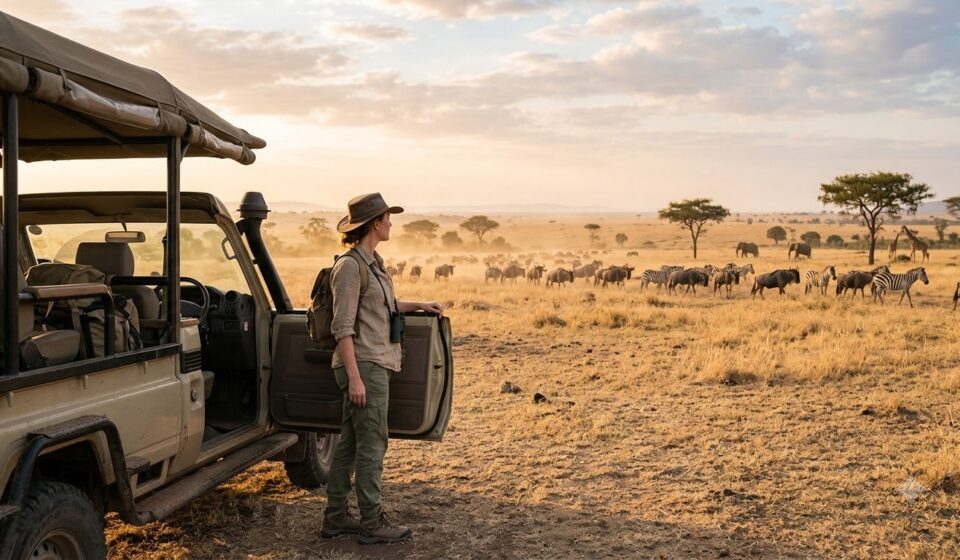

Spanning more than 14,700 square kilometers of Tanzania’s northern landscape, the Serengeti is the beating heart of African wildlife. Derived from the Maasai word siringet—meaning “the place where the land runs on forever”—this vast ecosystem delivers an authentic, unfiltered look into the natural world.
Whether you are looking to understand the mechanics of the Great Migration, track apex predators, or choose the ideal season for a journey, this comprehensive guide covers the essential dimensions of a Serengeti safari.
1. Anatomy of the Ecosystem: Key Regions
Because the Serengeti is a massive geographical expanse, its climate, scenery, and wildlife concentrations shift dramatically depending on where you go.
- The Central Serengeti (Seronera Valley): Characterized by wide-open savannahs, winding rivers, and granite kopjes. Seronera features the highest density of large cats in Africa and serves as the reliable, year-round hub for viewing lions, leopards, and cheetahs.
- The Southern Plains (Ndutu Region):Blending into the Ngorongoro Conservation Area, these open short-grass plains transform dramatically during the wet season.It is the premier location for witnessing the annual wildebeest calving season.
- The Western Corridor & Grumeti River: Dominated by dense riverine forests and black clay soils. As the herds push northwest, they face their first major aquatic obstacle here: the deep channels of the Grumeti River, populated by massive Nile crocodiles.
- The Northern Serengeti (Kogatende): Marked by rugged hills, open woodlands, and the life-giving Mara River. This is the stage for the iconic, high-drama northbound and southbound river crossings between July and October.
2. Timing Your Safari: A Seasonal Breakdown
The rhythm of the Serengeti is dictated entirely by rain and the quest for grazing land. Matching your travel window to the cycle of the Great Migration ensures you experience the park at its peak:
| Season | Migration Milestone | Primary Experience |
| January – March | The Calving Season (Southern Plains / Ndutu) | Roughly half a million calves are born over a few weeks, drawing intense predator-prey activity from lions, cheetahs, and hyenas. |
| April – May | The Green Season (Central & Western Regions) | Heavy rains turn the plains lush and emerald. Crowds are minimal, birdwatching peaks, and photography captures dramatic stormy skies. |
| June – July | The Trek North (Western Corridor) | Megaliths of animals form columns stretching miles, navigating the initial hurdles of the Grumeti River. |
| August – October | The Mara River Crossings (Northern Serengeti) | Peak dry season. Herds face turbulent river crossings under the watch of waiting crocodiles. Excellent visibility and dry weather. |
| November – December | The Return Trek (Eastern & Central Plains) | Short rains pull the herds back down south toward the rich short-grass plains to repeat the eternal cycle. |
3. Mastering the Wildlife Viewing Experience
A successful safari requires a blend of strategy, patience, and reliance on seasoned field guides.
- Embrace the Golden Hours:Wildlife is most energetic during the cooler hours of early morning (sunrise to 10:00 AM) and late afternoon (3:00 PM to sunset). Midday is typically spent resting beneath acacia trees.
- Decode Bush Signals: Experienced guides rely on natural cues rather than luck. Vultures circling high above usually indicate a predator kill site, while alarm calls from baboons or francolins signal a leopard or lion moving through the brush.
- Practice Patience: Rushing from sighting to sighting can cause you to miss subtle behaviors. Spending 20 to 30 minutes parked quietly near a resting lion pride or a nursing mother cheetah often yields unforgettable behavioral interactions.
4. Practical Logistics and Planning
- Duration:While a 3-day safari provides a brief taste of the central region, a 5 to 7-day itinerary is ideal for capturing the true scale of the park without exhausting travel days.
- Accommodation Styles:Options range from mobile tented camps that track the migration seasonally to permanent luxury lodges and budget-friendly public campsites.
- Beyond the Game Drive:To elevate the experience, consider booking a hot air balloon safari, which lifts off at dawn to float silently over the awakening plains, concluding with a champagne breakfast in the bush.