
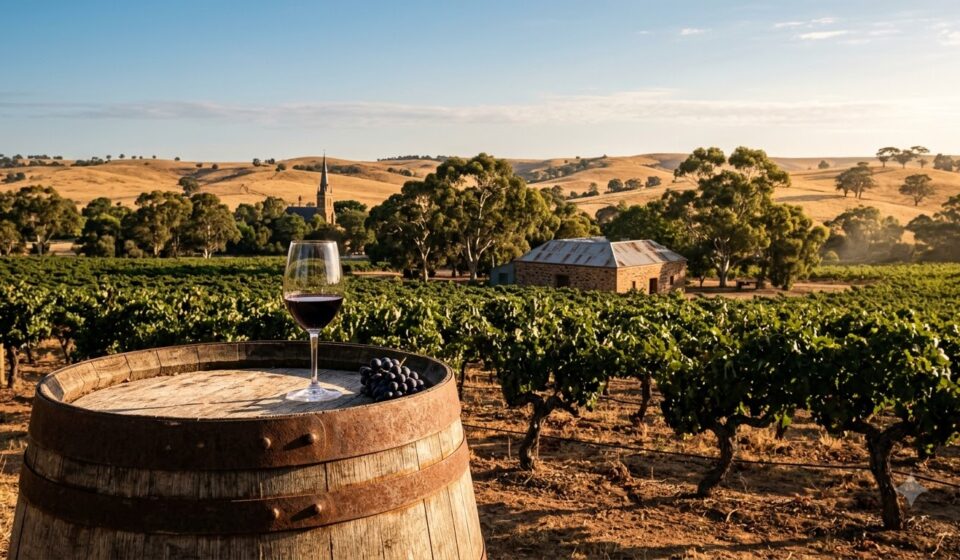

Just a short drive northeast of Adelaide lies one of the most historically rich and celebrated wine regions in the Southern Hemisphere: the Barossa Valley. Settled in the mid-19th century by German immigrants—whose architectural footprint still lingers in Lutheran church spires and stone cottages—the Barossa is a sun-drenched sun-trap of rolling green and golden hills.
While Piedmont whispers with cool mists and high-acid elegance, the Barossa roars with warmth, generosity, and unbridled flavor. It is a sanctuary for big, muscular reds, home to some of the oldest continuously producing vines on earth, and a paradise for travelers who love robust food and deep, fruit-forward wines.
1. The Terroir: Sun, Stone, and Ancient Earth
The Barossa Valley enjoys a Mediterranean climate characterized by warm, dry summers and cool winters. The valley floor absorbs the baking Australian sun, pushing grapes to full, lush ripeness, while the surrounding hillsides catch cooling gully breezes from the south, preserving essential structure.
What truly sets the Barossa apart is its geological diversity and vine age:
- The Valley Floor: Comprising rich, ancient alluvial and red-brown earth soils, this warmer sector produces opulent, full-bodied Shiraz loaded with rich dark chocolate, blackberry, and sweet spice notes.
- The Eden Valley (High Country): Sitting immediately adjacent at a higher altitude, the cooler microclimate of the Eden Valley yields world-class Riesling with piercing lime-and-petrol complexity, alongside more restrained, elegant cool-climate Shiraz.
- Living History: Because South Australia was spared the devastating phylloxera louse that wiped out European vineyards in the 19th century, the Barossa boasts ungrafted, pre-phylloxera vines dating back to the 1840s and 1850s—some of the oldest living vineyards in the world.
2. The Iconic Barossa Lineup
Barossa winemaking is anchored by a few legendary varietals that have defined its global reputation.
The Red Powerhouses
- Barossa Shiraz: The undisputed king of the region. Unlike the savory, peppery styles of France’s Northern Rhône, Barossa Shiraz is famous for its plush, full-bodied exuberance. Expect waves of ripe plum, blackberry jam, mocha, licorice, and sweet American or French oak.
- Grenache: Long used as a blending component, old-bush-vine Grenache has experienced a massive renaissance. Winemakers are now crafting stunning, perfumed single-varietal expressions featuring bright red fruits, white pepper, and silky, ethereal tannins.
- Mataro (Mourvèdre) & Cabernet Sauvignon: Often starring in classic Australian GSM (Grenache-Shiraz-Mataro) blends or structured standalone bottles, providing earthy depth, structure, and savory complexity.
The Refreshing Counterpoint
- Eden Valley Riesling: Bone-dry, razor-sharp, and remarkably age-worthy. It offers an incredible counter-weight to the heavy reds, bursting with citrus blossom, lime zest, and mineral drive.
- Semillon: Traditionally harvested early in the Barossa, offering a crisp, citrus-driven profile in youth that transforms over decades in the bottle into a rich, toasty, honeyed marvel.
3. Designing Your Journey: Logistics and Where to Base Yourself
Exploring the Barossa is an exercise in relaxed, sun-soaked hospitality. The region is surprisingly accessible, yet expansive enough to reward thoughtful planning.
- Getting Around: The Barossa is primarily navigated by car. Towns are connected by scenic, vineyard-lined country roads. If you plan on partaking in extensive tastings at legendary estates, booking a private driver or joining a guided wine tour is the safest and most enjoyable approach.
- Where to Base Yourself:
- Tanunda: The beating heart of the valley, offering historic pubs, bakeries, tree-lined streets, and easy access to many iconic heritage wineries.
- Angaston: A historic town nestled on the eastern ridge, celebrated for its artisanal food culture, boutique stays, and proximity to the Eden Valley.
- Nuriootpa: A bustling commercial hub with a great selection of accommodation and amenities.
4. Pairing Bold Wines with Barossa’s Culinary Heritage
The food of the Barossa reflects its dual heritage: hearty German-settler traditions fused with modern, farm-to-table Australian gastronomy.
- The Artisanal Food Scene: Visit local smokehouses for traditional mettwurst, drop into artisan cheese makers, or explore the bustling Barossa Farmers Market for seasonal produce, freshly baked sourdough, and local preserves.
- Iconic Pairings: A glass of rich, velvety Barossa Shiraz demands equally bold flavors—think slow-cooked lamb shoulder with rosemary, wood-fired beef brisket, or rich game meats.
- Cellar Door Culture: Barossa cellar doors are famously welcoming. From historic bluestone barns and architectural architectural marvels to family-run sheds where the winemaker pours the wine themselves, the hospitality here is warm, unpretentious, and deeply generous.
Final Thoughts for the Explorer
A journey through the Barossa Valley is an immersion into unpretentious luxury and agricultural resilience. By walking among vines that have survived for over a century, you taste history in every glass. Pack a sun hat, bring a deep appreciation for bold flavors, and prepare to experience one of the most vibrant wine cultures on earth.


