

The Smallest Country with the Biggest Surprises
El Salvador is the smallest country in Central America, roughly the size of Massachusetts, and one of the most densely packed with things to do. In a single week you can surf a right-hand point break at dawn, climb a volcano before lunch, eat pupusas at a plastic table in the afternoon, and watch the sun set over a crater lake. The Pacific coast runs along the whole southern edge, a volcanic spine runs through the middle, and cool, coffee-growing highlands rise in the north and west.
The country is also changing quickly. Tourism has grown sharply in recent years, helped by a large fall in violent crime, and the coast has earned a place on the global surf map. Even so, it remains cheap, unpretentious and very local. This guide covers the surf towns of the “Surf City” coast, the food culture of the pupusería, the colourful chicken buses that tie it all together, and the volcanoes, flower towns and colonial streets worth a detour.
Getting Your Bearings
Money, language and logistics
- Currency: El Salvador uses the U.S. dollar, so there are no exchange headaches for many travellers. Bitcoin was made legal tender in 2021, but its status was later scaled back, and in practice you will almost always pay in dollars. Carry small bills, because many small shops and buses cannot break a $20.
- Language: Spanish. English is spoken in surf towns and some tourist businesses, but a few phrases help enormously elsewhere.
- Size: Distances are short. San Salvador to the main surf beaches is roughly 45 minutes to an hour by car, and you can cross the country in a few hours.
- Entry: Requirements vary by nationality and have changed over time, so check the current rules with official sources before you go.
When to go
El Salvador has two seasons:
- November to April (dry season): Sunny, hot and the best period for hiking and general travelling. Surf is smaller but still fun, especially at beginner-friendly breaks.
- May to October (wet season): Afternoon rains, lush green landscapes and fewer visitors. The Pacific swells are biggest, and this is the prime time for experienced surfers. Heavy rain can affect roads and hikes, and the region is also exposed to tropical storms.
Since it is late October, you are at the end of the wet season. Expect warm water, green hills and cheaper rooms, but check forecasts for storms and landslide-prone roads.
Safety, honestly
El Salvador was long associated with gang violence. Since the government began a state of exception in 2022, which includes mass arrests and a heavy security presence, homicide rates have fallen dramatically, and many visitors now report feeling comfortable in tourist areas. The policy is also controversial, with human rights groups raising concerns about due process and detentions. Travellers will notice police and military checkpoints, particularly on highways.
Practical advice:
- Carry your passport or a copy, as you may be asked for ID at checkpoints.
- Follow standard precautions: avoid flashing valuables, use licensed taxis or ride apps at night, and ask your accommodation about local conditions.
- Check your government’s current travel advisory before you go, as conditions and rules can change.
The Surf Towns of the Pacific Coast
The “Surf City” coastline
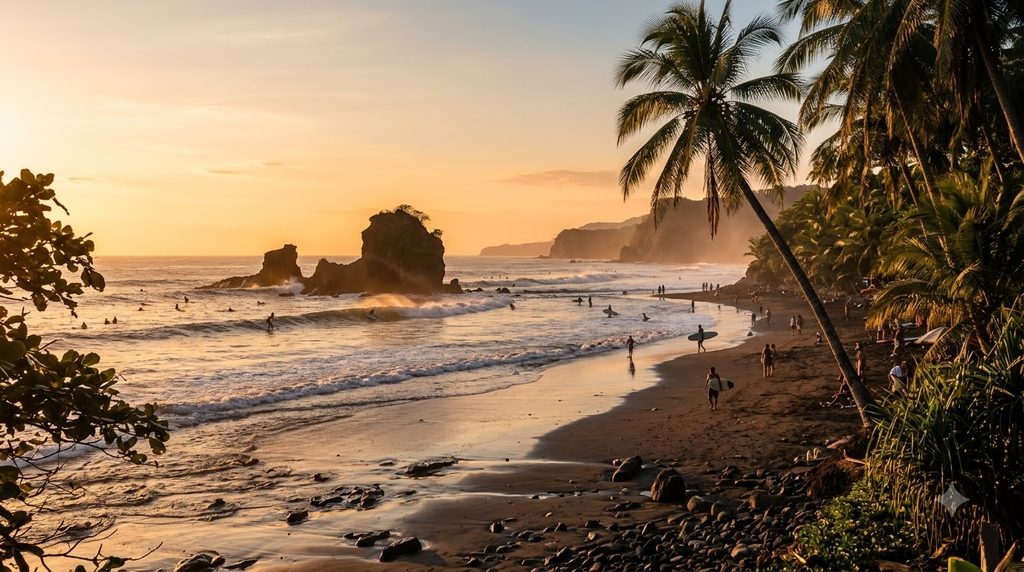
The western coast, running from La Libertad toward the Guatemalan border, is the country’s surf heartland. The waves here are consistent, warm and varied, with point breaks, reef breaks and beach breaks. The water is warm enough that you can surf in board shorts all year.
La Libertad, Sunzal and El Tunco
- El Tunco: The best-known backpacker beach. The name refers to a pig-shaped rock offshore, and the town is a small grid of hostels, bars, restaurants and surf shops. It is lively and sociable, with sunset drinks on the rocks and beach bonfires in the evening. Waves break close to shore, so beginners and intermediates both have options. Black volcanic sand can get very hot at midday, so wear sandals.
- Playa El Sunzal: A long, right-hand point break next door, famous for its smooth, peeling waves. It is a favourite for longboarders and intermediate surfers.
- La Libertad: A working fishing town with a busy pier, a daily fish market and Punta Roca, a powerful right-hand point break that attracts experienced surfers from around the world. Even if you do not surf, the fish market is a great place to watch the morning catch come in and eat ceviche or fried fish.
El Zonte (Bitcoin Beach)
About 45 minutes west, El Zonte is a smaller, quieter surf town that became known as “Bitcoin Beach” after a local project introduced cryptocurrency into the community’s economy. For travellers, it is a laid-back place with a mellow right point break that suits learners, a relaxed pace and a number of small hostels and guesthouses. It also has a growing yoga and wellness scene.
Playa Las Flores and the east
Further east, near San Miguel, the Playa Las Flores and Punta Mango area has a more remote feel, with long, crowd-free waves and a smaller tourist infrastructure. El Cuco has a wide beach and a down-to-earth, Salvadoran holiday-town atmosphere. The east is good if you want a quieter trip and are happy with simpler facilities.
Other beach options
- Costa del Sol: A long barrier-beach strip with large resorts, aimed more at Salvadoran families than backpackers.
- Playa Los Cóbanos: A small fishing village near Sonsonate, with reefs good for snorkelling and kayaking.
- Jiquilisco Bay: A mangrove-filled estuary on the southeast coast, with turtle conservation efforts and quiet island stays.
Surfing tips
- Lessons and rentals: Plenty of schools and shops in El Tunco and El Zonte offer lessons and board hire. Choose a reputable instructor, and ask about the day’s conditions and rip currents.
- Know your level. Some of the best-known breaks are over rocks or reef, and conditions can be powerful in the wet season. Beginners should stick to gentler beach breaks and listen to local advice.
- Respect the lineup. Learn basic surf etiquette, and be friendly with the locals.
- Protect yourself. Bring reef-safe sunscreen, a rash guard and a hat. The sun is intense, and the current can be strong.
Coastal nightlife and hostels
El Tunco has the liveliest nightlife on the coast, and dorm beds at hostels there and in El Zonte are among the cheapest in the region. Many hostels offer surf packages, yoga classes, communal dinners and day trips, and they are an easy way to meet other travellers. If you want sleep, ask for a room away from the main street.
The Pupusería, Where the Country Eats
What is a pupusa?
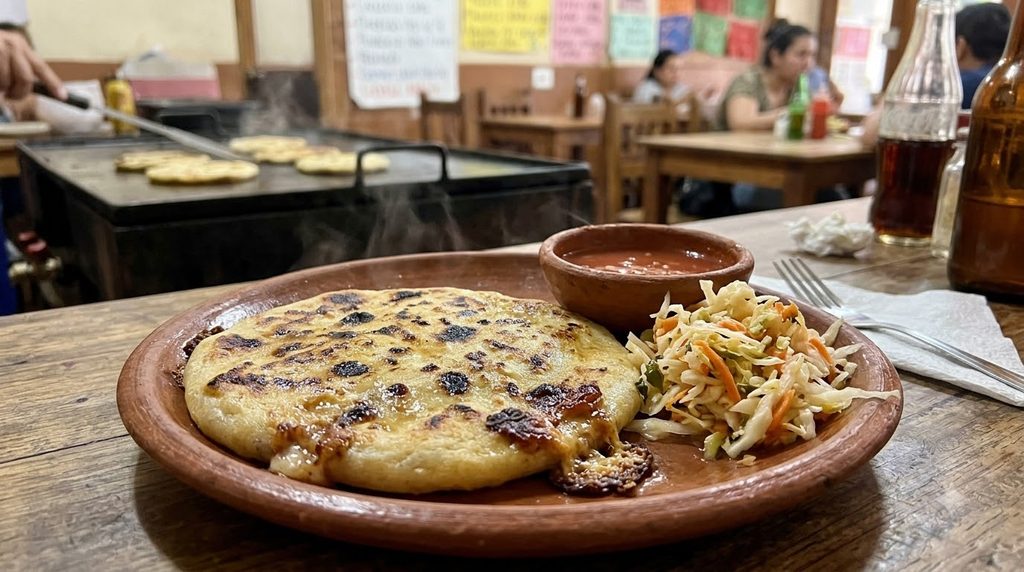
The pupusa is the national dish and a point of real pride. It is a thick, hand-patted disc of masa (corn dough, sometimes rice flour) stuffed with filling and griddled until it has crisp, golden-brown spots. It is served hot, with a cabbage slaw called curtido and a thin tomato salsa. Salvadorans eat it with their hands, usually tearing off pieces and piling on curtido.
The pupusa has deep roots in the region’s indigenous food traditions, and the second Sunday of November is commonly celebrated as National Pupusa Day.
The classic fillings
- Queso: Mild, melting cheese
- Frijol con queso: Refried beans and cheese
- Chicharrón: Finely ground, seasoned pork
- Revuelta: The “mixed” pupusa, with pork, beans and cheese, usually the most popular choice
- Queso con loroco: Cheese with loroco, an edible flower bud with a distinct, slightly floral, green flavour
- Ayote: A squash filling
- Other fillings: Shrimp, jalapeño, spinach, mushroom, and more creative combinations at modern places
Prices are low, typically around a dollar or so per pupusa, though they have crept up in recent years and differ between tourist areas and local spots. Most people order two or three.
Where to eat them
- Pupuserías are everywhere: open-fronted shops and roadside stands, usually busiest in the evening, when families eat pupusas for dinner.
- Look for the sound. Rhythmic slapping of dough usually means someone is making pupusas by hand.
- Try different places. The curtido, the salsa and the thickness of the masa vary, and locals have strong opinions.
- Visit Olocuilta. This town on the road between San Salvador and the coast has built its identity around pupusas, with a long line of vendors and some well-known rice-flour versions. It makes a good stop on the way to the beach.
Other Salvadoran foods to try
- Yuca frita: Fried cassava with chicharrón and curtido
- Pan con pollo: A hot, saucy chicken sandwich, far more flavourful than the name suggests
- Tamales: Both the savoury kind, stuffed with chicken or pork and wrapped in banana leaf, and the sweet corn-based kind
- Sopa de pata: A hearty soup made with cow’s feet, tripe, corn and vegetables, a traditional weekend dish
- Casamiento: Rice and beans cooked together, a common breakfast side
- Desayuno típico: A classic breakfast plate with eggs, beans, fried plantains, cream and fresh cheese
- Empanadas de plátano: Sweet plantain turnovers with a milk-custard filling
- Quesadilla salvadoreña: A sweet, dense cheese cake made with rice flour, not to be confused with the Mexican dish
- Fresh seafood on the coast: Ceviche, grilled fish, shrimp and coconut-based stews
What to drink
- Horchata de morro: A cinnamon-spiced drink made from morro seeds, the local style of horchata
- Atol de elote: A warm sweet corn drink
- Kolashampan: The national soda, with a sweet, fruity flavour
- Pilsener and Suprema: The country’s classic beers
- Fresh coconut water and fruit juices from roadside vendors
- Salvadoran coffee: The highlands produce excellent beans. Try it at cafés and farms in the Ruta de las Flores region.
Eating on a budget
You can eat well on $10 to $15 a day. Breakfast at a local comedor costs a few dollars, pupusas make a cheap dinner, and market food stalls offer filling lunches. Tourist-focused restaurants in El Tunco and El Zonte charge more, so mix them with local spots.
Chicken Buses and Getting Around
What are chicken buses?
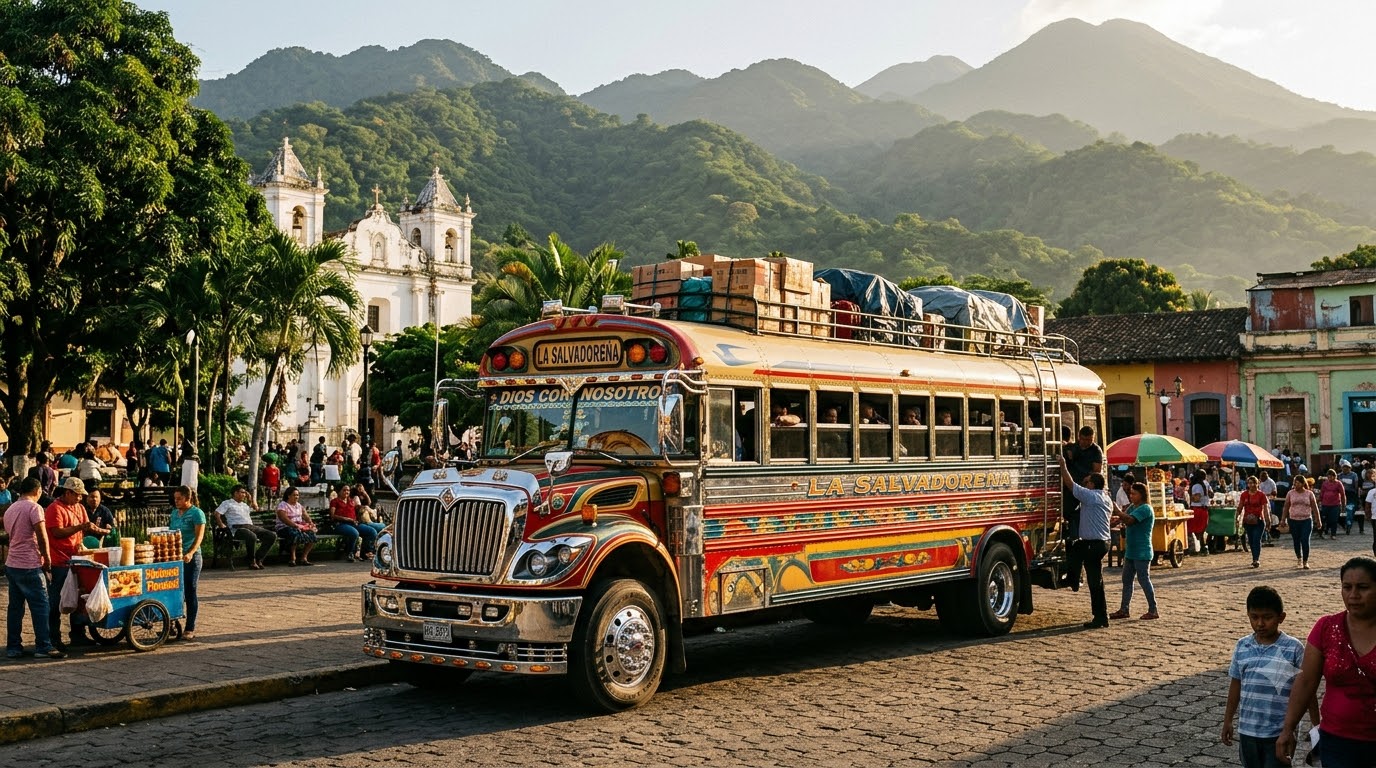
The famous “chicken buses” are retired American school buses that have been repainted, decorated and given a second life as public transport. In El Salvador they are called buses or camionetas, and they are known for bright colours, chrome details and loud music. They are the backbone of public transport, and they connect nearly every town. Riding one is part of the adventure.
How to ride
- Routes are numbered and many serve the capital and the main corridors. Ask at the bus stop, at your hostel or a nearby shop which number goes where.
- Fares are very cheap, often well under a dollar for short and medium trips, and an attendant collects the money on board.
- Buses are crowded, and may be hot and bumpy. Keep your bag on your lap or between your feet, and keep valuables out of sight.
- They move fast and stop on request. Tell the attendant where you are going, and be ready to hop off.
- Schedules are loose. Buses generally leave when full and run less frequently in the evening and at weekends.
- Vendors board at stops selling snacks, drinks and sweets, a quick way to eat on the road.
Other ways to get around
- Microbuses and minibuses: Often a faster, slightly pricier alternative on popular routes.
- Shuttles: Many hostels and tour operators run direct shuttles between the airport, San Salvador and the beaches, which are easier and more comfortable but costlier than public buses.
- Taxis and ride apps: Available in cities and tourist areas, useful at night or with luggage. Agree on a fare before you start if there is no meter.
- Rental cars: Handy for the Ruta de las Flores and remote beaches. Roads are generally decent on main routes, but driving can be fast and chaotic, and night driving is best avoided.
- Motorcycle taxis and tuk-tuks: Found in smaller towns for short hops.
Beyond the Beach
San Salvador
The capital is busy and bigger than most visitors expect, but its historic centre has been the focus of regeneration efforts.
- Centro Histórico: The Metropolitan Cathedral, which holds the tomb of Archbishop Óscar Romero, the National Theatre and the National Palace are all close together.
- Mercado Central and nearby markets: For crafts, street food and a taste of daily life.
- Museo de Arte (MARTE) and Museo Nacional de Antropología (MUNA): Good places to learn about the country’s art and indigenous history.
- Boquerón crater and Parque Nacional El Boquerón: A short drive from the city, with views into the crater of San Salvador volcano.
The Ruta de las Flores
This scenic route winds through the western highlands, with coffee plantations, small colonial towns and cool air.
- Juayúa: Known for its weekend food festival, with stalls serving grilled meats, local dishes and sweets.
- Concepción de Ataco: Famous for its murals, craft shops and coffee cafés.
- Apaneca and Salcoatitán: Quiet towns with hiking, cafés and artisan stalls.
- Waterfalls and hot springs: Several tour operators offer trips to nearby falls like the Los Chorros de la Calera series and local thermal pools.
Volcanoes and lakes
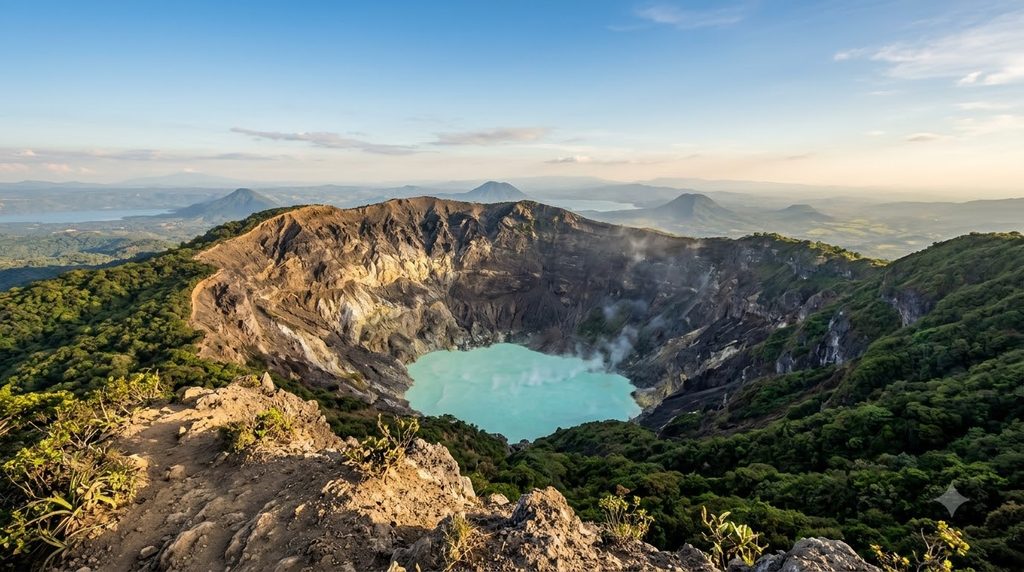
- Santa Ana (Ilamatepec) Volcano: The country’s highest, with a rewarding hike to a crater with a turquoise lake. Hikes are typically done with a guide and a police escort at designated times, so book ahead and confirm current rules.
- Cerro Verde and Izalco: Nearby viewpoints with views of the neighbouring volcanoes.
- Lago de Coatepeque: A large crater lake with clear water and swimming, kayaking and lakeside restaurants.
- Parque Nacional El Imposible: One of the country’s most biodiverse protected areas, with forests, rivers and wildlife.
History and culture
- Joya de Cerén: A UNESCO World Heritage Site often called the “Pompeii of the Americas,” a Maya farming village preserved under volcanic ash.
- Tazumal and San Andrés: Archaeological sites in the west that show the Maya and pre-Columbian heritage.
- Suchitoto: A cobblestoned colonial town overlooking Lake Suchitlán, with arts, indigo workshops, waterfalls and great viewpoints.
- Perquín and the Morazán region: In the northeast, an area closely linked to the civil war, with a museum on the conflict. El Mozote is a sombre memorial site. Visit it respectfully, ideally with a local guide who can add context.
Northern highlands
The north offers cool-weather hiking, small mountain villages and handicraft traditions. La Palma, with its colourful folk art, and El Pital, the highest point in the country, are good bases for those seeking a quieter side of El Salvador.
Part Six: Sample Itineraries
10 days: surf, food and volcanoes
| Day | Base | Highlights |
|---|---|---|
| 1 | San Salvador | Arrive, historic centre, pupusas for dinner |
| 2–4 | El Tunco / El Zonte | Surf lessons, sunsets, fish market in La Libertad |
| 5 | Ruta de las Flores | Chicken bus or shuttle inland, Juayúa food stalls |
| 6 | Ataco / Apaneca | Murals, coffee farm, waterfalls |
| 7 | Santa Ana / Coatepeque | Volcano hike, crater lake swim |
| 8 | Suchitoto | Colonial streets, lake views |
| 9 | San Salvador | Museums, markets, last-night feast |
| 10 | Departure | Final pupusas at the airport |
5 days: a quick taste
Spend two nights in San Salvador and Suchitoto or on the Ruta de las Flores, and three on the coast for surfing and rest.
2 weeks or more
Add the east, with Playa Las Flores, El Cuco and Perquín, plus the north, and perhaps a border crossing into Guatemala or Honduras.
Practical Tips
- Cash: Carry small bills and coins for buses, markets and pupuserías. ATMs are common in towns, but not in remote places.
- Health: Drink bottled or filtered water, and use insect repellent for mosquitoes. Check vaccination recommendations with a travel clinic before you go.
- Sun and sea: The tropical sun is strong, and the Pacific has real currents. Swim where locals swim, and never turn your back on the waves.
- Packing: Light clothes, a rain jacket, sturdy sandals, hiking shoes, reef-safe sunscreen, a dry bag and a small flashlight for power cuts.
- Respect: Greet people politely, ask before photographing individuals, and dress modestly in churches and rural villages.
- Connectivity: A local SIM or eSIM is cheap and useful for maps and ride apps.
- Money-saving tips: Eat where locals eat, travel by public bus, share shuttles and travel in the shoulder season.
- Flexibility: Buses and plans run on “Salvadoran time.” Build slack into your itinerary and enjoy it.
A Country That Rewards Curiosity
El Salvador is easy to underestimate on a map. On the ground it offers warm surf, a cuisine that is cheap and delicious, and a landscape of volcanoes and highland towns that you can cross in a morning by bus. The experiences travellers remember are often the simplest: a hot pupusa folded into a piece of curtido, a loud, brightly painted bus climbing a mountain road, and a Pacific sunset from a rock in El Tunco with a cold Pilsener in hand.
Come with some Spanish, a little patience and an appetite, and the country opens up quickly. It is small, but there is a lot to see in it.
A note on accuracy: Security conditions, entry requirements, prices, volcano-hike rules, bus routes and the status of businesses change often, and I have not looked up live information for this article. Please check current official advisories, transport information and local sources before you travel.
If you’d like, I can turn this into a shareable doc, shorten it to blog length, build a day-by-day budget itinerary, or focus on food only, as you did with the previous piece.