
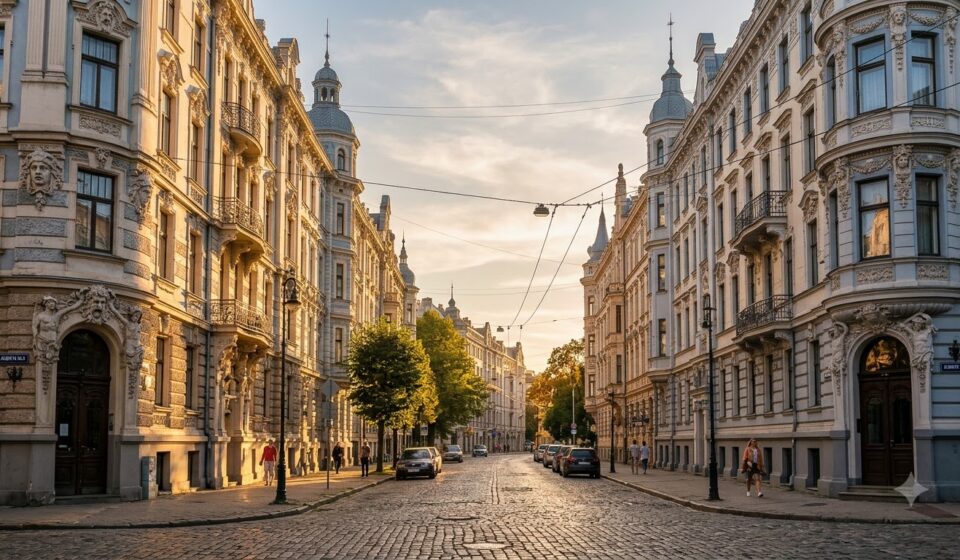
How to Explore Latvia on $35 a Day: Art Nouveau, Coastal Hostels, and Market Bites

The Baltic Bargain That’s Getting Harder to Find, but Still Exists
Latvia is the middle child of the Baltics. It has Estonia’s tech-forward polish on one side and Lithuania’s baroque old towns on the other, and it is often overlooked as a result. That makes it good for budget travellers. It has one of Europe’s finest concentrations of Art Nouveau architecture, a long, wild, pine-fringed coastline, castles and forests, and a food culture built on rye bread, smoked fish, dairy and farmers’ markets, which keeps eating cheap.
On the $35 figure: this is achievable, but it takes some discipline, and it depends on the season. Latvia uses the euro, so $35 is roughly €30 to €33 depending on the exchange rate. Prices have risen across the Baltics in recent years, and Riga in July is a different proposition from Riga in March. The plan below works best in shoulder and low season, outside the peak weeks of summer, and it assumes you sleep in dorms, cook or eat at markets, and use buses and trains. Treat the numbers as realistic targets rather than guarantees.
The Budget, Broken Down
Here is a sample daily budget that totals around €30 to €33.
| Category | Target per day | Notes |
|---|---|---|
| Dorm bed | €12 to €18 | Cheaper in low season, in smaller towns and on weekdays |
| Food | €9 to €12 | Market breakfast, canteen lunch, simple dinner |
| Local transport | €2 to €4 | Riga tickets, local buses |
| Intercity travel | €3 to €6 (averaged) | Buses and trains between towns, often booked ahead |
| Sights and extras | €2 to €5 | Many of the best things are free |
How to make the numbers work
- Sleep cheaply. Dorms in Riga typically cost more than in smaller towns, and prices jump on summer weekends and during big events. Book early for peak dates, and look for hostels with free breakfast or a kitchen.
- Cook sometimes. A hostel kitchen and a supermarket run can cut a day’s food costs sharply. Latvian supermarkets such as Rimi, Maxima and Mego sell cheap bread, cheese, smoked fish, yoghurt and ready-made salads.
- Eat your main meal at lunch. Many cafés and canteens offer lunch deals that are noticeably cheaper than dinner.
- Use the free stuff. Old Town wandering, Art Nouveau facades, beaches, forest trails and many churches and viewpoints cost nothing or very little.
- Book transport ahead. Intercity buses and trains are often cheapest when bought early online.
- Mix in camping. Latvia’s state forest company maintains free or low-cost rest and camping sites in forests and along some coastal areas, usually with fire pits and basic facilities. Rules vary, so check current conditions and local regulations before you rely on one.
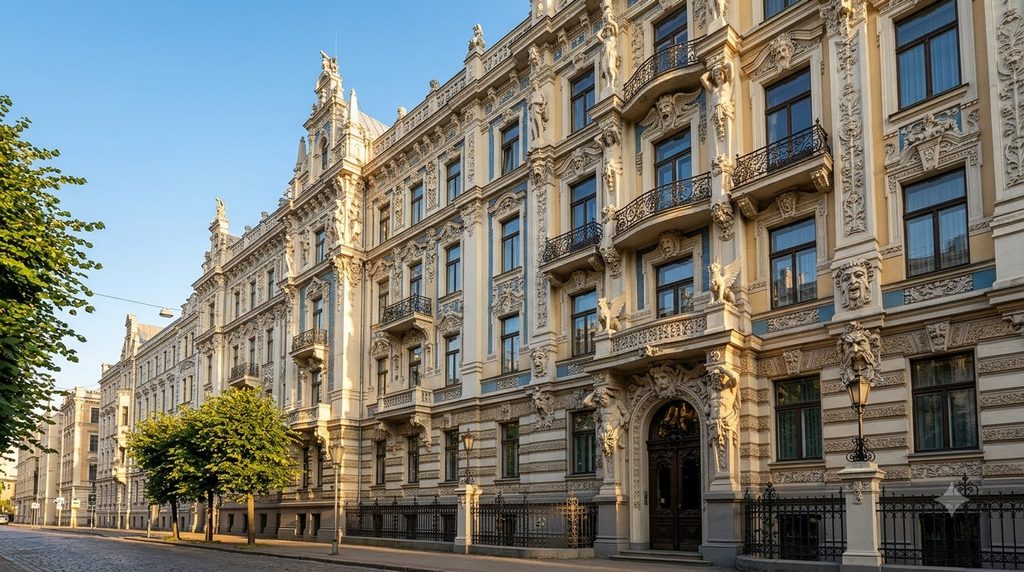
Riga, the Art Nouveau Capital
Why Riga’s architecture matters
Riga’s historic centre is a UNESCO World Heritage Site, partly because of its extraordinary collection of Art Nouveau (Jugendstil) buildings. Many are concentrated in the “quiet centre” just beyond the medieval Old Town. They date mostly from the early twentieth century, when the city was booming and wealthy clients commissioned buildings covered in sculpted faces, mythic creatures, ornate balconies and flowing floral motifs.
The best free Art Nouveau walk
You can do a self-guided walk at no cost:
- Alberta iela (Albert Street): The showpiece. Many of its facades are by the architect Mikhail Eisenstein, and they are exuberant, with masks, sphinxes, peacocks and heroic figures. Look up, because the details are above eye level.
- Elizabetes iela and Strēlnieku iela: More striking facades, including works by other notable architects of the period.
- The Riga Art Nouveau Museum (on Alberta iela): A paid museum set in a restored apartment, showing how a middle-class household looked at the time. It is a good splurge if you want context, but the street itself is the main attraction.
Tip: Go in the morning or late afternoon, when the light rakes across the stone details, and leave time to simply stand and stare.
The Old Town on a budget
The medieval centre is compact and walkable. Wander the cobbled lanes, the squares around the House of the Blackheads, the Freedom Monument, the Three Brothers (a trio of old houses), and the Daugava riverfront. Many churches charge a small fee for their towers, so choose one viewpoint instead of several. For a free panorama, the riverbank and bridges are excellent.
Parks, canals and the quiet side of the city
Riga is green. The Bastejkalns park and the canal that curves around the Old Town are lovely for walking, and the larger Mežaparks area to the north has forest, lakes and long paths. The Uzvaras Park and the Āgenskalns neighbourhood, with its wooden houses, are good for getting away from the crowds.
Riga Central Market: the heart of cheap eating
The Riga Central Market, housed in enormous former airship hangars, is among the largest markets in Europe. It is the best place in the city to eat and shop on a budget. It is organised into pavilions for meat, fish, dairy, vegetables and ready-to-eat food.
What to buy and eat:
- Rye bread (rupjmaize): Dense, dark and slightly sweet, the backbone of Latvian cuisine.
- Smoked fish: Smoked salmon, mackerel, sprats and eel, sold by weight.
- Dairy: Cottage cheese, sour cream, curd snacks (biezpiena sieriņš, a chocolate-coated curd bar) and kefir.
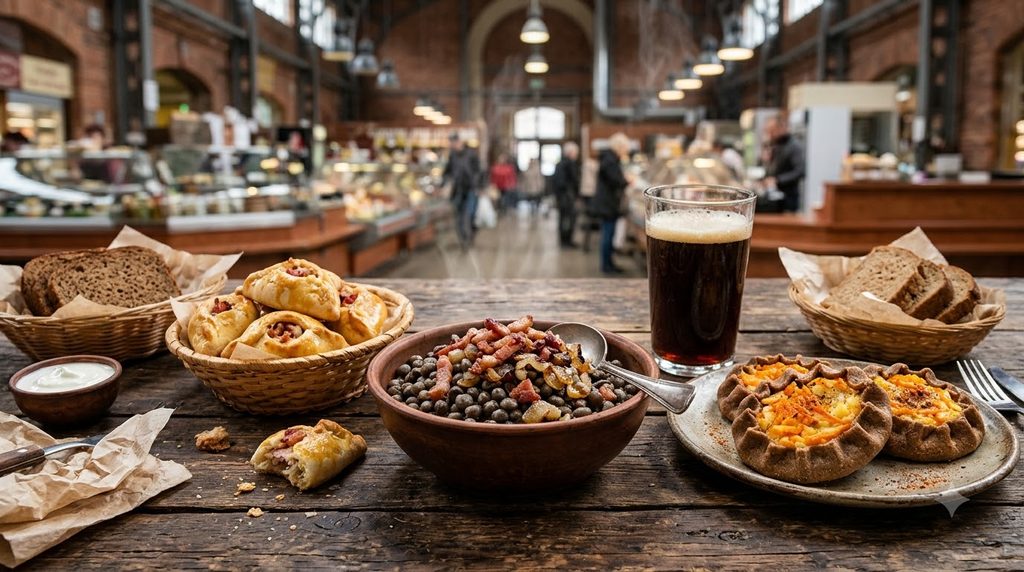
- Pīrāgi: Small baked buns, typically filled with bacon and onion, a perfect cheap snack.
- Seasonal produce: Berries, mushrooms, apples, pickles and honey, depending on the time of year.
A picnic assembled from a market costs a fraction of a restaurant meal and is often better.
Eating Latvian, Cheaply
The core dishes
- Grey peas with speck (pelēkie zirņi ar speķi): A traditional dish of stewed grey peas with fried bacon and onions, rustic and filling.
- Cold beet soup (aukstā zupa): A bright pink summer soup made from beetroot and kefir, often served with boiled potatoes and egg.
- Rye bread soup or dessert (maizes zupa): A sweet dessert made from rye bread, fruit and cream, a quirky local favourite.
- Potato dishes, sauerkraut and pickles: Staples, often served as sides.
- Smoked and cured fish: Particularly along the coast.
- Sklandrausis: A traditional pie with a rye crust, filled with potato and carrot, flavoured with caraway.
- Kvass and herbal teas: Kvass is a fermented bread drink, and Latvian herbal teas are popular. If you want to try the national spirit, Riga Black Balsam is a strong herbal liqueur that is an acquired taste. It is bitter, so sip it slowly.
Where to eat cheaply
- Self-service canteens (pašapkalpošanās): Lunch cafés where you point at dishes and pay by weight or portion. They are the budget traveller’s best friend.
- Bakeries and cafés: For pastries, pīrāgi and coffee.
- Market food halls: Cheap, fresh and varied.
- Supermarkets: For picnic supplies.
- Lunch deals (dienas piedāvājums): Many restaurants have a set daily offer that includes soup and a main course.
Drinking on a budget
Latvian craft beer and local ciders are worth trying, and prices in neighbourhood bars are lower than in Old Town tourist spots. Some Riga bars cluster around Miera iela and the Āgenskalns area. Drinking in the Old Town on a summer terrace will quickly eat into your budget, so keep an eye on it.
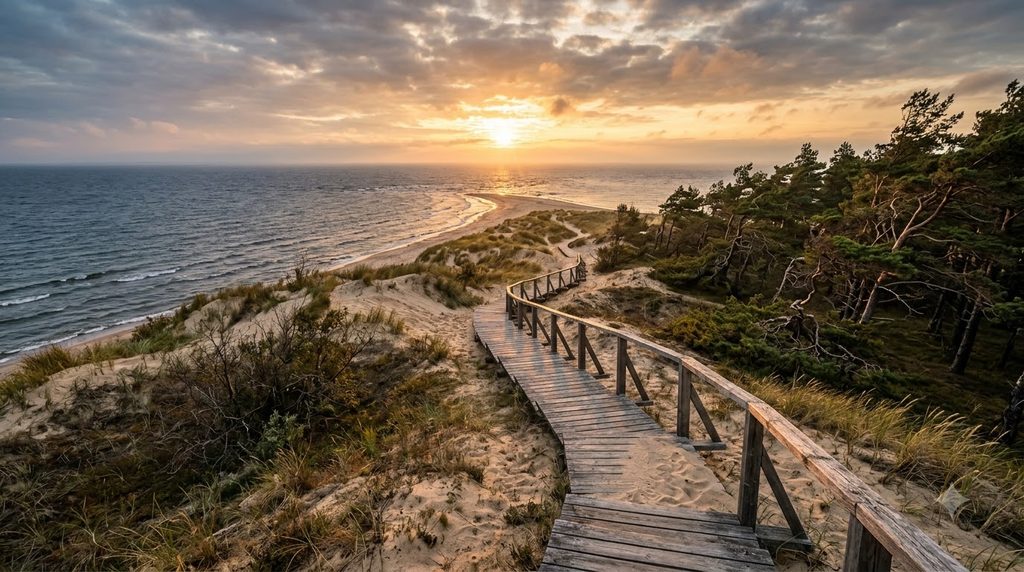
The Coast, Hostels, Dunes and Pine Forests
Latvia has roughly 500 kilometres of Baltic coastline, much of it sandy, pine-backed and nearly empty outside summer. The coast is where the “hostel” part of this trip shines, because small towns offer cheap beds, quiet beaches and a slower pace.
Jūrmala
About 25 to 30 minutes by train from Riga, Jūrmala is a long chain of seaside towns with a broad white-sand beach, pine forests and some of the country’s finest wooden villa architecture, built when it was a resort for the Russian Empire’s elite. Majori is the liveliest area, with a pedestrian street and cafés, while Dzintari has a concert hall and a quieter feel. Day trips are easy and cheap by train, and the beach itself is free, though some areas charge a small entry fee in the summer season. Accommodation in Jūrmala itself tends to be pricier, so use it as a day trip from a Riga hostel.
Saulkrasti and the Viking-coast route
North of Riga, Saulkrasti is a short train or bus ride away, with a long beach, a wooden boardwalk and quieter surroundings. Further north, small coastal villages and nature reserves make good stops for cyclists and hikers.
Liepāja
On the southwest coast, Liepāja has a different personality: windswept, musical, a bit gritty and increasingly creative. It has a long beach, a historic Old Town, and the Karosta district, a former military port with Soviet-era remnants. Karosta has a former prison that now operates as a museum and offers unusual overnight stays. These are atmospheric, but they are not for everyone, so read the description before booking. Liepāja is known for its music scene, and its beaches are long and often empty.
Pāvilosta and the surf coast
Pāvilosta is a tiny coastal town known for windsurfing and kitesurfing, with a relaxed, outdoorsy vibe, small guesthouses and camping options. The coast around here is wild and beautiful, especially at sunset.
Ventspils
A port city with a long beach, a Blue Flag reputation for cleanliness, family-friendly attractions, and public art. It is more polished and slightly pricier, but the beach and promenade are lovely.
Cape Kolka and the Slītere coast
At the tip of the Kurzeme peninsula, Cape Kolka is where the Baltic Sea meets the Gulf of Riga. The sea currents collide here, and on a windy day you can see the waves meeting from opposite directions. The surrounding Slītere National Park offers forest trails and quiet beaches, although public transport is limited, so plan your route in advance.
Coastal hostel and camping tips
- Book ahead in summer; options in small coastal towns are limited.
- Expect basic facilities in rural guesthouses and hostels.
- Check opening seasons. Some coastal hostels and campsites close from autumn to spring.
- Ask about kitchens, which are common in smaller hostels and help keep food costs low.
- Respect nature. Dunes are fragile, and protected areas have rules about camping and fires.
Beyond Riga and the Coast
Sigulda and Gauja National Park
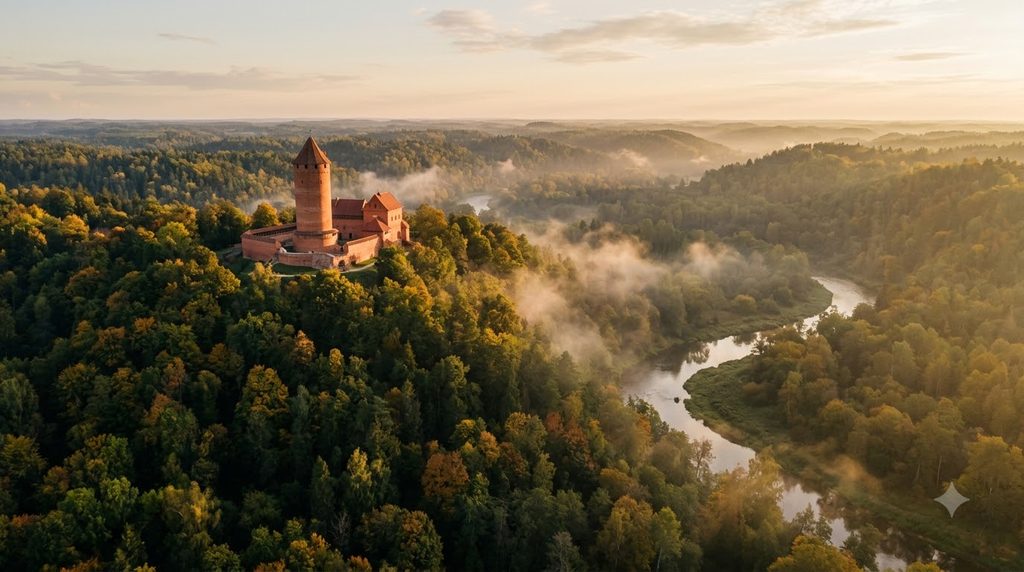
About an hour from Riga by train, Sigulda sits in the Gauja valley, Latvia’s most visited national park. Highlights include Turaida Castle, the ruins of Sigulda Medieval Castle, sandstone caves, and trails with views over the river. The nearby town of Cēsis has a well-preserved medieval castle and a pleasant old centre. This is the best day trip from Riga for hikers, and walking trails cost nothing.
Rundāle Palace
An hour or so south of Riga, this baroque palace was designed by the architect of St Petersburg’s Winter Palace and is often called “the Versailles of Latvia.” Entry is paid, and getting there without a car takes a little planning, but it is one of the country’s most impressive sights.
Kuldīga
A charming small town in Kurzeme, with red-roofed wooden houses, a historic brick bridge and the Ventas Rumba, often described as the widest waterfall in Europe. It is not tall, but it stretches across the river, and in spring, people sometimes watch fish leaping up it. Kuldīga is a good stop on the way to or from the coast.
Other options
- Kemeri National Park: Boardwalk trails through bogs and forest, close to Jūrmala.
- Daugavpils: Latvia’s second city, with a large fortress and a notable art centre.
- Latgale region: Lakes, villages and traditional crafts for those who want to go off the beaten track.
Getting Around Cheaply
Within Riga
Riga has trams, buses and trolleybuses. You will pay less using a rechargeable travel card than buying single tickets, and the app-based options can be convenient. The central areas are walkable, so many travellers need public transport only for the market, the train station and some outlying sights. Check the current ticketing system before you arrive, since it has changed over time.
Between cities
- Trains: Latvia’s rail network connects Riga with Jūrmala, Sigulda, Cēsis and some other destinations. Trains are cheap but the network is not extensive.
- Buses: The most flexible option. Intercity buses connect most towns, and international operators run cross-border services to Tallinn, Vilnius and beyond at low fares.
- Cycling: Latvia is flat in many areas, and cycling along the coast or through forests is a pleasant and cheap way to travel. Bike rental is available in cities and tourist towns.
- Hitchhiking and carpooling: Both exist, but use caution and common sense.
Money-saving transport tips
- Book long-distance bus and train tickets online in advance.
- Travel mid-week when fares and demand are lower.
- Look for combined day passes in cities if you plan to make many trips.
When to Go, and Which Season Fits $35 a Day
- May to June: Fresh green landscapes, long days, and prices that have not yet reached their summer peak. Probably the best balance of weather and budget.
- July to August: Warm beach weather and festivals, but the highest prices and busiest hostels. Staying on budget needs advance booking.
- September to early October: Autumn colours in the forests, mushroom-picking season, and calmer streets.
- Late October to November (the current period): Cold, grey and short days, with a real chance of rain. Many coastal facilities are closed, but prices are low and Riga’s cafés feel cosy. Christmas markets in Riga typically start around late November or early December, and they bring a festive atmosphere.
- December to March: Cold and often snowy. Good for Riga, forest walks and spa culture, but the beaches are bleak, and some rural accommodation is shut.
Pack accordingly: even in summer, evenings can be cool, and Baltic weather can change quickly.
A Sample 7-Day Budget Itinerary
| Day | Plan | Approximate focus |
|---|---|---|
| 1 | Arrive in Riga, wander the Old Town, evening at the Central Market | Free sights, cheap dinner |
| 2 | Art Nouveau walk, Riga Art Nouveau Museum or a café stop, Āgenskalns wooden houses | Mostly free |
| 3 | Day trip to Jūrmala by train, beach and pine forest walk | Low cost |
| 4 | Sigulda and Gauja National Park, castle ruins and trails | Train plus hiking |
| 5 | Travel to Kuldīga, visit Ventas Rumba and the old town | Bus plus cheap lodging |
| 6 | Liepāja or Pāvilosta, beach and coastal sunset | Hostel night |
| 7 | Return to Riga, final market meal | Stocking up on souvenirs like rye bread and herbal tea |
If you have fewer days
Spend three days in Riga, one in Jūrmala or Sigulda, and one on the coast.
If you have more time
Add Cēsis and Rundāle, a longer Kurzeme coast route, or cross-border trips to Tallinn or Vilnius.
Practical Tips
- Currency and payments: The euro. Cards and contactless payment are widely accepted, but carry some cash for markets and rural areas.
- Tipping: Not obligatory, but rounding up or leaving around 5 to 10 percent for good service is common.
- Language: Latvian is the official language, and many people, especially younger ones, speak English. Russian is also widely spoken. A few words of Latvian, such as paldies (thank you) and labdien (good day), are appreciated.
- Safety: Latvia is generally safe. Use normal precautions in cities, particularly around nightlife areas and crowded places.
- Water and nature: Tap water in Riga is generally considered drinkable, but check locally in smaller towns. In forests, watch for ticks in warm months and consider repellent and checking your clothes.
- Entry rules: Check visa and border requirements for your nationality well before you travel, as rules can change.
- Budget sanity check: Track your spending in a simple app or notebook for the first few days. If you are running over, the biggest savings usually come from cooking more meals and choosing cheaper accommodation.
Small Country, Big Rewards
Latvia rewards travellers who look up at the facades, linger over a loaf of rye bread, and take the slow bus to a beach with no one on it. The country’s best moments are often its simplest ones: a pīrāgs warm from a market stall, a wooden villa glowing in the late sun, a forest path with no crowds, or the sound of Baltic waves on an empty shore.
On around $35 a day, you will not live luxuriously. You will, however, see the main sights, eat well, sleep soundly, and come away with a clear picture of a country that is proud, creative and quietly beautiful.
A note on accuracy: Prices, exchange rates, hostel rates, opening seasons, museum fees, ticketing systems, train and bus schedules, and camping rules change often, and Latvia’s costs have risen in recent years. Please verify current details with official tourism and transport sources before you travel. I have not looked up live prices for this article, so treat all figures as approximate targets.