
A Valley with a Coastline Close By
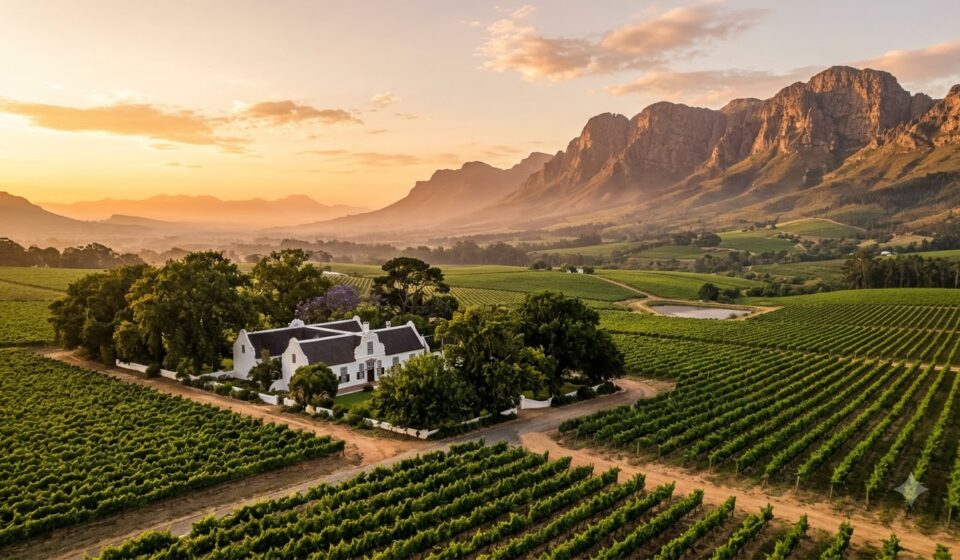
A quick clarification before the wine: Franschhoek is an inland valley, about 75 kilometres east of Cape Town, tucked between steep mountains. The vineyards, the old Cape Dutch estates and the village’s restaurants all sit well away from the sea. Even so, “ocean views and award-winning cellars” is a fair way to describe the trip, because the Atlantic and the Indian Ocean are within a morning’s drive. The best way to see Franschhoek is as the heart of a journey that pairs the Cape’s mountain-and-vineyard scenery with its dramatic coastline.
This guide covers the valley and its history, the wines worth seeking out, the food, the places to stay, and the coastal day trips that add the ocean to the picture. It is organised so you can read it start to finish or dip into the sections you need.
Getting to Know Franschhoek
The “French Corner”
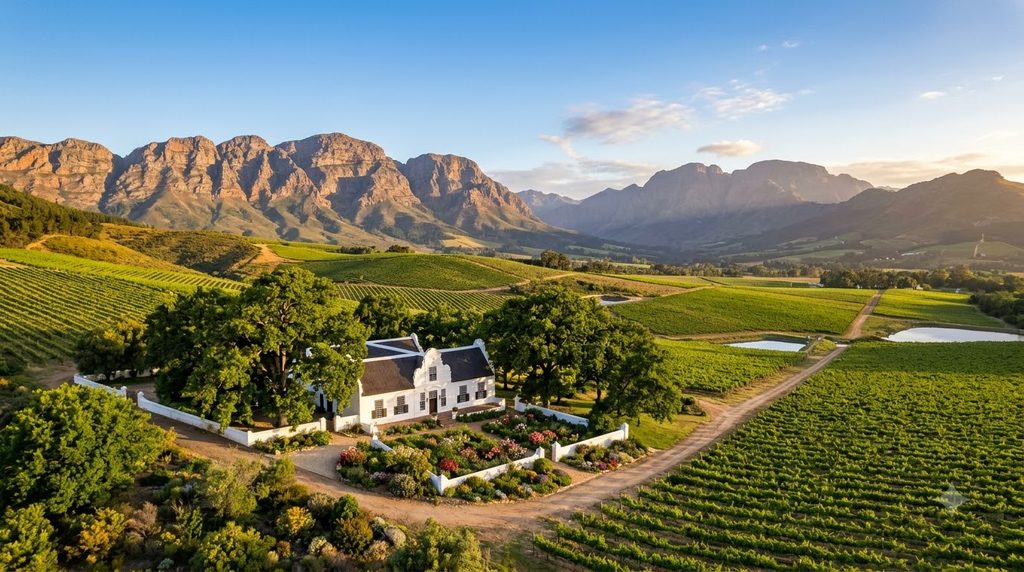
Franschhoek’s name comes from the Dutch for “French Corner.” In 1688, French Huguenots, Protestants fleeing religious persecution in Europe, began settling in the valley. They brought viticulture knowledge, and many of the farm names you will see on wine labels, such as La Motte, La Provence, L’Ormarins and Haute Cabrière, still reflect that heritage. The Huguenot Memorial Monument at the top end of the village, with its museum, tells the story of these settlers.
Today the valley is about 15 kilometres long, ringed by the Franschhoek, Drakenstein and Wemmershoek mountains. Its main street, Huguenot Road, runs through a village packed with restaurants, galleries, boutiques and tasting rooms, and almost everything is within walking distance of everything else.
When to go
Because the Cape has a Mediterranean climate, the seasons are the reverse of the northern hemisphere:
- September to November (spring): The valley turns green, the days are mild, and the crowds are manageable. This is a lovely time to visit, and it is the season you are in now. It also overlaps with the tail end of whale season on the coast.
- December to March (summer): Hot, dry and busy. Long evenings suit outdoor dining and wine on the lawn. Harvest usually runs from roughly February into March, which is an exciting time to visit a working cellar. Book well in advance for December and January.
- April to May (autumn): The vineyards turn red and gold, and many people consider this the most beautiful time in the valley.
- June to August (winter): Cooler and wetter, with snow often dusting the high peaks. Rates are lower, log fires are lit in tasting rooms, and the valley feels intimate.
Getting there and around
Cape Town International Airport is roughly an hour’s drive from Franschhoek, depending on traffic. Your main options are:
- Hire a car. It gives you the most freedom, especially for coastal day trips. South Africans drive on the left.
- Private transfers or driver-guides. Many visitors hire a driver for wine days, which is the safest and often the most relaxed choice.
- The Franschhoek Wine Tram. This is a hop-on, hop-off service that combines a tram and bus route linking various estates, with different lines and tasting options. Check current routes, tickets and operating days before you plan around it.
- Bikes and walking. The village itself is walkable, and some estates are close enough to cycle to.
One firm rule: do not drink and drive. Tastings add up quickly, and South Africa has strict drink-driving laws. Appoint a designated driver, book a guide or use the tram.
The Wines, What Franschhoek Does Best
Cap Classique, the valley’s sparkling signature
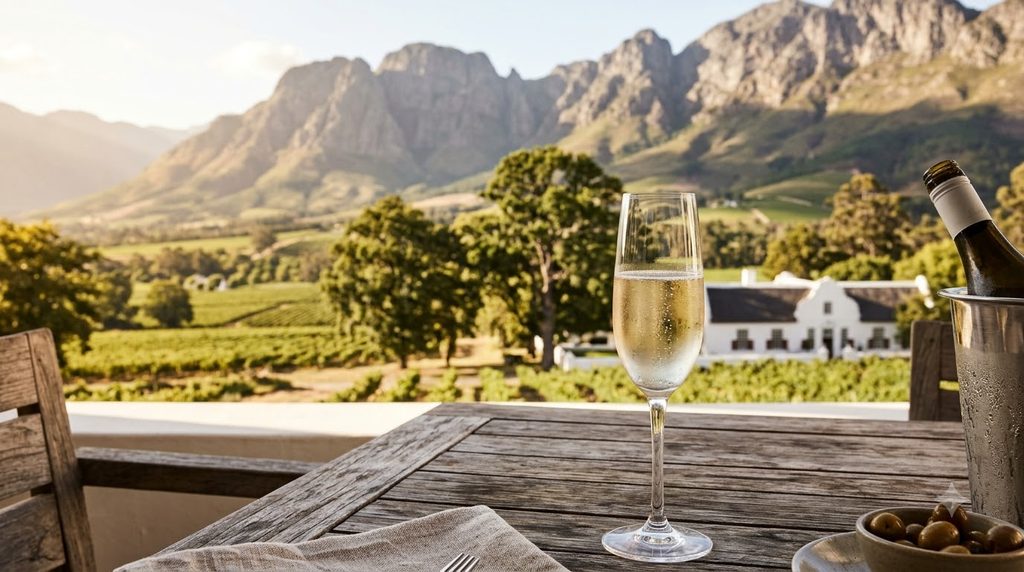
Franschhoek has become closely associated with Méthode Cap Classique (MCC), South Africa’s term for sparkling wine made in the traditional bottle-fermented method used in Champagne. The grapes are usually Chardonnay and Pinot Noir, sometimes with Pinot Meunier or Chenin Blanc. A flute of MCC on a sunny terrace, with the mountains behind you, is one of the quintessential Franschhoek moments. Several estates, including Haute Cabrière (home to Pierre Jourdan sparkling) and Boschendal, are known for their bubbles.
Semillon and Chenin Blanc, the old-vine whites
Franschhoek has some of the Cape’s older Semillon vineyards, and the best bottles show waxy, honeyed depth and impressive ageing potential. Chenin Blanc is South Africa’s most widely planted white grape, and the Cape’s old bush vines produce versions ranging from fresh and fruity to rich and complex. If you want to taste something distinctively South African, start here.
Reds and blends
The valley’s reds lean towards Cabernet Sauvignon, Merlot, Cabernet Franc, Syrah and Cape-style blends, often grown on the cooler, higher slopes. The mountain setting gives many wines freshness and structure, and some of them are built for long cellaring.
Award-winning, but what does that really mean?
Franschhoek estates regularly collect medals and high scores at national and international competitions, and the region’s wines are well represented in South African and global rankings. Treat awards as a useful guide, not a guarantee. A better strategy is to taste widely and trust your own palate, and to ask the host which wines they are proudest of this year. Listings, scores and rankings change annually, so check recent sources rather than relying on any single list.
Estates worth putting on your list
This is a starting point, not a complete list, and tasting formats, prices and opening hours change, so confirm before you go.
- Boschendal: A historic estate with beautiful gardens, a farm-to-table ethos, picnics and a choice of dining options. A good first stop.
- La Motte: Known for its elegant wines, art collection, and a restaurant celebrating local produce.
- Haute Cabrière: Famous for its cellar built into the mountainside and its sparkling wines.
- Rickety Bridge: A popular estate with a scenic setting and well-regarded wines.
- Grande Provence: Wine, art and a garden setting just outside the village.
- Chamonix, Leopard’s Leap, Allée Bleue, Môreson and Anthonij Rupert: Each offers a different style of experience, from relaxed lunches to more structured tastings.
- L’Ormarins: Home to the Franschhoek Motor Museum, a good option for a non-wine break.
Tasting etiquette and tips
- Book ahead, especially on weekends and in high season. Many estates require reservations.
- Pace yourself. Three or four estates in a day is plenty, and you can spit or share tastings.
- Ask questions. Hosts usually love to explain the grapes, the soils and the story behind the wines.
- Eat between tastings. Many estates offer platters, picnics or full restaurants.
- Buying wine: Most estates will ship internationally, which saves carrying bottles home, but check the rules and costs for your destination.
Eating Well in the Winelands
Franschhoek has long been known as the country’s gourmet capital, and the village packs in an impressive range of restaurants for its size.
What to expect
The cooking mixes French technique, Cape Malay spice, South African produce and a growing farm-to-table movement. Look for dishes featuring Karoo lamb, line fish, local cheeses, seasonal vegetables and olive oil from the valley’s groves. Traditional Cape dishes you might meet include bobotie (spiced minced meat baked with an egg topping), Cape Malay curries, malva pudding and koeksisters.
Dining styles
- Fine dining and tasting menus: Several restaurants in the valley have long been regarded among South Africa’s best. Because rankings and chefs change, check recent reviews and book well ahead.
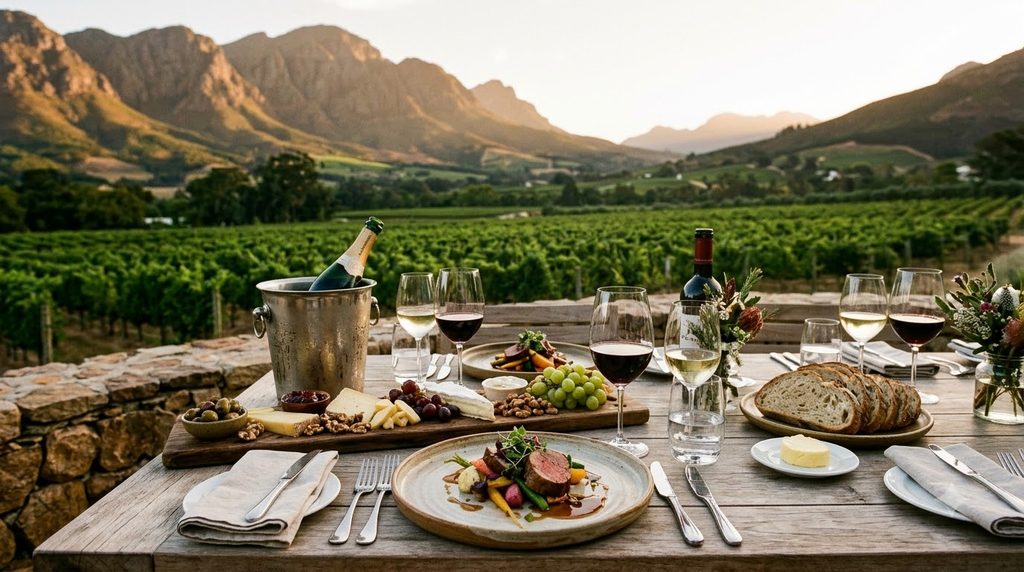
- Estate restaurants: Dining among the vines, often with mountain views, is the classic experience.
- Casual village spots: Cafes, bakeries, bistros and wine bars along Huguenot Road, good for a lighter lunch.
- Picnics: Several estates offer picnic baskets to enjoy on their lawns, a relaxed and often good-value option.
Pairing food and wine
Try Cap Classique with oysters or a cheese board, Chenin Blanc with spiced dishes, Semillon with richer seafood, and a structured red with lamb. Many restaurants offer wine pairings, and the sommeliers are generally happy to recommend something local.
Where the Ocean Comes In
This is the half of the trip that gives it its title. From Franschhoek you can reach some of the Western Cape’s most spectacular coastline within one to two hours.
The Franschhoek Pass viewpoint
The R45 Franschhoek Pass climbs out of the valley and gives sweeping views back over the vineyards and the surrounding mountains. It is more of a mountain-and-valley panorama than a sea view, but it is a scenic drive and a good way to start the journey towards the coast.
Hermanus and whale watching
About 90 minutes’ drive from the valley, Hermanus is a seaside town famous for land-based whale watching. Southern right whales come close to the shore, and the cliff path in town offers excellent viewing. The season typically runs from about June to November, with September and October often the peak, so a late-October visit is a good time, although sightings are never guaranteed. Stop for a seafood lunch with a view and you will have the “ocean views” half of the trip covered.
The Cape Peninsula
Allow a full day for the peninsula:
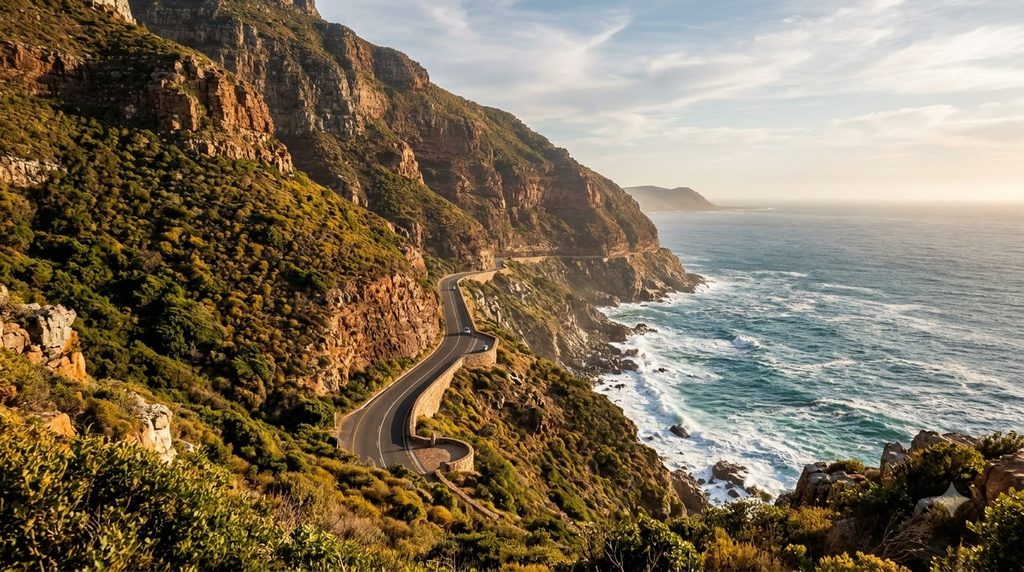
- Chapman’s Peak Drive, a coastal road carved into the cliffs (check whether it is open, as it can close for weather or rockfall).
- Boulders Beach, home to a colony of African penguins.
- Cape Point and the Cape of Good Hope, part of Table Mountain National Park, with dramatic cliffs and fynbos vegetation.
- Kalk Bay and Simon’s Town, charming harbour villages with cafes and fresh fish.
Cape Town itself
If you are staying a few extra days, Cape Town offers Table Mountain (cable car or hike, weather permitting), the V&A Waterfront, the Bo-Kaap’s colourful streets, Camps Bay’s beach and sunsets, and the Kirstenbosch Botanical Garden.
A coastal wine pairing
Several wine regions sit closer to the sea, including Constantia on the Cape Town side of the mountains, and the cool-climate Elgin and Hemel-en-Aarde areas near Hermanus. Adding one of these to your trip lets you taste how maritime influence shapes the wines and ties the “ocean and cellar” theme together.
Beyond Wine, Other Things to Do in the Valley
- Hiking and mountain biking: Trails in the mountains around Franschhoek range from gentle walks to challenging climbs, with views over the vineyards. Check conditions and permits, and go early in summer.
- Huguenot Memorial Museum and Monument: For a deeper understanding of the valley’s history.
- Franschhoek Motor Museum: A large collection of classic and vintage cars.
- Art galleries and shops: The village has a notable collection of galleries and craft shops.
- Horse riding, helicopter and balloon flights: Several operators offer scenic experiences, though availability varies.
- Spas: Many hotels and estates offer treatments, a good counterpoint to a busy tasting day.
- Festivals: The valley hosts events through the year, including food, wine, literary and cultural festivals. Dates change annually, so check the current calendar.
Where to Stay
Options by style
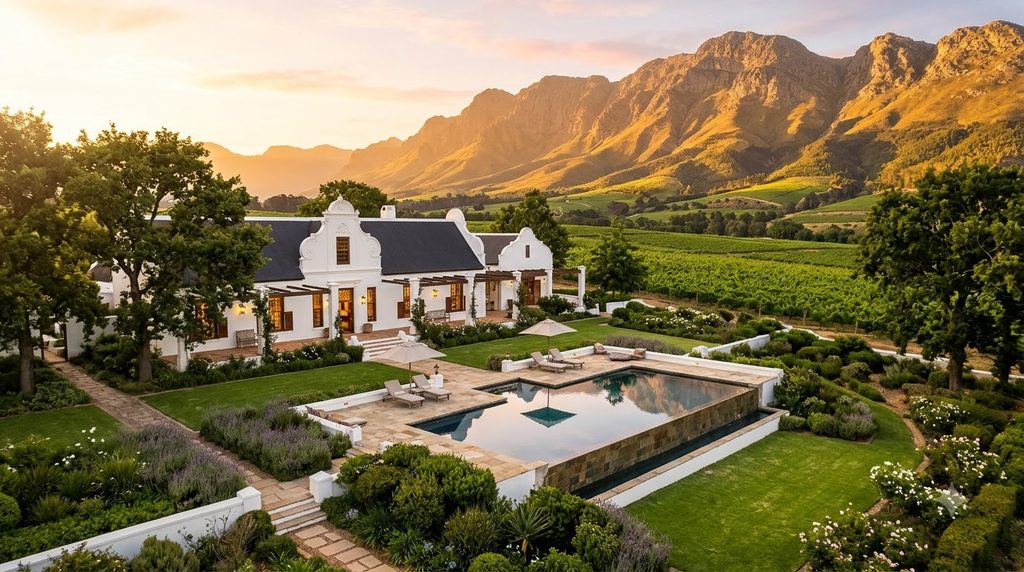
- Luxury estates and boutique hotels: Vineyard views, spas and fine dining on site, ideal for a special occasion.
- Guesthouses and B&Bs: Often family-run, with a personal touch and excellent breakfasts.
- Self-catering cottages: Good for groups or longer stays, particularly if you want to cook with local ingredients.
- Budget options: Choices are more limited in the village itself, but there are some hostels and simple guesthouses in Franschhoek and nearby towns such as Paarl and Stellenbosch.
Choosing a base
Staying in the village means you can walk to restaurants and galleries. Staying on an estate gives you vineyard surroundings and quiet. Many travellers split their time, spending a few nights in Franschhoek and then moving to the coast or Cape Town.
Sample Itineraries
A 3-day Franschhoek stay
| Day | Plan |
|---|---|
| 1 | Arrive, stroll Huguenot Road, visit the monument, early dinner in the village |
| 2 | Morning tastings at two or three estates, long lunch, a spa or gallery visit in the afternoon |
| 3 | Franschhoek Pass drive, Hermanus for whale watching and seafood, return for a final sundowner |
A 5-day winelands and coast trip
| Day | Plan |
|---|---|
| 1–2 | Franschhoek: wine, food, village life |
| 3 | Stellenbosch or Paarl for contrast, with more tastings |
| 4 | Hermanus and the Hemel-en-Aarde valley |
| 5 | Cape Peninsula or Cape Town before departure |
Adding more time
Add the Garden Route (a longer drive east), the West Coast in wildflower season (typically late winter into spring), or a safari in one of the Western Cape’s game reserves.
Practical Tips
- Currency: South African rand. Cards are widely accepted, but carry some cash for tips and small purchases.
- Tipping: Around 10 to 15 percent in restaurants is customary, and a small tip for wine hosts and guides is appreciated.
- Power cuts: South Africa has experienced scheduled power outages in recent years. Most hotels and restaurants have backup power, but it is worth being flexible.
- Safety: Franschhoek itself is generally relaxed, but take normal precautions: do not leave valuables visible in the car, be careful when walking at night, and ask your hosts for local advice. Cape Town and its surroundings call for a little more care, especially in unfamiliar areas.
- Sun and weather: The Cape sun is strong and the weather changes quickly, particularly on the coast and mountains. Pack layers, sunscreen and a hat.
- Health and documents: Check passport validity and visa requirements for your nationality well before travel, and consider travel insurance.
- Booking: Reserve top restaurants, popular tastings and accommodation in advance, especially from December to March and during long weekends.
Mountains, Vines and a Horizon
Franschhoek is a place to slow down. The valley rewards time spent on a terrace with a glass of something cold and sparkling, or a long lunch among the vines with a mountain wall at your back. The coastline, with its whales, penguins and cliff-edged roads, adds the other half of the picture and gives the trip its sense of scale.
Taste widely, ask lots of questions, leave room in the schedule for a detour, and let the Cape’s landscapes do some of the talking. Whether you remember the trip for a particular bottle, a sunset over the water, or a conversation with a winemaker, Franschhoek has a way of making the days feel generous.
A note on accuracy: Restaurant rankings, estate opening hours, tasting prices, tram routes, festival dates, road closures and whale-watching conditions change often. Please confirm current details with the estates, operators and official tourism sources before you travel.
If you’d like, I can turn this into a shareable doc, trim it to a blog-length version, build a day-by-day itinerary with a budget breakdown, or adapt the tone for a magazine or social media.