
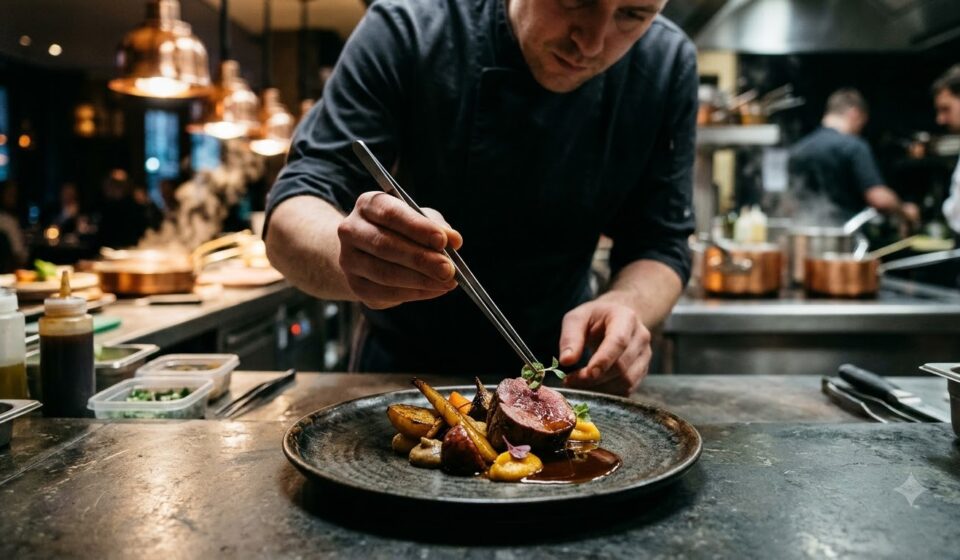
Dinner in London, Course by Course: Inside the City’s Most Inventive Tasting Menus

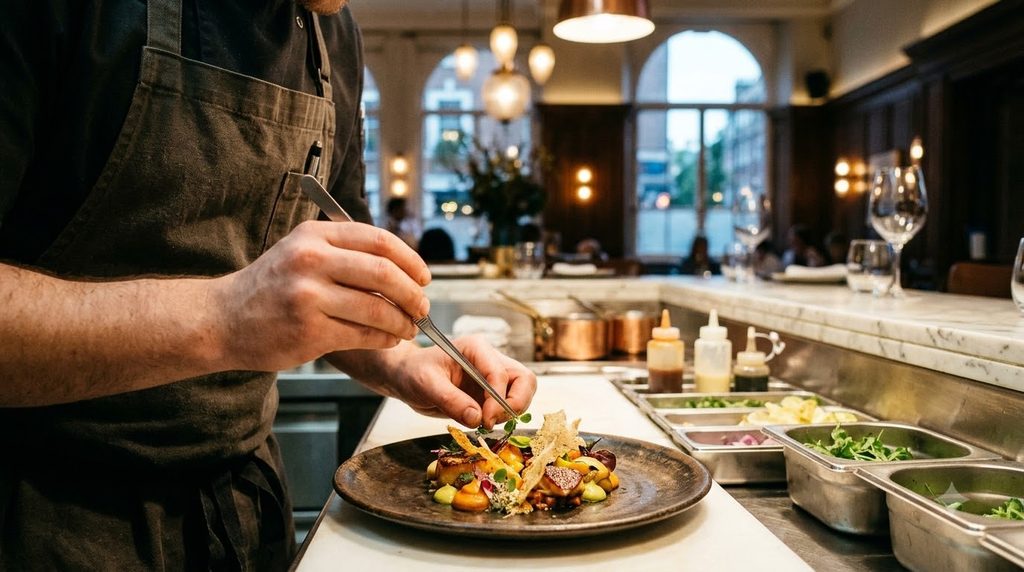
City That Cooks Like Nowhere Else
London’s best tasting menus work differently from those in Paris, Copenhagen or Tokyo, because the city has no single culinary identity to defend. It has a deep seam of British produce, from Scottish langoustines to Kentish apples, and a population drawn from nearly every corner of the world. Chefs here can build a menu around West African spice, Portuguese seafood, Japanese technique, medieval English recipes or a Hackney fishing boat’s catch, and nobody thinks it strange. The best dinners are inventive in that specific way: they take a precise idea and follow it through every course.
This guide goes through a London tasting menu from the first bite to the last, explains what each course is for, and shows how different kitchens approach it. It also covers wine and non-alcoholic pairings, what these dinners cost, how to book, and how to enjoy three hours at one table without flagging.
What a Tasting Menu Actually Is
The basic contract
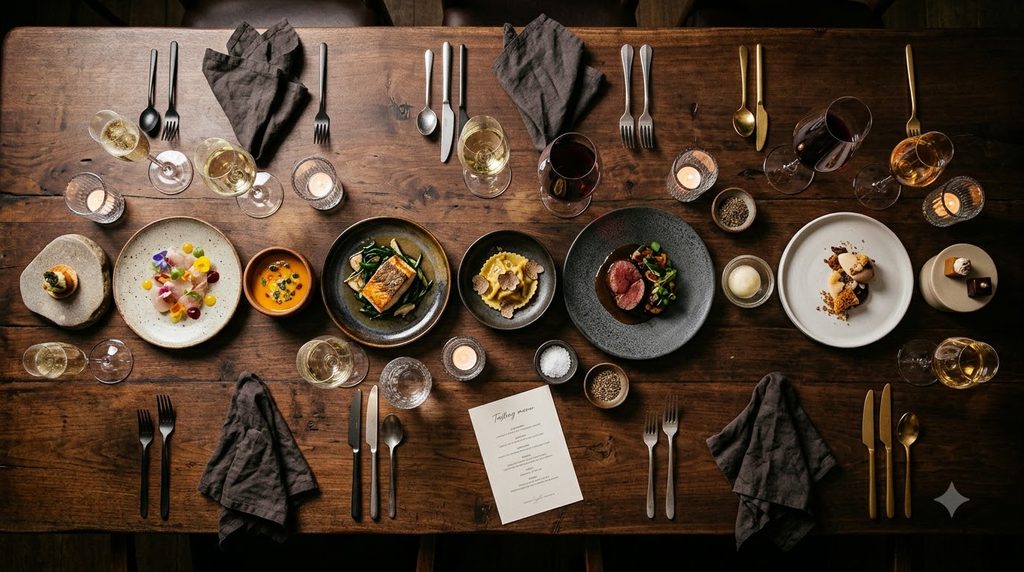
A tasting menu is a fixed sequence of small dishes chosen entirely by the kitchen. You give up choice and in exchange get pacing, surprise and a coherent argument from the chef. Most menus run between six and twelve courses, plus extras. A good one is built like a piece of music, with a quiet opening, a rise, a few high points, a gentle landing and an encore.
Why London does it well
- Produce: Britain’s shellfish, game, lamb, dairy, root vegetables and orchard fruit are excellent, and many kitchens work directly with small farms and boats.
- Talent: The city draws ambitious chefs from across Europe, Asia, the Americas and Africa, and many train here before opening their own rooms.
- Diversity of diners: An audience used to eating everything is willing to try a menu built on an unfamiliar idea.
- Range of formats: You can sit at a counter facing the pass, in a hushed hotel dining room, or in a converted pub with an open kitchen.
The caveat
Tasting-menu restaurants open, close, change chefs and rewrite their menus constantly. The names in this guide are well-known examples of different approaches, not a ranking, and any menu described here is typical of a style, not a promise of what you will be served. Check each restaurant’s current format, price and availability before you book.
The Anatomy of a Dinner, Course by Course
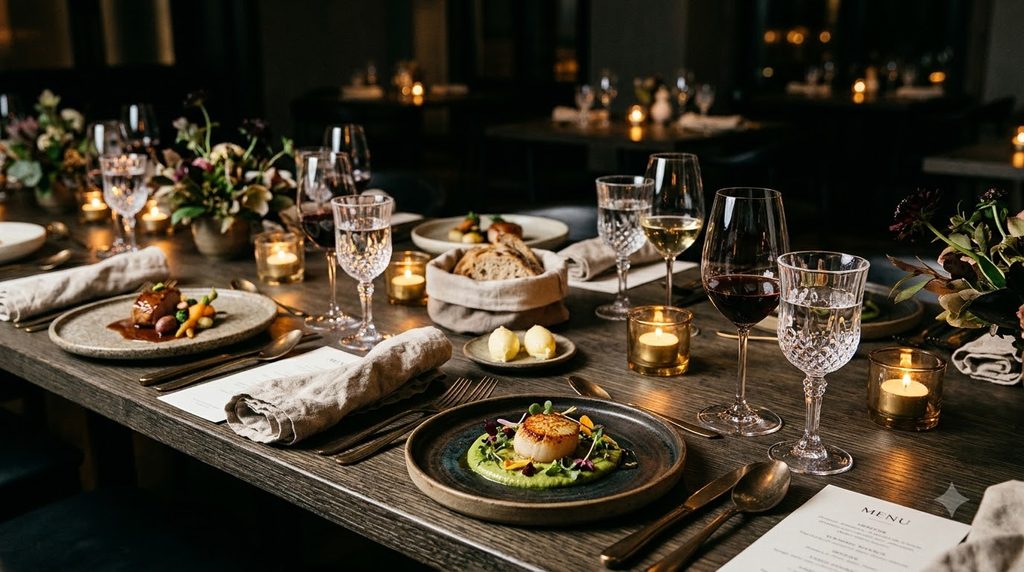
Here is how a typical evening unfolds, with an explanation of what each stage is trying to do.
1. The arrival and the snacks
You are seated and handed a drink, often a glass of Champagne or English sparkling wine, and within minutes the first bites appear. These are usually eaten with the fingers and are meant to wake up the palate with salt, acid, crunch and fat. Examples include a crisp tart with cured fish, a savoury choux bun, a fried chicken skin with a sharp dip, or a tiny bowl of broth.
What it’s doing: setting the tone and signalling what kind of restaurant this is. A playful kitchen will be witty here. A classical one will be immaculate and restrained.
2. The bread course
Bread is often a showpiece in London, served warm with cultured butter, whipped lard, a seaweed-flecked spread or a flavoured oil. Many restaurants bake their own sourdough or serve a house-made soda bread or flatbread.
What it’s doing: providing comfort and a chance to relax. If you are a bread person, this is also a quick way to judge the kitchen’s care.
3. The raw and the cold
Next, the menu usually turns to delicate, cold or lightly cured dishes: oyster with a cucumber granita, hand-dived scallop with apple and dill oil, cured mackerel, beef tartare, a chilled vegetable dish at the height of the season.
What it’s doing: showing the quality of the ingredient with as little interference as possible. These dishes are usually bright, acidic and clean.
4. The vegetable course
London’s more thoughtful menus often give vegetables a full course, not a side role. A single heritage carrot roasted in its own juices, charred cabbage with a rich sauce, or a celeriac cooked slowly until it tastes almost meaty can be the most memorable plate of the night.
What it’s doing: showing the chef’s technical skill and ethos. It is also the course most likely to challenge your assumptions.
5. The fish
Expect something from British waters: turbot, Dover sole, monkfish, cod, langoustine, crab, lobster or Cornish mackerel. The fish is often cooked simply, then paired with a sauce that does the heavy lifting, such as a beurre blanc, a shellfish emulsion, a brown-butter sauce or a smoky broth.
What it’s doing: marking the midpoint of the meal with something rich but precise. This is where classical technique often shows most clearly.
6. The pasta, grain or “in-between” course
Many menus include a dish that sits between fish and meat: a hand-rolled pasta, a risotto, a dumpling, a dish built around rice or barley. It tends to be generous, savoury and deeply flavoured.
What it’s doing: adding warmth and substance before the main event.
7. The main course
The star is usually a prime cut of meat or game: aged beef, a lamb saddle, roast duck, venison in season, pigeon, a rare-breed pork dish. It is typically a small portion, served with a deeply reduced sauce and one or two garnishes. Some restaurants serve a vegetarian main of equal ambition.
What it’s doing: providing the dramatic peak, with big flavour, rich sauce and a satisfying finish to the savoury half of the evening.
8. The palate cleanser
A small, bright dish follows, usually a sorbet or granita made with sharp fruit, herbs, pickle juice, fermented berries or something unexpected such as sea buckthorn or sorrel.
What it’s doing: resetting your mouth and bridging savoury and sweet.
9. The dessert, often in two or three parts
Pastry kitchens in London are a growing source of creativity. A first dessert may be fruit-led, such as roasted pear, poached rhubarb, a blackcurrant sorbet, or an apple dish that plays with sour, sweet and bitter. The second is often richer, with chocolate, caramel, burnt honey, brown butter, malted ice cream or a tart.
What it’s doing: bringing the meal to a close with sweetness and texture, and often a final surprise.
10. Petits fours and the farewell
Tea or coffee arrives with a tray of small sweets, such as truffles, financiers, jellies and tiny biscuits. Some restaurants send you home with a pastry or a jar of jam for breakfast.
What it’s doing: creating a gracious ending and a physical memento.
The Styles, and What They Taste Like
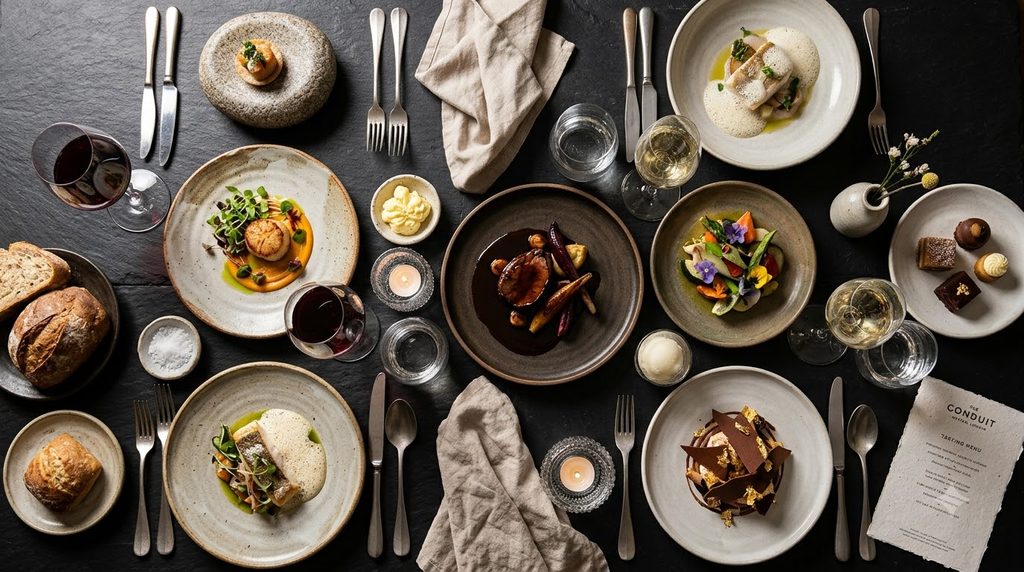
London’s tasting menus fall into several broad camps. Many restaurants blend two or more.
Modern British, with a sense of place
These kitchens look at British ingredients with fresh eyes. Expect heritage vegetables, native shellfish, game, foraged herbs, smoked and fermented elements, and a lot of butter. The cooking can be polished and luxurious or rustic and playful. Restaurants such as Core by Clare Smyth in Notting Hill have long been associated with elevated British cooking built around prime produce and a very high standard of service.
Seafood-driven and coastal
A few kitchens centre the menu on fish and shellfish, often sourced from small boats. Behind, in Hackney, is one example known for a counter-style seafood-led format. These menus tend to be light, briny and precise.
Fire, smoke and ferment
Live-fire cooking and fermentation have shaped a good deal of recent London cooking. Charcoal-grilled meats and vegetables, house-made garum and miso-style ferments, and smoky sauces all create deep, savoury flavours.
Global flavours through a British lens
London’s international character shows up most clearly here. Ikoyi, widely known for its bold use of West African ingredients and spice, is the best-known example of a restaurant built around a distinctive, personal flavour palette. Other kitchens draw on Portuguese, Japanese, Korean, Indian, Mexican or Brazilian traditions, often combined with local ingredients.
Historical and conceptual cooking
Some restaurants cook from history. Dinner by Heston Blumenthal at the Mandarin Oriental has long been associated with dishes inspired by centuries-old British recipes, reinterpreted with modern technique. This is a good choice if you like a story with your food.
Grand classical and hotel dining
London’s luxury hotels and long-established dining rooms still excel at the classic form: tableside service, silver domes, a trolley of petits fours, and rigorous French technique. Restaurant Gordon Ramsay in Chelsea and the Lecture Room & Library at Sketch in Mayfair are examples of formal, high-end dining with a reputation for theatre and precision.
Counter dining and chef’s tables
Many of the most exciting meals happen at a counter facing the kitchen, where cooks hand you plates and explain them. Places such as Kitchen Table have popularised this intimate, conversational format, which suits curious diners who want to talk to the people cooking.
Neighbourhood tasting menus
Not every great tasting menu costs a fortune. Smaller, shorter menus in places like Shoreditch, Hackney, Bermondsey and Soho offer inventive cooking in more relaxed rooms, often at a lower price. The Clove Club in Shoreditch has been a long-standing example of a modern, produce-led approach.
What the Best Menus Have in Common
Whatever the style, the strongest tasting menus share a few qualities:
- A clear idea. You can feel what the kitchen is trying to say, whether that is a place, a memory, a culture or a technique.
- Balance and pacing. Rich dishes are followed by sharp ones, and the meal does not leave you stuffed or flat.
- Texture. Crunch, cream, chew, crisp and silk appear in contrast, often within one dish.
- Seasonality. Menus change with the calendar, and the same restaurant will taste different in March and October.
- Warm, intelligent service. The person at your table explains each plate without lecturing, reads your mood and adjusts.
- Surprise. There is at least one dish you will talk about for weeks.
The Drinks
Wine pairings
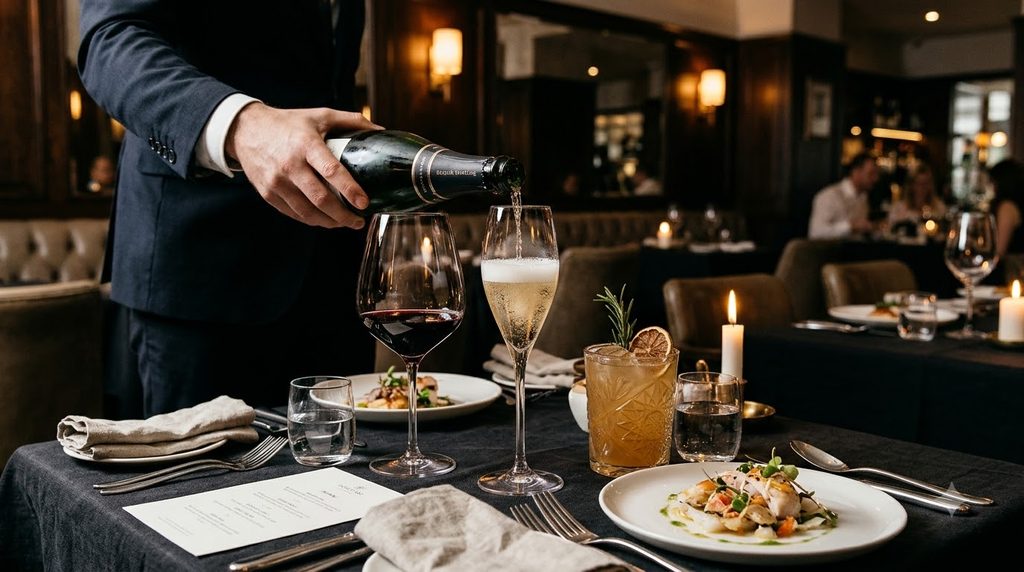
A wine pairing is a set of glasses matched to each course, usually chosen by a sommelier. It is a good way to taste bottles you might not order yourself, and London’s sommeliers are known for adventurous lists that include small growers, natural wines and English sparkling. Pairings often add considerably to the bill, so ask about options when you book.
Other ways to drink
- A shorter or “half” pairing, with fewer pours, if you want to pace yourself.
- A bottle, often better value if you know what you like.
- Non-alcoholic pairings. These have become a highlight in London. Expect house-made juices, shrubs, kombucha, cold-infused teas, ferments and tonics, designed with as much care as a wine list. Many people find them as interesting as the wine.
- Cocktails and aperitifs, which many restaurants offer at the start.
English wine
Sparkling wine from southern England has earned a following, and many London restaurants pour it by the glass. It is worth trying, especially if you want something local.
Cost, Booking and Planning
What it costs
London’s tasting menus span a wide range. Casual, shorter menus in neighbourhood restaurants sit at the more accessible end. Michelin-starred rooms and grand hotel dining sit at the top, where the food alone may cost several hundred pounds per person before drinks and service. Prices change often and vary by restaurant, so check the current price on the restaurant’s website.
Things that add to the bill:
- Wine or non-alcoholic pairings
- Supplements for truffle, caviar or premium ingredients
- A discretionary service charge, which many restaurants add automatically
- Water, aperitifs and coffee
Ways to eat well for less
- Lunch menus, which are often shorter and cheaper than dinner.
- Shorter tasting formats, such as five or six courses.
- Counter seats and bar seating, which can be more affordable and more fun.
- Midweek bookings, which are often easier to get.
- Looking beyond the stars. Many exciting kitchens have no Michelin recognition at all.
Booking
- Reserve well ahead. Popular restaurants release tables on set dates, often weeks or months in advance, and the best slots go quickly. Check each restaurant’s booking system.
- Join waiting lists and watch for cancellations.
- Expect to prepay or leave a deposit at many places, with cancellation rules that can be strict.
- Mention dietary needs early. Vegetarian, vegan, gluten-free and allergy-friendly menus are common, but they require notice. Say so when you book, not on the night.
- Tell them about celebrations, because many restaurants will add a small gesture.
How long it takes
Plan on two and a half to four hours, depending on the number of courses. Do not schedule anything tight afterwards, and eat lightly earlier in the day.
How to Enjoy It
- Arrive hungry but not ravenous, and pace yourself through the bread and snacks.
- Ask questions. Chefs and servers enjoy explaining a dish, and you will notice more.
- Eat with your hands when invited. If the server says to pick something up, do it.
- Take your time, since the pacing is part of the experience.
- Drink water between pours.
- Do not photograph everything. A few photos are fine, but a meal viewed through a phone loses something. Keep the flash off and be considerate of other diners.
- Be honest and kind. If something is not to your taste, say so quietly. Kitchens generally prefer to know.
- Dress code: Most places are relaxed, but formal rooms may ask for smart attire. Check before you go.
- Tipping: Check whether service is included, and tip additionally only if you want to recognise something exceptional.
Sample Evenings
The special-occasion splurge
A grand, formal dining room, a full pairing, a trolley of petits fours and impeccable service. Best for anniversaries and milestone birthdays.
The adventurous evening
A West African-inflected or boldly spiced menu with an unusual drinks list, for diners who want to be surprised.
The counter experience
A seat at the pass, a small group of fellow diners, and a conversation with the cooks. Perfect for food lovers who enjoy watching the work.
The neighbourhood find
A shorter menu in a casual room, with a more affordable price, in an area like Hackney, Shoreditch or Bermondsey. A great way to try the style without a huge commitment.
The historical dinner
A menu built around centuries-old recipes, served in a luxurious setting. Good for curious diners who like context.
Making a Weekend of It
Pair a big dinner with lighter days. Eat breakfast at a market such as Borough or Maltby Street, take a long walk along the South Bank or through Hyde Park, have a pub lunch, and save your appetite for the evening. If you are visiting for a few days, space out tasting-menu dinners so that you are not tired by the second one.
The Meal as a Story
A great tasting menu is a short story told in courses. It has an opening, a middle and an ending, and it asks you to pay attention for a few hours in a world that rarely does. London’s chefs, working with a pantry that stretches from the Scottish coast to the spice markets of the world, tell some of the most varied and surprising stories you will hear at a table.
Pick a style that suits your curiosity and budget, book early, tell the restaurant what you cannot eat, and let the evening unfold. The best part is rarely the most expensive ingredient. It is usually a small moment: a sauce you want to drink, a vegetable that tastes of more than it should, a server who knows exactly when to walk over.
A note on accuracy: Restaurants, chefs, Michelin ratings, prices, booking systems and menu formats change often, and I have not looked up live listings for this article. The restaurants named are examples of styles, not recommendations of current availability. Please confirm details with each restaurant before you book.
If you’d like, I can turn this into a shareable doc, shorten it to blog length, research current London tasting menus and prices with live sources, or adapt the tone for a magazine or social media.

