


Nestled at the dramatic intersection of Eastern Europe and Western Asia, where the high-altitude peaks of the Greater Caucasus Mountains tower over lush green valleys, lies one of the best-kept secrets in global travel: the Republic of Georgia.
Boasting an 8,000-year-old winemaking tradition, legendary supra feasts of hospitality, medieval stone defense towers clinging to cliff edges, and cobblestone capital streets pulsing with creative energy, Georgia offers an extraordinarily rich cultural tapestry. Better yet, it remains astonishingly affordable. Traveling Georgia on a $25-a-day budget is not merely a survival strategy; it is an invitation to experience authentic, immersive hospitality that has largely vanished from more commercialized corners of Europe.
Here is your comprehensive blueprint for conquering the Caucasus on twenty-five dollars a day.
1. The Art of Georgian Hospitality: Family-Run Guesthouses (Ojakhi)
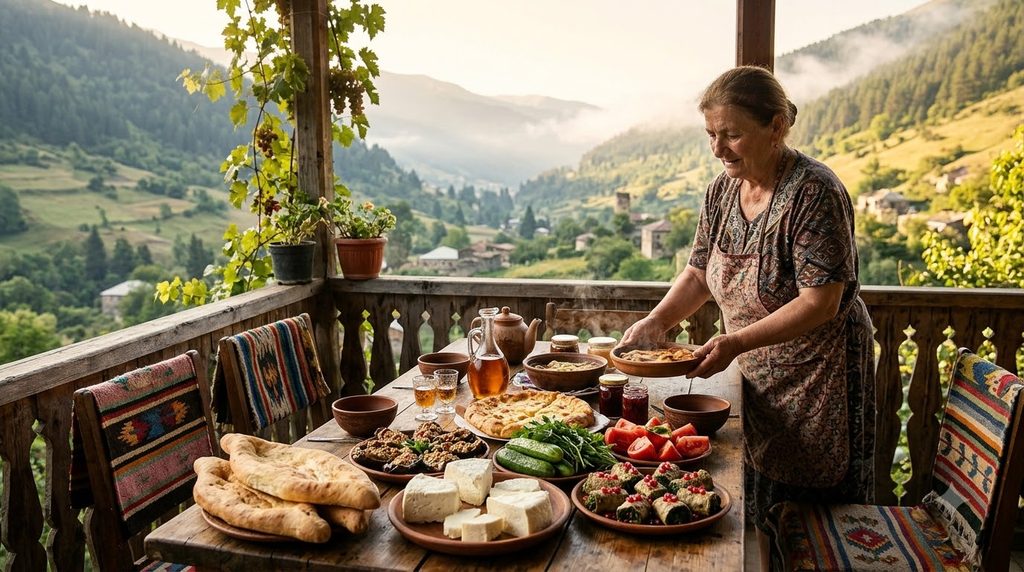
In Georgia, hospitality is treated as a sacred duty. Guests are traditionally viewed as gifts from God (stumar-maspindzeli), and nowhere is this more evident than in the country’s legendary network of family-run guesthouses.
- Staying in Guesthouses (Ojakhi) ($12 – $18 / night): Whether you are exploring the alpine village of Kazbegi (Stepantsminda), the remote stone-tower outpost of Ushguli in Svaneti, or the vineyard-draped hills of Kakheti, local families open their homes to travelers. For less than $20 a night, you get a clean, cozy private or semi-private room in a family home, often surrounded by flourishing orchards, vegetable gardens, and sweeping mountain views.
- The Legendary Half-Board Upgrade ($5 – $8 extra): If your budget allows, always opt to include breakfast and dinner with your guesthouse hosts. For a few extra dollars, you will sit down to a home-cooked feast prepared with organic garden ingredients: fresh goat cheese, rich walnut-paste vegetables (pkhali), stuffed eggplants, freshly baked bread, stewed meats, and endless carafes of homemade house wine. It is easily the best culinary value in the entire Northern Hemisphere.
- Hostel Dorms in Tbilisi and Kutaisi ($8 – $13): When passing through major urban hubs like the capital of Tbilisi or the historic western city of Kutaisi, modern social hostels provide incredible pod beds, fast Wi-Fi, and communal kitchens for pocket change.

2. Eating Like Royalty: Dumplings, Cheese Boats, and Market Feasts
Georgian cuisine is a robust, soul-warming celebration of dough, cheese, fresh herbs, and aromatic spices. Eating well on a budget here is effortless.
- The Mighty Khinkali (Georgian Soup Dumplings) ($0.40 – $0.60 per dumpling): These giant, twisted knots of dough are stuffed with seasoned minced meat (beef and pork mixed) and a rich, savory broth. To eat one properly without wearing the broth, you flip it upside down, take a tiny bite out of the top fold, drink the hot soup inside, and devour the rest (leaving the thick knot on your plate to keep track of how many you’ve conquered—usually 5 to 8 will leave you thoroughly stuffed).
- Khachapuri (The Ultimate Cheese Bread) ($3 – $6): Every region of Georgia claims its own variation of khachapuri. The most famous is Adjarian Khachapuri, a boat-shaped bread stuffed with molten sulguni cheese, topped with a raw egg yolk and a pat of butter. You tear off the crust, stir the golden center together, and dip to your heart’s content. For a budget-friendly lunch on the go, grab a slice of Imeretian Khachapuri from a street-side bakery for under a dollar.
- Bazaar Markets (Bazari) ($2 – $4): Dive into Tbilisi’s Dezerter Bazaar or Kutaisi’s Green Bazaar. Wander through stalls overflowing with golden sun-dried tomatoes, strings of churchkhela (candle-shaped candies made of thickened grape juice and walnuts), fragrant fresh tarragon and cilantro, and blocks of salty mountain cheese.
3. 8,000 Years of Wine for Pocket Change
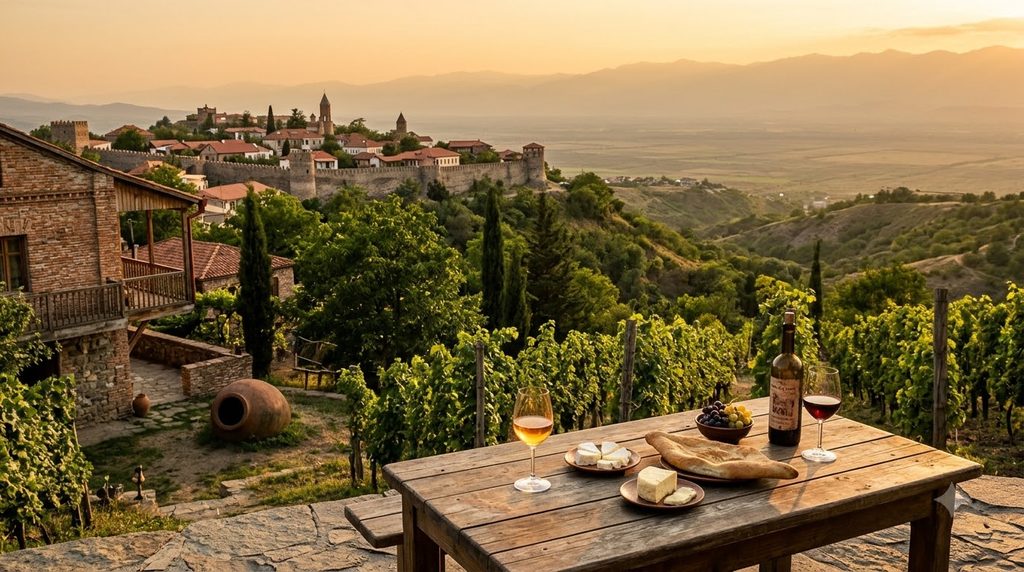
Georgia is the cradle of wine, having fermented grapes in underground clay earthenware vessels called qvevri for millennia—a traditional method recognized by UNESCO.
- Sampling Local Wine ($1.50 – $3.00 a glass / $6 – $12 a bottle): Unlike mass-produced European wines, traditional Georgian qvevri amber (orange) wines are fermented with grape skins and stems, producing a complex, earthy, tannin-rich flavor profile unlike anything else in the world. Whether you buy a bottle of local Saperavi (red) or Rkatsiteli (amber) from a neighborhood grocery store or share a carafe at a local tavern, wine in Georgia is cheaper than bottled water and infinitely more rewarding.
- Visiting Kakheti on a Shoestring: If you venture east to Kakheti—Georgia’s premier wine region centered around towns like Sighnaghi and Telavi—you can tour family vineyards, taste amber wines straight from ancient clay vessels, and learn winemaking techniques passed down through generations without paying exorbitant luxury tour fees.
4. Conquering the Caucasus: Transportation and Mountain Trekking
Moving across Georgia’s dramatic, rugged topography requires local insight, patience, and a taste for adventure.
- Marshrutkas (Shared Minivans) ($3 – $15 per journey): The beating heart of Georgian transit is the marshrutka—a fleet of vintage Soviet-era Ford or Mercedes minivans that connect every village, town, and city. They depart from central bus stations once full (or on a loose schedule), cost very little, and offer an unforgettable cultural immersion as you squeeze shoulder-to-shoulder with locals carrying sacks of flour, live chickens, or fresh cheese.
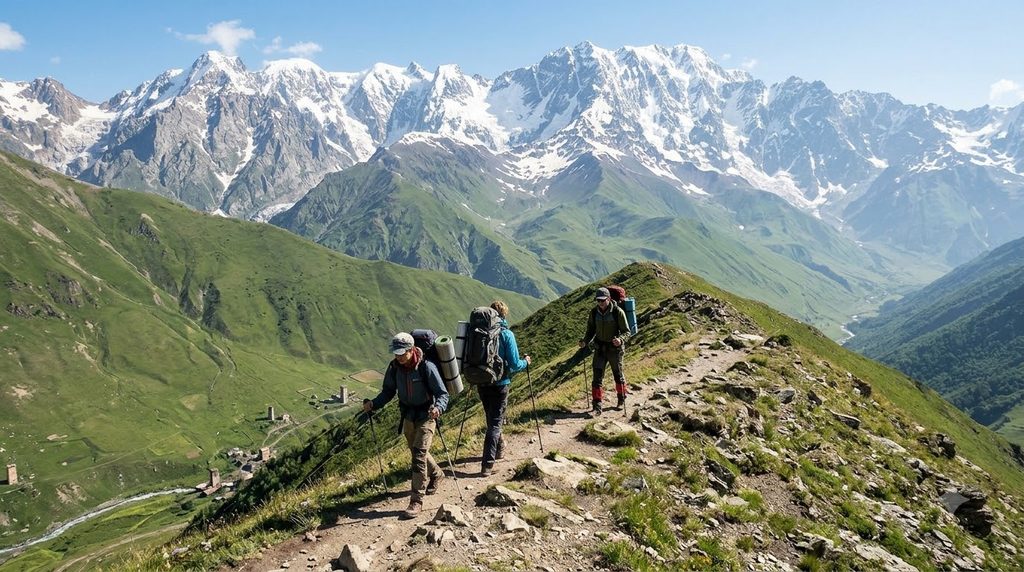
- Epic Alpine Hiking for Free: Some of the world’s most breathtaking mountain landscapes—from the trek up to the Gergeti Trinity Church beneath Mount Kazbek to the remote, multi-day alpine trails connecting Mestia to Ushguli in Svaneti—cost absolutely nothing to traverse. Pack your hiking boots, a waterproof jacket, and hit the trails.
- Free Walking Tours in Tbilisi: Uncover Tbilisi’s fascinating architectural blend of Persian, Russian, Art Nouveau, and Soviet-era structures by joining tip-based free walking tours winding through the sulfur bath district (Abanotubani), ancient fortress ruins, and colorful wooden balcony-lined alleyways.
Sample $25 Daily Budget Breakdown
- Accommodation (Family-Run Guesthouse or Hostel Dorm): $14.00
- Food & Drink (Bakery breakfast, khinkali lunch, market snacks, and local house wine): $7.00
- Transport & Activities (Averaged daily marshrutka share and park/monastery entry): $4.00
- Total Estimated Daily Cost: $25.00
Final Tips for Backpacking Georgia
- Master Basic Russian or Georgian Phrases: While younger generations in Tbilisi speak fluent English, older locals in mountain villages and rural markets are far more likely to speak Georgian or Russian. Knowing basic greetings (Gamarjobat for hello, Madloba for thank you) opens doors, hearts, and wine cellars instantly.
- Embrace Georgian Time: Schedules for minibans and regional trains are flexible guidelines at best. Cultivate patience, sit back, enjoy the mountain views, and let go of strict western timetables.
- Mind Local Traditions at Churches: When visiting Georgia’s ancient Orthodox churches and monasteries, women should wear a headscarf and a skirt (many churches provide wraps at the entrance), and men should wear long trousers.
Georgia proves that staggering natural beauty, profound historical depth, and legendary culinary generosity are entirely accessible to travelers exploring the world on a modest budget. Pack your hiking boots and an empty stomach—the Caucasus are waiting!