
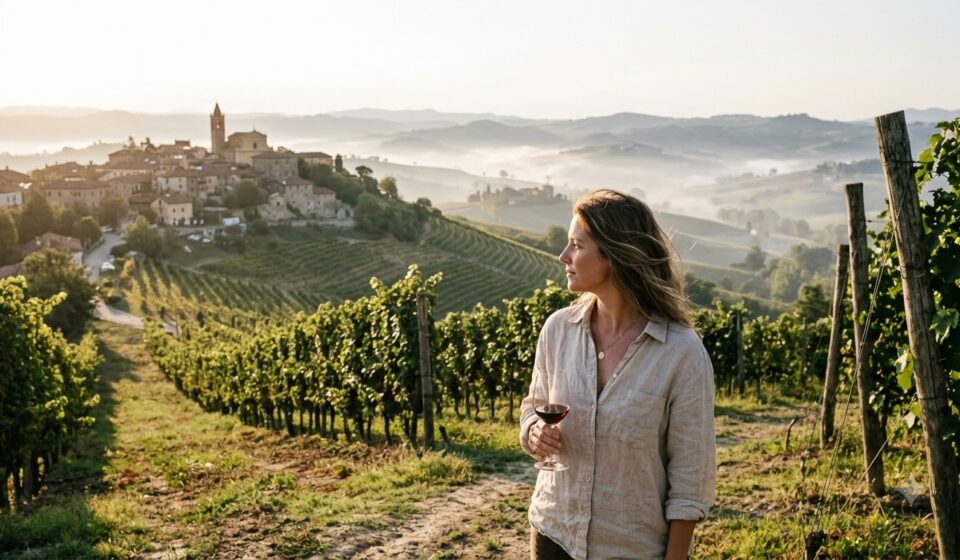

Nestled at the foot of the Alps (piè del monte), Piedmont (Piemonte) is a land of morning mists, medieval hilltop castles, and some of the most revered vineyards on the planet. While Tuscany often steals the spotlight for casual wine travelers, Piedmont is where connoisseurs go to find world-class complexity, deep-rooted tradition, and an uncompromising dedication to quality.
Stretching across rolling hillsides carved out by ancient rivers, this northwestern Italian powerhouse balances rustic charm with aristocratic elegance. Whether you are drawn by the haunting aromatics of Nebbiolo or the food-friendly versatility of Barbera, here is your comprehensive playbook for exploring Piedmont’s legendary wine country.
1. Understanding the Terroir: The Landscape of the Langhe and Beyond
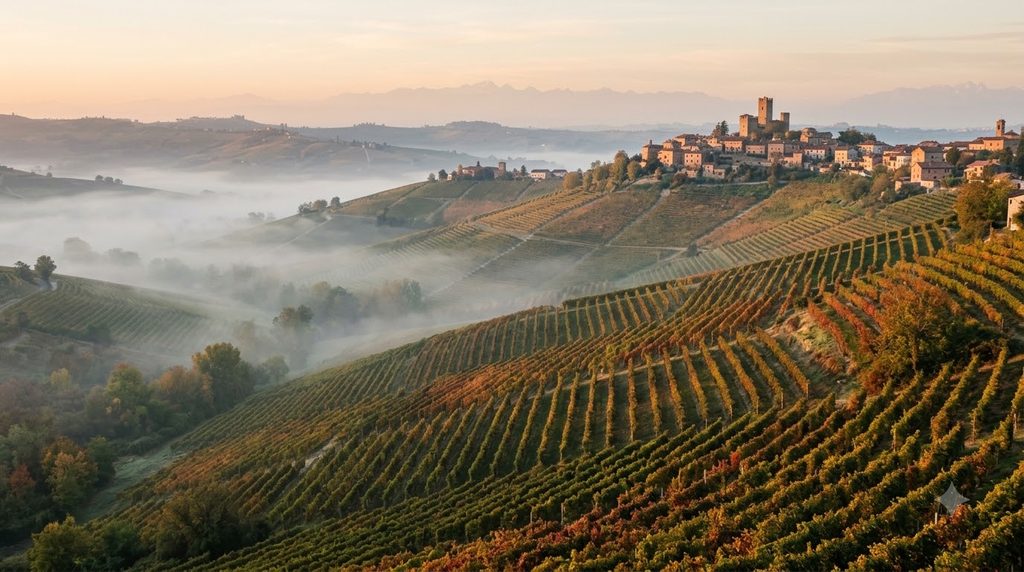
Piedmont’s geography is shaped by a dramatic interplay between the ice-cold Alps and the warmth of the nearby Mediterranean.This creates a signature diurnal shift—warm, sun-drenched days followed by brisk, cool nights—which allows grapes to retain vital acidity while developing deep phenolic ripeness.
The region is split into distinct sub-regions, each with its own geological personality:
- The Langhe:The epicenter of Piedmont winemaking.Centered around the vibrant town of Alba, this UNESCO World Heritage landscape features steep, dramatic slopes where every angle of sun exposure matters. This is the holy land of Barolo and Barbaresco.
- The Roero:Lying just north of the Tanaro River, the Roero features sandier soils born from an ancient seabed. It is celebrated for its fragrant, mineral-driven whites alongside structured reds.
- Monferrato & Asti:Rolling hills stretching eastward, famous for sprawling vineyards of Barbera, lively sparkling wines, and historic towns like Nizza Monferrato.
- Alto Piemonte (Northern Piedmont):Tucked closer to the mountains, cooler alpine zones like Gattinara produce lighter-bodied, highly aromatic, and intensely age-worthy Nebbiolo blends.
2. The Royal Cast of Grapes
Piedmont is a paradise for native varietals. While international grapes like Chardonnay and Pinot Noir find homes here, the local grapes tell the true story of the soil.
The Red Heavyweights
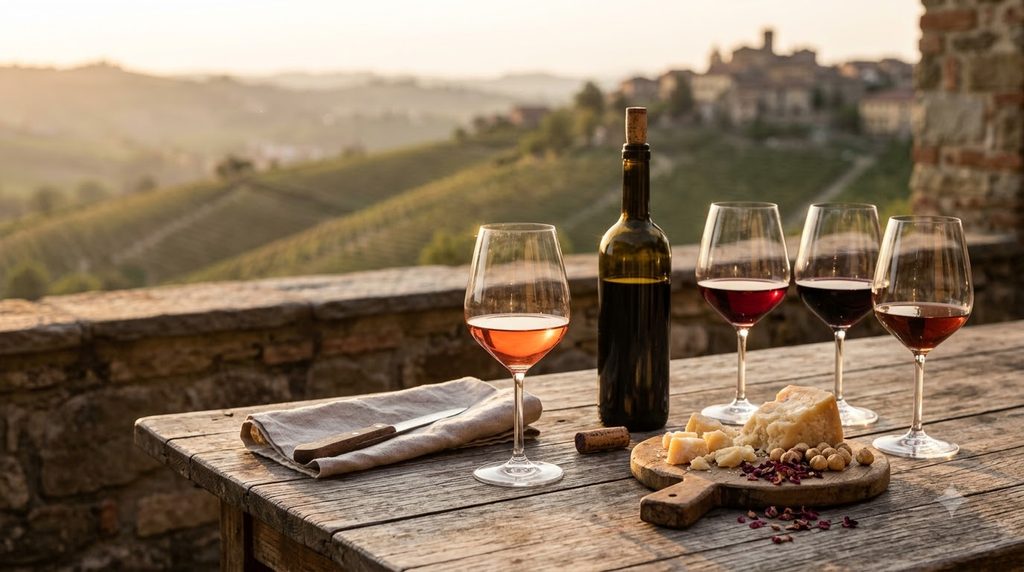
- Nebbiolo: The undisputed king. Known for its deceptively pale brick-red color, Nebbiolo packs a powerhouse punch of grippy tannins, high acidity, and mesmerizing notes of dried rose petals, tar, wild cherry, and leather.
- Barolo DOCG: Often called the “King of Wines,” Barolo requires extended aging and yields structured, muscular bottles that can evolve for decades.
- Barbaresco DOCG: Grown on slightly more nutrient-rich limestone soils, Barbaresco is traditionally viewed as more approachable and elegant in its youth—the “Queen” to Barolo’s king.
- Barbera:Piedmont’s everyday heart and soul. With mouth-watering acidity, low tannins, and lush notes of dark plum and blackberries, it is exceptionally food-friendly and ready to drink younger than Nebbiolo.
- Dolcetto:Despite its name (which translates to “little sweet one”), Dolcetto is a dry, deeply colored red loaded with dark fruit, a pleasant almond bitterness on the finish, and a punchy, approachable personality.
The Refreshing Whites
- Arneis:Hailing primarily from the Roero, this white offers delicate notes of white flowers, green apple, peach, and a distinct flinty minerality.
- Cortese: Most famously expressed in Gavi DOCG, this high-acid white is crisp, citrus-forward, and bone-dry.
- Moscato d’Asti: A lightly sparkling (frizzante), sweetly aromatic wine with low alcohol, offering notes of fresh-picked peaches, sage, and orange blossom.
3. Crafting Your Itinerary: Logistics and Where to Stay
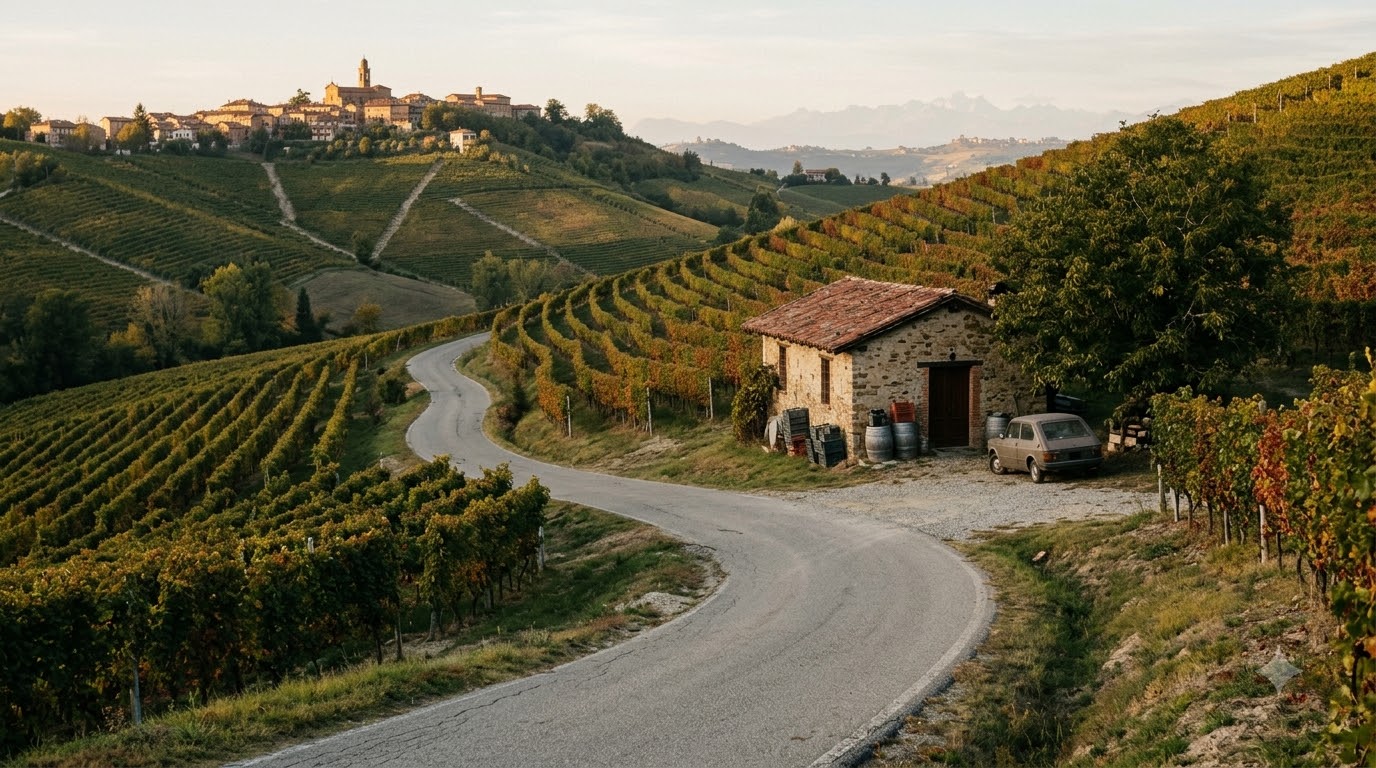
Planning a trip to Piedmont requires a bit of tactical thinking. Unlike urban wine regions, the most prestigious vineyards and family-run cantine (wineries) are tucked away on winding rural hillsides.
- Getting Around:Public transportation between villages is designed for local commuters rather than tourists. Renting a car (or hiring a private driver/guide) is essential if you want to seamlessly hop between hillside appellations without missing a tasting.
- Where to Base Yourself:Staying directly in tiny villages like Barolo or Barbaresco offers incredible romance, but nightlife and late-night transport can be limited.Many travelers prefer staying in Alba, a vibrant hub packed with excellent restaurants, wine bars, and shops, situated roughly 30 minutes from the core vineyard estates.
4. Pairing Wine with Culture: The Culinary Scene
You cannot separate Piedmontese wine from Piedmontese food; the region’s gastronomy is world-renowned.
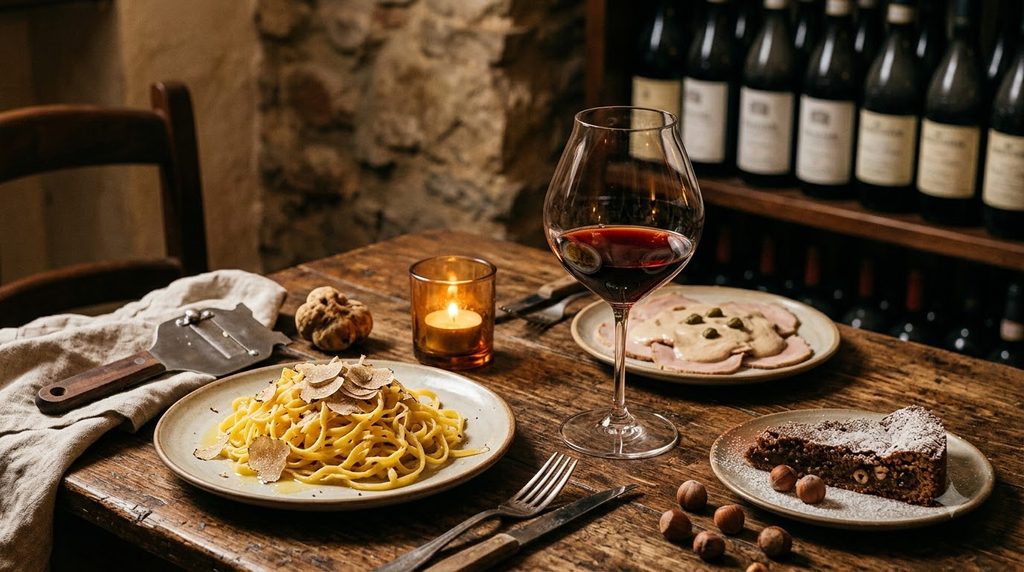
- The Truffle Connection:Autumn brings the legendary Alba White Truffle (Tuber magnatum pico). Shaved generously over hand-rolled tajarin pasta buttered to perfection, it creates a transcendent pairing when matched with an aged Barolo or Barbaresco.
- Local Delicacies: Look out for vitello tonnato (veal with a creamy tuna-caper sauce), rich braised meats cooked in Barbera (brasato al Barolo), and handmade hazelnut tortes utilizing the region’s famous IGP hazelnuts.
- The Enoteca Culture: Take advantage of regional enotecas (wine libraries) found in castle towns like Barolo and Barbaresco. They offer self-guided tasting machines or extensive glass lists, allowing you to sample dozens of local producers under one roof.
Final Thoughts for the Explorer
Piedmont rewards the curious traveler. Beyond the grand estates of the Langhe lie hidden micro-appellations, experimental winemakers pushing boundaries, and a profound sense of generational heritage. Approach your journey with patience, an appetite for slow travel, and an empty suitcase for a few bottles to bring home—you are stepping into one of Europe’s greatest cultural and oenological masterpieces.