
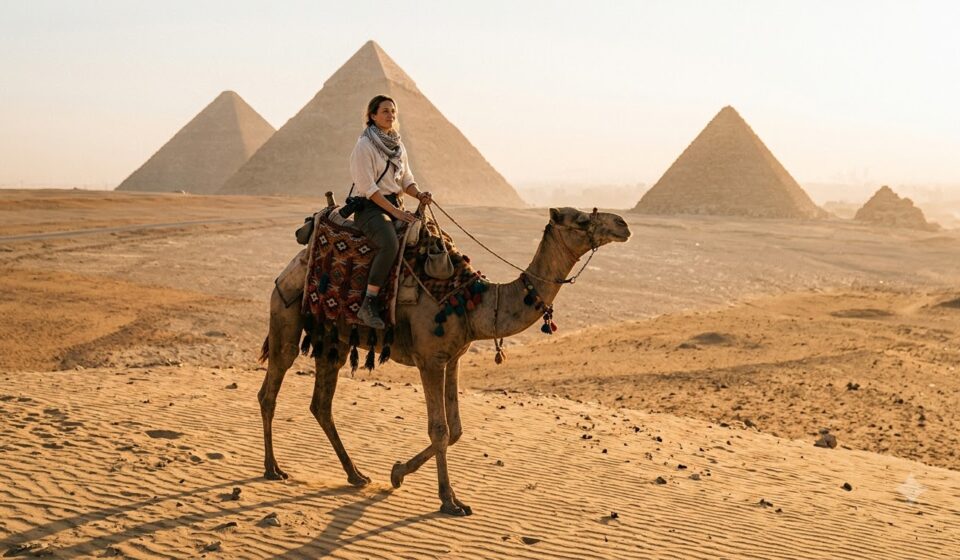
Gateways of the Pharaohs: Unveiling the Pyramids and Valley of the Kings in Cairo and Luxor, Egypt

Few destinations on Earth evoke as much wonder, mystery, and timeless grandeur as Egypt. Spanning millennia of human history, a journey through this ancient land is ultimately a journey through two defining capitals of the ancient world: Cairo, the gateway to the monumental Old Kingdom pyramids, and Luxor, the sprawling open-air museum guarding the subterranean splendor of the New Kingdom pharaohs.
Together, these two regions trace the architectural evolution of how ancient Egyptian monarchs sought eternity—moving from towering mountains of stone pointing toward the heavens to hidden, brilliantly painted chambers carved deep into the desert rock.
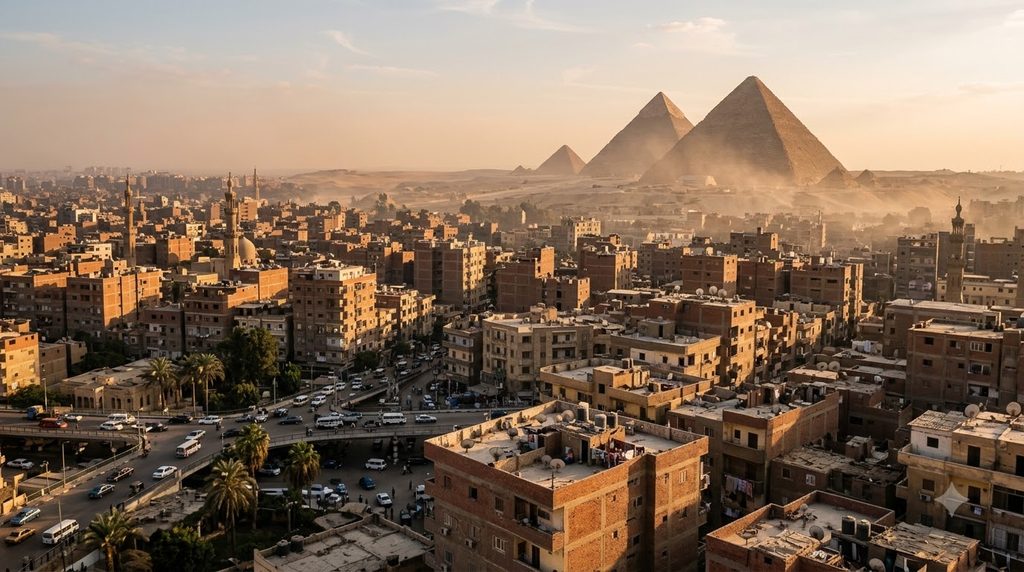
Part I: Cairo and the Giza Plateau – Monuments to the Heavens
Rising abruptly from the edge of the modern urban sprawl of Greater Cairo, the Giza Plateau stands as an enduring monument to the absolute power, engineering genius, and religious devotion of Egypt’s Old Kingdom.
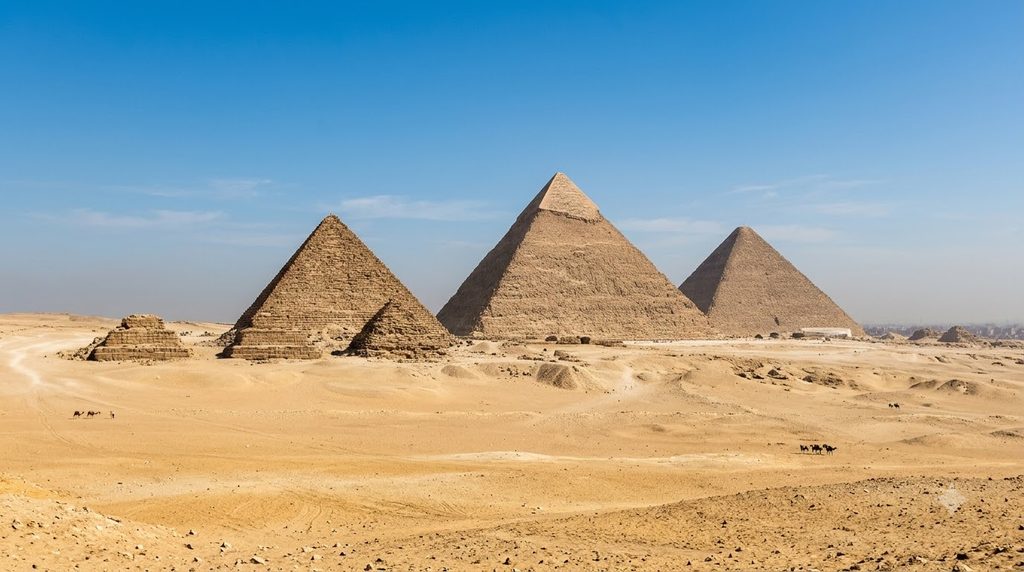
The Great Pyramids of Giza
Constructed roughly 4,500 years ago during the 4th Dynasty, the three main pyramids were built as eternal resting places for the pharaohs Khufu, Khafre, and Menkaure.
- The Great Pyramid of Khufu: The oldest and largest of the trio, it originally stood at an astonishing 146.6 meters. Composed of an estimated 2.3 million hand-cut limestone blocks, its sheer precision continues to baffle modern engineers. Venturing inside via the ascending passages leads adventurous travelers into the heart of the structure to the stark, granite King’s Chamber.
- The Pyramid of Khafre: Built for Khufu’s son, this pyramid often appears taller because it sits on a slightly higher elevation and retains a portion of its original smooth casing stones at its peak.
- The Pyramid of Menkaure: The smallest of the three principal pyramids, notable for the remnants of its once-grand pink granite exterior casing.
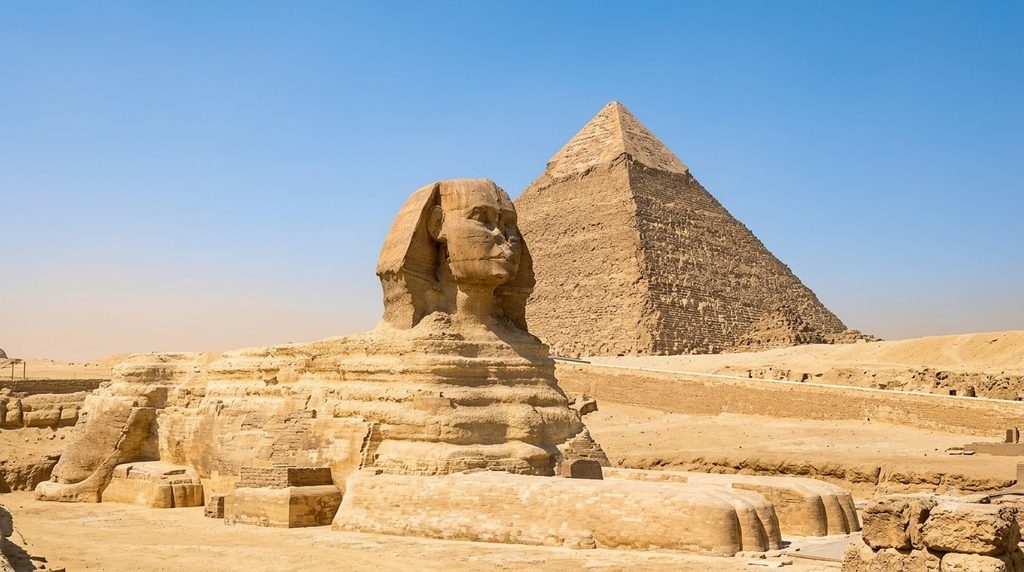
The Guardian of the Plateau: The Great Sphinx
Carved from a single ridge of natural limestone bedrock, the Great Sphinx rests silently nearby, blending the body of a lion with the head of a king (traditionally believed to represent Khafre). Despite weathering, centuries of shifting sands, and historical myths regarding its missing nose, the Sphinx remains an eternal sentinel of the plateau.
Part II: Luxor and the West Bank – Secrets of the Underworld
Roughly 600 kilometers south of Cairo lies Luxor (ancient Thebes), the religious capital of Egypt’s New Kingdom. Recognizing that the conspicuous pyramids of the north were frequent targets for tomb robbers, the pharaohs of the 18th, 19th, and 20th Dynasties abandoned pyramid building entirely. Instead, they chose to hide their royal sepulchers deep within the barren limestone cliffs of the Theban Hills—a region now globally renowned as the Valley of the Kings.
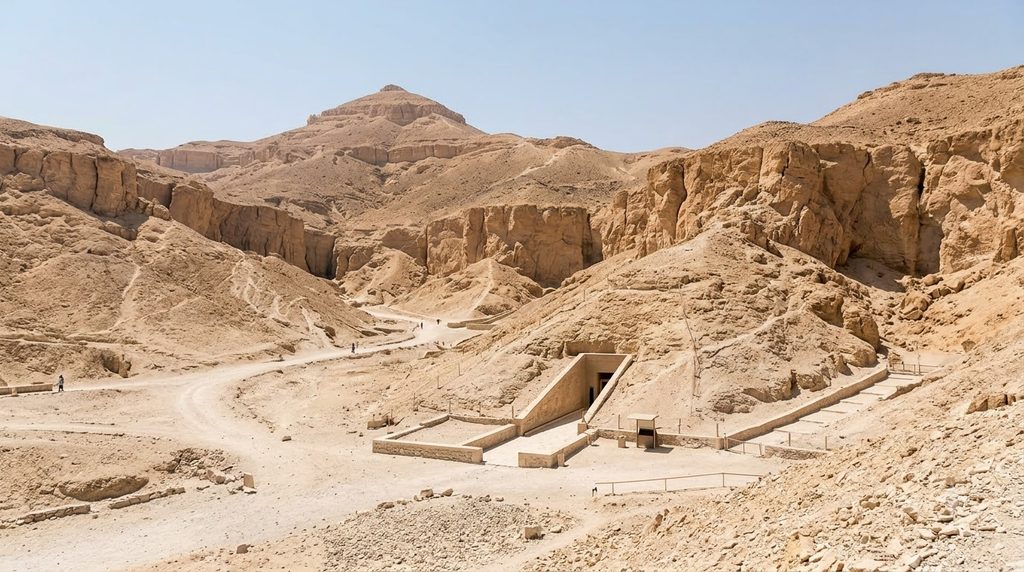
The Valley of the Kings
To date, 63 magnificent tombs have been discovered in this arid desert canyon. Unlike the stark, empty chambers of the Giza pyramids, the walls of these subterranean tombs are completely covered in vibrant, intricate hieroglyphics and sacred texts (such as the Book of the Amduat and the Book of Gates) designed to guide the pharaoh safely through the perils of the underworld to eternal rebirth.
- The Tomb of Tutankhamun (KV62): While physically small and modestly decorated compared to its neighbors, it famously yielded the intact royal treasure trove discovered by Howard Carter in 1922.
- The Tomb of Seti I (KV17): Widely considered the artistic masterpiece of the valley, featuring long, descending corridors and vaulted ceilings painted with breathtaking astronomical and religious scenes.
- Ramesses V and VI (KV9): Renowned for its massive proportions and a soaring, beautifully decorated burial hall ceiling depicting the sky goddess Nut swallowing and rebirthing the sun.
Beyond the Valley: The West Bank’s Other Wonders
A complete journey through Luxor’s West Bank pairs the Valley of the Kings with other monumental structures:
- The Mortuary Temple of Hatshepsut (Deir el-Bahari): A striking, terraced colonnaded structure built against towering limestone cliffs, honoring Egypt’s most successful female pharaoh.
- The Colossi of Memnon: Two massive 18-meter-high stone statues of Amenhotep III that have stood guard over his ruined mortuary temple for millennia.
Practical Tips for the Modern Explorer
- Timing is Everything: In Cairo, arrive at the Giza Plateau early in the morning before tour buses flood the site. In Luxor, the Valley of the Kings opens at sunrise (6:00 AM)—be at the gates immediately to beat both the intense desert heat and the heavy midday crowds.
- Hire an Egyptologist: While you can walk the grounds independently, hiring a licensed local guide transforms a collection of old stones and dark tunnels into a rich narrative filled with mythology, history, and royal intrigue.
- Pace Yourself: Avoid “temple and tomb fatigue” by balancing heavy archaeological sightseeing with leisurely moments, such as taking a traditional felucca sailboat ride down the Nile at sunset.
From the monumental engineering heights of Giza to the deeply spiritual, painted depths of Luxor, Egypt’s ancient gateways offer an unmatched window into a civilization that dared to conquer time itself.