
















































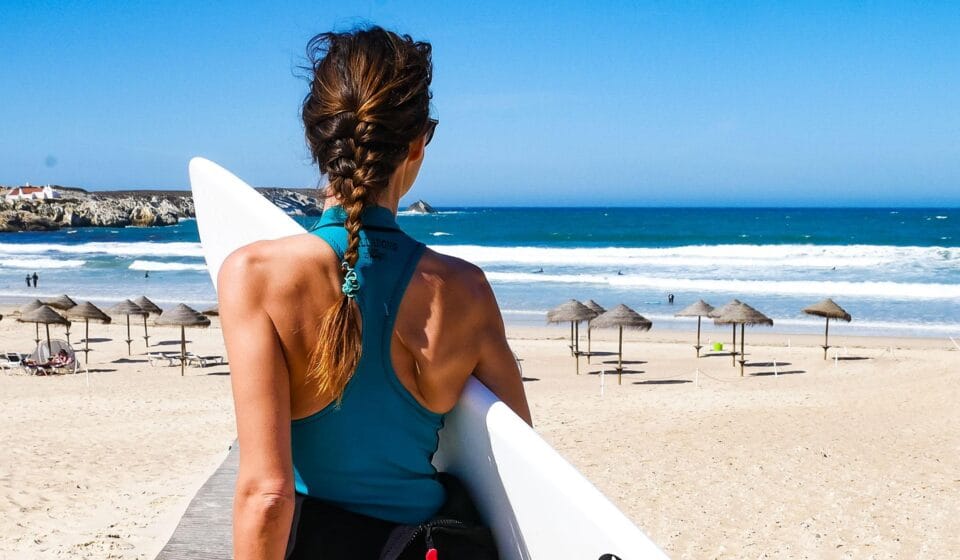

There is something transformative about the ocean. The sound of waves crashing against cliffs, the salty Atlantic wind, the rhythm of paddling through water, and the complete focus required to catch a wave create a feeling many surfers describe as deeply healing. In Portugal’s coastal villages, surfing is no longer viewed only as a sport or lifestyle — it has become a form of therapy, wellness, and emotional escape.
Across Portugal’s Atlantic coastline, small fishing towns and surf villages are attracting travelers searching for more than beaches and adventure. They come looking for calm, clarity, and connection. Many discover what marine biologists and psychologists now call the “Blue Mind” effect — the idea that being near water can reduce stress, improve mental health, and create a meditative state of mind.
Portugal has quietly become one of the world’s great surf destinations. But beyond the famous waves lies something even more powerful: a slower coastal culture centered around nature, mindfulness, simplicity, and emotional well-being.
For many travelers, surfing in Portugal becomes less about performance and more about healing.
What Is the “Blue Mind” Philosophy?
The term “Blue Mind” was popularized by marine biologist Wallace J. Nichols, who explored how water environments positively affect mental health, creativity, stress levels, and emotional balance.
The theory is simple: humans naturally feel calmer, happier, and more reflective near water.
In Portugal’s surf culture, this philosophy appears everywhere. Early-morning surf sessions, barefoot walks through fishing villages, quiet sunsets over the Atlantic, and long hours spent listening to the ocean all contribute to a lifestyle focused on slowing down.
Many visitors arrive exhausted from urban life and leave feeling mentally refreshed.
Portugal’s coastal communities naturally encourage this rhythm:
- Slower daily routines
- Outdoor living
- Connection with nature
- Minimalist lifestyles
- Emphasis on balance rather than productivity
Surfing becomes both physical exercise and mental reset.

Commercial-use image source
Why Portugal Became Europe’s Surf Capital
Portugal’s geography makes it ideal for surfing.
The country’s Atlantic coastline stretches for hundreds of kilometers, creating consistent waves suitable for everyone from complete beginners to professional surfers.
Unlike tropical surf destinations that depend on specific seasons, Portugal offers year-round surf conditions. Different regions produce different types of waves, allowing surfers to choose between relaxed beach breaks and powerful giant-wave spots.
Portugal also combines excellent surf conditions with affordable prices, beautiful villages, fresh seafood, and warm hospitality.
Over the last decade, surf tourism has transformed many coastal towns into global wellness destinations filled with:
- Surf camps
- Yoga retreats
- Digital nomads
- Eco-lodges
- Healthy cafés
- Meditation spaces
Yet many villages still maintain their authentic fishing-town atmosphere.

Commercial-use image source
Ericeira: Europe’s Surf Sanctuary
Ericeira is perhaps Portugal’s most famous surf town.
Located less than an hour from Lisbon, this whitewashed fishing village became Europe’s first World Surfing Reserve thanks to its exceptional wave quality and coastal ecosystem.
But Ericeira’s appeal goes far beyond surfing itself.
The town feels designed for slow living:
- Narrow cobbled streets
- Oceanfront cafés
- Fresh seafood restaurants
- Sunset viewpoints
- Boutique guesthouses
- Relaxed local culture
Surfers walk barefoot through town carrying boards beneath dramatic Atlantic cliffs.
The atmosphere is calm but social. People come here not only to surf, but also to disconnect from fast-paced lifestyles.
Yoga studios and wellness retreats are now deeply integrated into the local culture, reinforcing the idea that surfing here is connected to mental health and mindfulness.

Commercial-use image source
Nazaré: The Town of Giant Waves
Nazaré represents another side of Portugal’s surf culture entirely.
This traditional fishing town became internationally famous after surfers began riding some of the largest waves ever recorded off its coast. Massive Atlantic swells amplified by an underwater canyon can produce waves exceeding 80 feet during winter storms.
Watching giant-wave surfers at Nazaré is breathtaking even for non-surfers.
Yet despite global fame, Nazaré still retains much of its fishing-town identity. Elderly women wearing traditional layered skirts sell dried fish near the beach while colorful boats line the shore.
The contrast between ancient traditions and extreme modern surfing gives Nazaré a unique atmosphere.
For many surfers, the town symbolizes respect for nature’s power rather than conquering it.

Commercial-use image source
Peniche and Baleal: Surf Culture Without Pretension
Peniche and nearby Baleal are among Portugal’s most popular surf destinations for beginners and intermediate surfers.
The peninsula’s geography creates waves facing multiple directions, making it possible to find good conditions almost every day.
But what makes the area special is its atmosphere.
Surf hostels, beach bars, camper vans, yoga retreats, and oceanfront cafés create a welcoming environment where travelers from around the world gather around a shared love of the sea.
Unlike luxury beach resorts, Peniche feels casual and accessible.
Many travelers arrive planning a short stay and remain for weeks or months after becoming attached to the lifestyle.
Daily routines revolve around:
- Surf forecasts
- Sunrise sessions
- Healthy meals
- Ocean sunsets
- Community gatherings
The focus shifts away from productivity toward presence.

Commercial-use image source
The Algarve: Surfing at the Edge of Europe
Southern Portugal’s Algarve region is better known for beaches and sunshine, but its western coastline also contains some of Europe’s best surf spots.
Towns like Sagres and Arrifana attract surfers seeking dramatic scenery and a more remote atmosphere.
Sagres especially feels unique. Located near the southwestern tip of mainland Europe, the town sits between towering cliffs and powerful Atlantic waves.
Sunsets here are legendary.
The area’s wild landscapes encourage reflection and solitude, which explains why many travelers describe surfing in the Algarve as emotionally restorative.
Morning surf sessions are often followed by:
- Cliffside yoga
- Seafood lunches
- Coastal hikes
- Meditation retreats
- Quiet evenings watching the ocean
Life feels simpler here.

Commercial-use image source
Why Surfing Feels Therapeutic
Surfing demands total concentration.
When sitting in the ocean waiting for waves, thoughts about work, stress, and everyday problems often disappear. The body focuses entirely on breathing, movement, balance, and timing.
Many surfers describe entering a meditative mental state while surfing.
Scientific research increasingly supports these experiences:
- Ocean exposure may reduce stress hormones
- Physical activity improves mood
- Sunlight supports mental health
- Repetitive wave motion promotes calmness
- Nature exposure improves emotional regulation
Portugal’s surf villages amplify these effects because daily life itself feels slower and more connected to the environment.
For some travelers, surfing becomes a form of emotional recovery.

Commercial-use image source
The Rise of Surf Retreats and Wellness Tourism
Portugal’s surf culture has evolved far beyond sports tourism.
Today, many surf camps combine:
- Yoga
- Breathwork
- Meditation
- Ice baths
- Healthy cooking
- Digital detox programs
- Mental wellness workshops
Travelers increasingly seek experiences that improve emotional health rather than simply offering entertainment.
Portugal’s coastal villages naturally support this shift because the environment itself feels calming.
Many retreat centers focus on sustainability and minimalism:
- Eco-friendly accommodations
- Organic food
- Community dining
- Outdoor living
- Nature-based routines
This combination of wellness and surfing has become one of Portugal’s fastest-growing tourism sectors.

Commercial-use image source
Food, Seafood, and Coastal Simplicity
Portugal’s surf villages also offer incredible food culture.
Fresh seafood dominates coastal menus:
- Grilled sardines
- Octopus rice
- Clams in garlic sauce
- Sea bass
- Cod dishes
- Shellfish stews
Meals are often simple but exceptionally fresh.
Local cafés focus on healthy bowls, fresh juices, pastries, and specialty coffee — perfect after early surf sessions.
Portugal’s famous pastel de nata custard tart remains a staple everywhere, even in the smallest coastal villages.
The food culture complements the relaxed lifestyle perfectly.
Commercial-use image source
Best Time to Experience Portugal’s Surf Villages
Spring (March to May)
Excellent weather, moderate crowds, and good surf conditions.
Summer (June to August)
Warm temperatures and vibrant social atmosphere, though beaches become busier.
Autumn (September to November)
Many experienced surfers consider autumn ideal due to warm water and consistent waves.
Winter (December to February)
Powerful swells attract advanced surfers, especially in Nazaré.
For beginners, late spring and early autumn usually provide the best balance of conditions and manageable crowds.
A Perfect 5-Day Surf and Wellness Itinerary
Day 1
- Arrive in Ericeira
- Sunset coastal walk
- Seafood dinner
Day 2
- Beginner surf lesson
- Yoga session
- Relax at oceanfront café
Day 3
- Road trip to Nazaré
- Watch giant waves
- Explore fishing village
Day 4
- Surf in Peniche or Baleal
- Meditation session
- Sunset bonfire on beach
Day 5
- Travel to Sagres
- Cliffside hiking
- Final Atlantic sunset
Why Portugal’s Surf Culture Is About More Than Waves
Portugal’s surf villages offer something increasingly rare in modern life: stillness.
People arrive searching for adventure but often leave talking about peace, clarity, and emotional balance instead.
The Atlantic Ocean shapes daily life here. Time slows down. Routines become simpler. Nature becomes central again.
Whether you are surfing giant Atlantic waves, drinking coffee above dramatic cliffs, practicing yoga at sunrise, or simply listening to the ocean from a quiet coastal village, Portugal creates the feeling of reconnecting with yourself.
That is the true meaning of the “Blue Mind” culture.
And it is why so many travelers keep returning to Portugal’s wild Atlantic coast.