


















































Northern Spain feels completely different from the sunny Mediterranean image many travelers imagine when they think of the country. The Basque Country is greener, moodier, wilder, and deeply connected to its own culture, language, and traditions. Here, dramatic cliffs crash into the Atlantic Ocean, fishing villages cling to rugged coastlines, and centuries-old cider houses fill with locals pouring sparkling cider directly from giant wooden barrels.
Most visitors arrive in the Basque Country for San Sebastián, famous for its beaches and world-class food scene. But beyond the elegant city lies a region filled with hidden coastal roads, mountain villages, surf towns, hiking trails, vineyards, and cultural traditions unlike anywhere else in Spain.
The Basque Country is not just a destination for sightseeing. It is a destination for experiencing identity, history, food, and nature together.
Why the Basque Country Feels So Different
The Basque Country, known locally as Euskadi, has a distinct identity that sets it apart from the rest of Spain. The Basque language, Euskara, is one of Europe’s oldest and most mysterious languages, unrelated to Spanish or any other major European language.
The region’s culture has been shaped by fishing traditions, Atlantic weather, mountain life, and a strong sense of local pride. Visitors quickly notice that Basque towns feel more connected to the ocean and countryside than many tourist-heavy parts of Spain.
Instead of endless beach resorts, the Basque coast offers rugged cliffs, dramatic waves, green hills, and authentic fishing villages.

Commercial-use image source
San Sebastián: The Elegant Gateway to Basque Culture
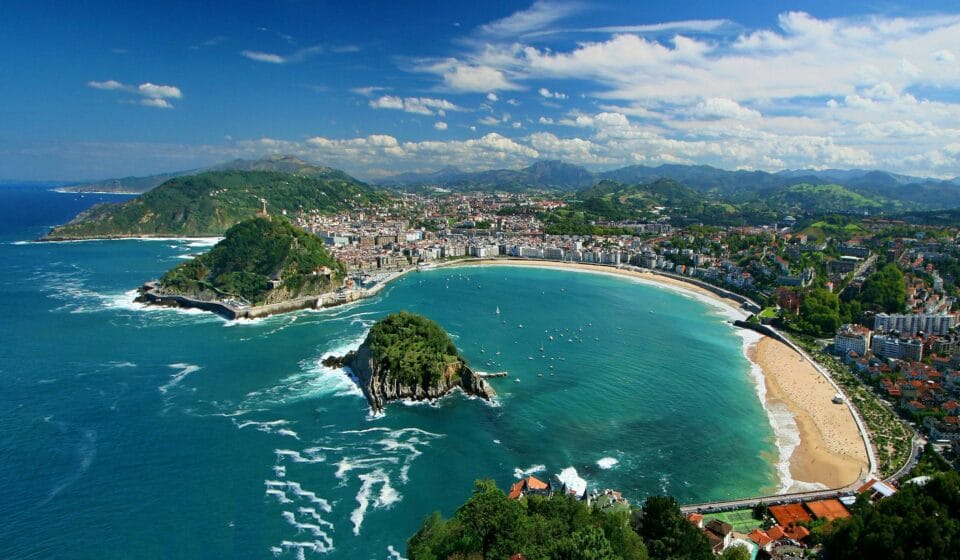
San Sebastián, or Donostia in Basque, is often considered one of Europe’s most beautiful small cities. Its famous La Concha Beach curves around a perfect bay, while elegant Belle Époque architecture gives the city a sophisticated atmosphere.
But San Sebastián’s true fame comes from food.
The city has one of the highest concentrations of Michelin-starred restaurants in the world, but its culinary magic is equally present in small taverns serving pintxos — the Basque version of tapas.
Pintxos are often displayed directly on bar counters, allowing visitors to move from one tavern to another trying different dishes throughout the evening.
Popular pintxos include:
- Grilled octopus
- Anchovies with peppers
- Iberian ham
- Crab tartlets
- Cod omelets
- Mushroom croquettes
The Old Town becomes especially lively at night as locals and travelers crowd narrow streets hopping between bars.

Commercial-use image source
Beyond San Sebastián: Discovering the Rugged Basque Coast
While San Sebastián deserves its reputation, the true magic of the Basque Country often appears outside the city.
Driving along the coast reveals hidden beaches, fishing ports, dramatic cliffs, and quiet villages that feel untouched by mass tourism.
The Atlantic Ocean shapes everything here — the weather, food, architecture, and even local personality.
Getaria: Wine, Seafood, and Maritime History
Getaria is one of the Basque coast’s most charming small towns. Narrow stone streets lead toward a picturesque harbor filled with fishing boats and seafood restaurants.
The town is famous for txakoli, a lightly sparkling white wine produced on nearby coastal vineyards. Many restaurants serve the wine poured dramatically from height to create bubbles and aeration.
Fresh seafood dominates menus here. Grilled turbot is considered one of the region’s signature dishes.
Getaria is also the birthplace of explorer Juan Sebastián Elcano, the first person to complete a circumnavigation of the globe after Magellan’s death.

Commercial-use image source
Zumaia and the Flysch Cliffs
The coastline near Zumaia contains some of Europe’s most extraordinary geological formations. Towering layered cliffs known as Flysch stretch dramatically along the Atlantic coast.
Millions of years of geological history are visible in the rock layers, attracting scientists and photographers from around the world.
The area also became internationally famous after appearing in the television series Game of Thrones.
Walking trails above the cliffs offer incredible ocean views, especially during sunset when waves crash against the rocky shoreline below.

Commercial-use image source
Surf Culture in Zarautz
The Basque Country has one of Europe’s strongest surf cultures, and Zarautz is at its center.
Long sandy beaches and reliable Atlantic waves attract surfers year-round. The town feels youthful and energetic, with surf schools, beach cafés, and relaxed coastal vibes.
Even travelers who do not surf enjoy Zarautz for its beautiful beachfront promenade and casual atmosphere.
Compared to the elegance of San Sebastián, Zarautz feels more laid-back and local.

Commercial-use image source
Exploring Traditional Basque Cider Houses
One of the Basque Country’s most unique experiences is visiting a sagardotegi — a traditional cider house.
These rustic dining halls sit mostly in the countryside around Astigarraga and Hernani near San Sebastián. Inside, enormous wooden cider barrels line the walls.
During cider season, guests gather around communal tables eating traditional meals while periodically standing up when the shout “Txotx!” announces that a barrel has been opened.
Visitors walk directly to the barrel and catch cider streaming from the tap into their glass in one quick motion.
The atmosphere is loud, social, and incredibly authentic.
Traditional cider house meals often include:
- Salt cod omelet
- Fried cod with peppers
- Massive grilled steak
- Cheese with walnuts and quince paste
The cider itself is much drier and less sweet than many international ciders.

Commercial-use image source
Bilbao: The Modern Face of the Basque Country
Bilbao once relied heavily on industry and shipbuilding, but today it has transformed into one of Spain’s most dynamic cities.
The Guggenheim Museum completely changed Bilbao’s international image. Designed by architect Frank Gehry, the titanium-covered building became one of modern architecture’s most famous landmarks.
But Bilbao offers much more than the museum.
The city combines:
- Modern architecture
- Historic old streets
- Riverfront walks
- Traditional food markets
- Pintxos bars
- Contemporary art
Compared to San Sebastián, Bilbao feels larger, more urban, and more industrial — yet equally fascinating.

Commercial-use image source
Basque Food Culture Beyond Pintxos
Food in the Basque Country is deeply connected to local ingredients and culinary tradition.
The Atlantic Ocean provides exceptional seafood, while green mountains produce cheeses, meats, and seasonal vegetables.
Must-Try Basque Dishes
Bacalao al Pil-Pil
Salt cod cooked in olive oil and garlic sauce.
Txuleta
Large bone-in steak grilled over open flames.
Marmitako
Traditional tuna and potato stew once eaten by fishermen.
Idiazabal Cheese
Smoked sheep’s milk cheese produced in the Basque mountains.
Basque Cheesecake
A burnt-style cheesecake now famous worldwide thanks to restaurants in San Sebastián.
Food here is not rushed. Meals are social experiences often lasting hours.

Commercial-use image source
Hiking and Nature in the Basque Country
The Basque Country is perfect for travelers who love outdoor adventures.
Green hills, coastal trails, forests, and mountains create endless hiking opportunities.
One of the most famous routes is the Camino del Norte, the northern coastal route of the Camino de Santiago pilgrimage.
Hiking sections along the Basque coast combine ocean views with charming villages and dramatic cliffs.
Nature here feels wild and untamed compared to Spain’s more tourist-heavy beach destinations.

Commercial-use image source
Best Time to Visit the Basque Country
Summer (June to September)
Warm weather, lively beaches, festivals, and ideal coastal road trips.
Spring (April to May)
Green landscapes, fewer tourists, and comfortable hiking conditions.
Autumn (October)
Excellent food season with cooler temperatures and dramatic coastal scenery.
Winter (November to March)
Rainier weather but cozy cider houses and fewer crowds.
Unlike southern Spain, the Basque Country receives significant rainfall, which explains its lush green scenery.
A Perfect 5-Day Basque Country Itinerary
Day 1
- Explore San Sebastián
- Pintxos tour in the Old Town
- Sunset at La Concha Beach
Day 2
- Visit Getaria and Zarautz
- Wine tasting and seafood lunch
- Coastal road trip
Day 3
- Hike around Zumaia Flysch cliffs
- Explore small fishing villages
- Evening cider house experience
Day 4
- Travel to Bilbao
- Visit Guggenheim Museum
- Riverfront dining
Day 5
- Coastal hiking trail
- Local food market
- Final Basque dinner
Why the Basque Country Should Be Your Next European Adventure
The Basque Country offers a side of Spain many travelers never expect.
Instead of crowded resorts and predictable tourist experiences, visitors find rugged coastlines, powerful Atlantic landscapes, ancient traditions, incredible food, and a culture fiercely proud of its identity.
Whether you are eating pintxos in San Sebastián, hiking above ocean cliffs in Zumaia, surfing in Zarautz, or drinking cider directly from a barrel in a countryside sagardotegi, the Basque Country feels authentic in a way few destinations still do.
It is one of Europe’s most unforgettable regions — wild, flavorful, dramatic, and deeply alive.