

















































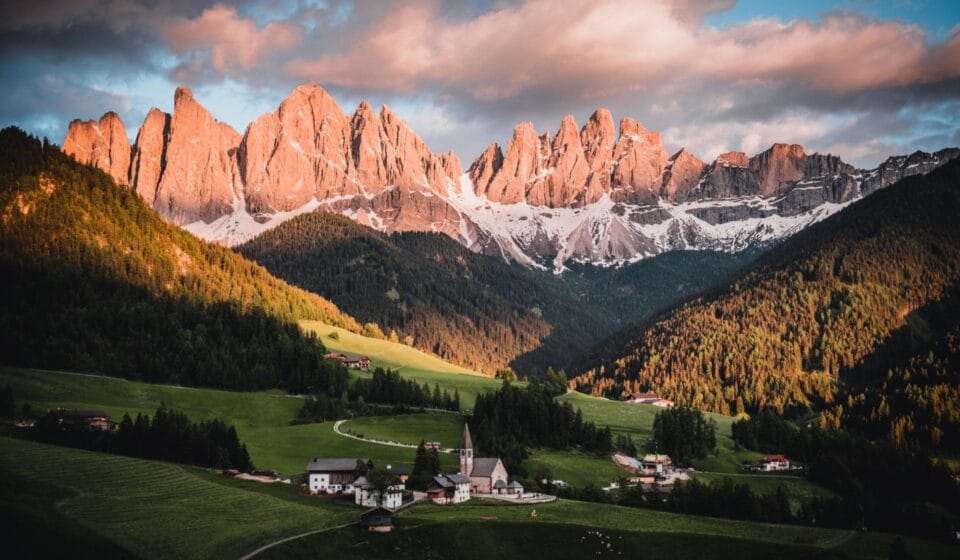

The Dolomites are not just mountains. They are some of the most dramatic landscapes on Earth.
Jagged limestone peaks rise above alpine meadows, wooden chalets sit beneath snow-covered cliffs, and winding roads cut through valleys that look almost unreal. Located in northern Italy, the Dolomites have long been considered one of Europe’s greatest mountain destinations. Now, with the 2026 Winter Olympics bringing global attention back to the region, these legendary peaks are preparing for another historic moment.
The Milano-Cortina 2026 Winter Olympics will spread events across northern Italy, with several major competitions taking place in and around the Dolomites, especially near Cortina d’Ampezzo. (Wikipedia)
For travelers, this is the perfect year to experience the region’s incredible scenery, skiing culture, mountain villages, food, hiking trails, and Olympic atmosphere.
Why the Dolomites Feel Different From the Rest of the Alps
The Dolomites are part of the Italian Alps, but they look completely different from many other mountain ranges in Europe.
Instead of rounded snowy peaks, the Dolomites are known for dramatic vertical rock formations that glow pink and orange during sunrise and sunset — a phenomenon locals call Enrosadira.
Recognized as a UNESCO World Heritage Site, the region combines Italian culture, Austrian influences, Ladin traditions, luxury resorts, outdoor adventure, and world-class skiing into one unforgettable destination.

Commercial-use image sources
The 2026 Winter Olympics and the Dolomites
The 2026 Winter Olympics are unique because the Games are spread across multiple locations instead of one single host city.
Cortina d’Ampezzo — often called the “Queen of the Dolomites” — will host several major events, including women’s alpine skiing, curling, bobsleigh, skeleton, and luge competitions. (Wikipedia)
Other Olympic venues across the wider alpine region include:
- Val di Fiemme
- Livigno
- Bormio
- Antholz-Anterselva
- Predazzo
- Tesero
The Games primarily use existing infrastructure and historic winter sports venues rather than building entirely new facilities. (Wikipedia)
This creates a more authentic Olympic atmosphere deeply connected to Italy’s mountain culture.
Cortina d’Ampezzo: The Heart of the Olympic Dolomites
Few alpine towns in Europe are as famous as Cortina d’Ampezzo.
Surrounded by towering peaks and elegant hotels, Cortina has been a luxury mountain destination for decades. The town previously hosted the 1956 Winter Olympics and will once again become the center of global winter sports in 2026. (National Geographic)
Today, Cortina blends old-world alpine charm with modern luxury. Visitors can spend mornings skiing world-class slopes and evenings enjoying wine bars, designer boutiques, and traditional mountain restaurants.

Commercial-use image links
Best Places to Visit in the Dolomites
Tre Cime di Lavaredo
Tre Cime di Lavaredo may be the most iconic mountain formation in the Dolomites. These three towering peaks attract hikers, photographers, climbers, and nature lovers from around the world.
During summer, hiking trails around the peaks offer some of Europe’s best alpine scenery. In winter, snow transforms the landscape into something magical.
Seceda
Seceda is famous for its dramatic knife-edge ridges overlooking rolling alpine meadows.
The panoramic views from the summit are among the most photographed in Italy. Cable cars make the area accessible even for travelers who are not experienced hikers.
Alpe di Siusi
Alpe di Siusi is Europe’s largest high-altitude alpine meadow. Wooden cabins, grazing cows, snowy fields, and panoramic mountain backdrops create postcard-perfect scenery year-round.
The area is excellent for skiing in winter and hiking or cycling in summer.

Commercial-use image links
Skiing in the Dolomites
The Dolomites contain one of the largest ski networks in the world.
Dolomiti Superski connects dozens of ski resorts across multiple valleys and villages through lifts and interconnected slopes. The system includes more than 1,200 kilometers of ski runs and extensive lift access. (SKI)
Skiers can spend entire days traveling between villages entirely on snow.
Best Ski Areas
Cortina d’Ampezzo
Known for Olympic history, luxury hotels, and scenic slopes.
Val Gardena
Excellent for advanced skiers and stunning mountain scenery.
Alta Badia
Famous for food, beginner-friendly slopes, and relaxed atmosphere.
Arabba
Ideal for experienced skiers seeking challenging terrain.
Kronplatz
Modern lifts and wide ski runs perfect for families.
Visiting During Olympic Season
Traveling to the Dolomites during the Olympics will be exciting but requires planning.
Hotels in Cortina and nearby towns are expected to book out far in advance. Transportation demand will also increase significantly.
The Olympics officially begin in February 2026, with events spread across northern Italy. (Wikipedia)
Tips for Visiting During the Games
- Reserve hotels months in advance.
- Consider staying in nearby villages instead of central Cortina.
- Use trains and shuttle services when possible.
- Expect higher accommodation prices.
- Book ski passes and event tickets early.
Despite larger crowds, the atmosphere will be unforgettable.
The Incredible Food Culture of the Dolomites
One of the best surprises about visiting the Dolomites is the food.
The region blends Italian cuisine with Austrian and Ladin influences, creating hearty mountain dishes perfect after a day outdoors.
Must-Try Foods
Canederli
Traditional bread dumplings often served in broth or with butter.
Speck
A smoked cured ham famous throughout northern Italy.
Polenta
A mountain staple served with meat, mushrooms, or cheese.
Apple Strudel
A clear Austrian influence still deeply connected to alpine culture.
Fresh Mountain Cheese
Many alpine huts and farms produce exceptional local cheeses.

Commercial-use image links
Hiking and Summer Adventures
Although the Olympics focus on winter sports, the Dolomites are spectacular year-round.
Summer brings green valleys, wildflowers, cycling routes, mountain lakes, and hiking trails.
Many travelers now visit outside ski season specifically for outdoor adventures and fewer crowds.
Popular summer activities include:
- Hiking hut-to-hut trails
- Via ferrata climbing routes
- Mountain biking
- Scenic cable car rides
- Photography tours
- Paragliding
The region’s extensive lift network also operates during warmer months, making mountain access easier. (SKI)
The Culture of the Dolomites
The Dolomites are culturally unique compared to much of Italy.
In some villages, locals speak Ladin, an ancient language blending influences from Latin, Italian, and German traditions. (SKI)
Architecture also reflects the region’s mixed heritage:
- Austrian-style chalets
- Italian cafés
- Alpine churches
- Wooden farmhouses
- Historic mountain inns
This cultural blend gives the Dolomites a completely different atmosphere from cities like Rome, Venice, or Florence.
Sustainable Tourism and Olympic Challenges
The 2026 Olympics aim to focus heavily on sustainability by using existing venues and reducing unnecessary construction. (Iye News)
However, climate change remains a major issue for alpine destinations.
Recent reports have highlighted increasing reliance on artificial snow due to changing winter weather patterns in the Alps. (The Times of India)
Visitors can help support sustainable tourism by:
- Using public transportation
- Supporting local businesses
- Visiting outside peak periods
- Respecting hiking and ski trail regulations
- Choosing eco-conscious accommodations
Best Time to Visit the Dolomites
Winter (December to March)
Perfect for skiing, snowboarding, and experiencing Olympic energy.
Spring (April to May)
Quiet and peaceful, though some lifts and hotels may close temporarily.
Summer (June to September)
Ideal for hiking, cycling, photography, and mountain lakes.
Autumn (October)
Beautiful fall colors and fewer tourists.
Many experienced travelers believe September offers the perfect balance of scenery, weather, and manageable crowds.
A Perfect 5-Day Dolomites Itinerary
Day 1
- Arrive in Cortina d’Ampezzo
- Explore the town
- Traditional alpine dinner
Day 2
- Skiing or hiking near Tofane
- Sunset mountain photography
- Local wine tasting
Day 3
- Visit Tre Cime di Lavaredo
- Scenic drive through mountain passes
- Overnight chalet stay
Day 4
- Explore Val Gardena and Seceda
- Cable car ride
- Mountain hut lunch
Day 5
- Relax at Alpe di Siusi
- Visit local villages
- Final panoramic viewpoints
Why the Dolomites Should Be on Every Traveler’s Bucket List
The Dolomites combine natural beauty, adventure, luxury, culture, and Olympic history in a way almost no other destination can match.
This year, the mountains will become the center of the sporting world as athletes arrive for the 2026 Winter Olympics. But even beyond the Games, the region offers something timeless: silence, beauty, fresh alpine air, incredible food, and landscapes that seem almost impossible to believe.
Whether you visit for skiing, hiking, photography, or simply to experience the atmosphere of northern Italy’s mountains, the Dolomites leave a lasting impression.
These are not just mountains.
They are some of the most breathtaking peaks on Earth.