

















































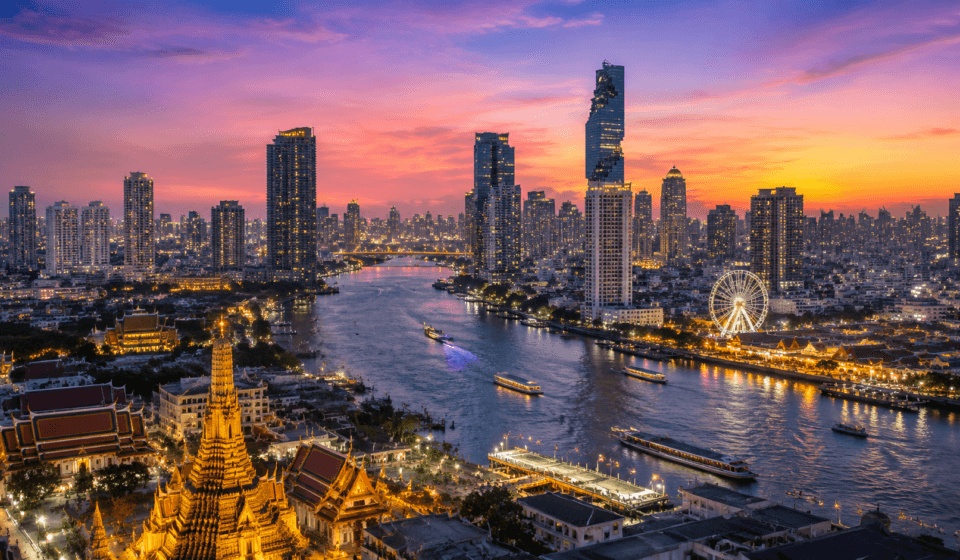

Bangkok is often introduced through its giant malls, rooftop bars, and famous tourist streets. But the real Bangkok begins far away from the polished travel brochures. It lives in crowded alleyways filled with sizzling woks, hidden riverside cafés, old neighborhood markets, and tiny family-run food stalls that have been serving the same recipes for generations.
This city rewards curiosity. The best noodle soup might be hidden behind a motorcycle repair shop. A forgotten alley in Chinatown may lead to a tiny dessert café covered in plants. A quiet floating market outside the city center can feel like stepping into old Thailand.
Bangkok can also be surprisingly affordable. A full street-food meal often costs less than a coffee in many Western cities. Local markets sell vintage clothes, handmade goods, and fresh fruit at prices that seem unreal. And some of the city’s most beautiful cafés are tucked into residential neighborhoods tourists rarely visit.
This guide focuses on Bangkok from a local perspective — places where residents actually eat, shop, and relax.
Understanding Bangkok Like a Local
Before exploring the hidden places, it helps to understand how locals experience Bangkok.
The city is built around neighborhoods rather than attractions. Each district has its own personality:
- Chinatown is chaotic, historic, and food obsessed.
- Ari is calm, residential, and filled with stylish cafés.
- Thonburi feels older and slower than modern Bangkok.
- Sukhumvit mixes luxury with hidden street food alleys.
- Bang Rak combines old shophouses with modern creative spaces.
Bangkok changes personality throughout the day. Morning markets open before sunrise. Street food peaks in the evening. Cafés become social hubs in the afternoon. Night markets come alive after dark.
The easiest way to explore like a local is by using the BTS Skytrain and MRT subway. They are cheap, fast, and help avoid Bangkok’s legendary traffic.
Hidden Markets Most Tourists Miss

Wang Lang Market
One of Bangkok’s best local food markets sits across the river near Siriraj Hospital. Wang Lang Market is crowded with university students, hospital workers, and locals grabbing quick meals.
The market feels authentic because it is built around daily life rather than tourism. Narrow walkways overflow with grilled meats, Thai desserts, fried snacks, and clothing stalls.
What makes Wang Lang special is the food quality. Vendors compete for local customers, so prices stay low and standards remain high.
Try:
- Crispy pork rice
- Thai milk tea
- Coconut pancakes
- Boat noodles
- Mango sticky rice
Many meals cost only 50–80 baht.
According to recent Bangkok food guides, Wang Lang remains one of the city’s favorite daytime street-food destinations for locals.
Khlong Toei Market
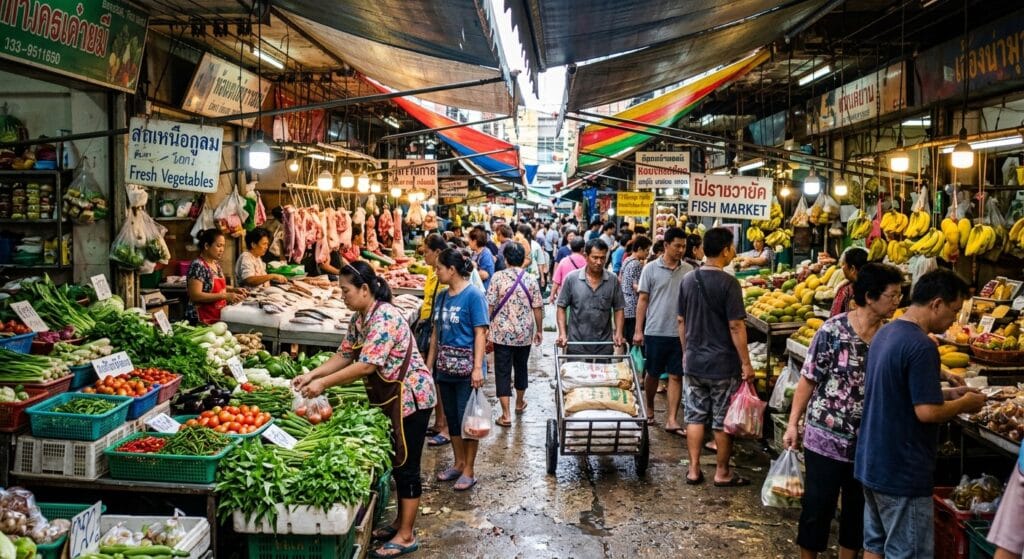
Khlong Toei Market is Bangkok at its rawest and most authentic. It is the city’s largest fresh market and one of the most fascinating places to experience local daily life.
This is not a polished tourist market. It is loud, humid, intense, and unforgettable.
Vendors sell:
- Fresh seafood
- Exotic fruits
- Curry pastes
- Herbs and spices
- Cheap street food
- Meat and vegetables
Photographers love the atmosphere, but the market works best when treated respectfully as a functioning local space.
Arrive early in the morning for the full experience.
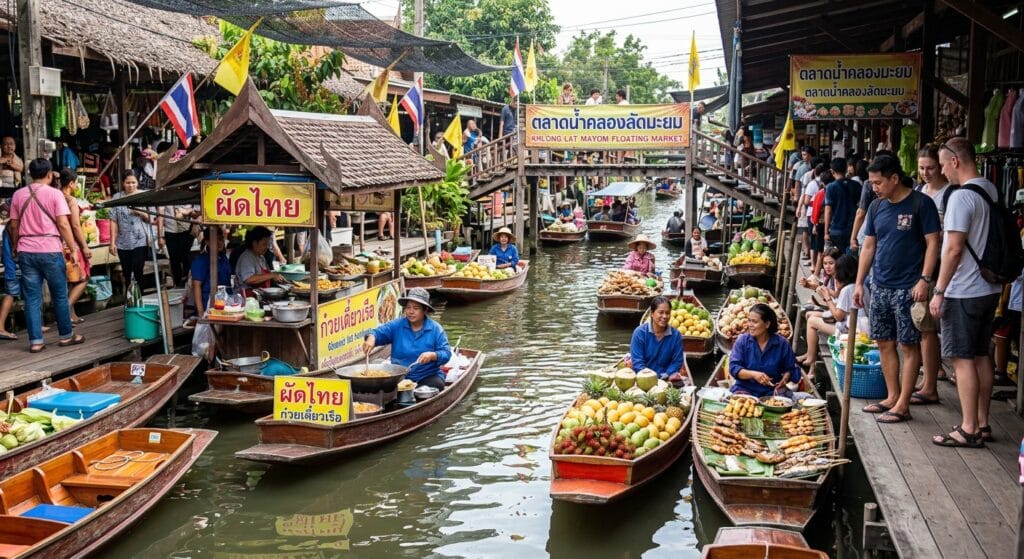
Khlong Lat Mayom Floating Market
Many tourists visit the famous floating markets outside Bangkok, but locals often prefer quieter alternatives like Khlong Lat Mayom Floating Market.
This market feels far more relaxed and authentic than the heavily commercialized floating markets designed for tour groups.
Wooden boats sell:
- Grilled river prawns
- Fresh coconut desserts
- Noodle soups
- Thai sweets
- Tropical fruit
The canals surrounding the market create a peaceful atmosphere rarely associated with Bangkok.
Weekend mornings are the best time to visit.
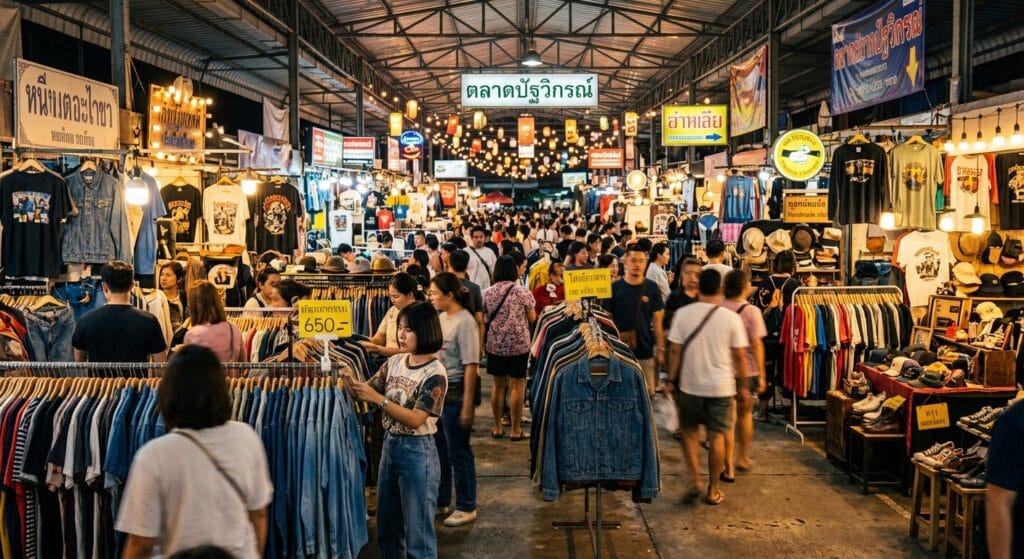
Pattavikorn Vintage Market
Bangkok has an incredible second-hand shopping culture, and Pattavikorn Market is one of the city’s hidden treasures for vintage lovers.
Unlike trendy vintage stores charging premium prices, Pattavikorn remains wonderfully local.
You can find:
- Vintage denim
- Old band T-shirts
- Retro jackets
- Second-hand sneakers
- Anime collectibles
- Cheap accessories
Some items start at only a few baht.
The market feels messy, chaotic, and exciting — exactly how great thrift shopping should feel.
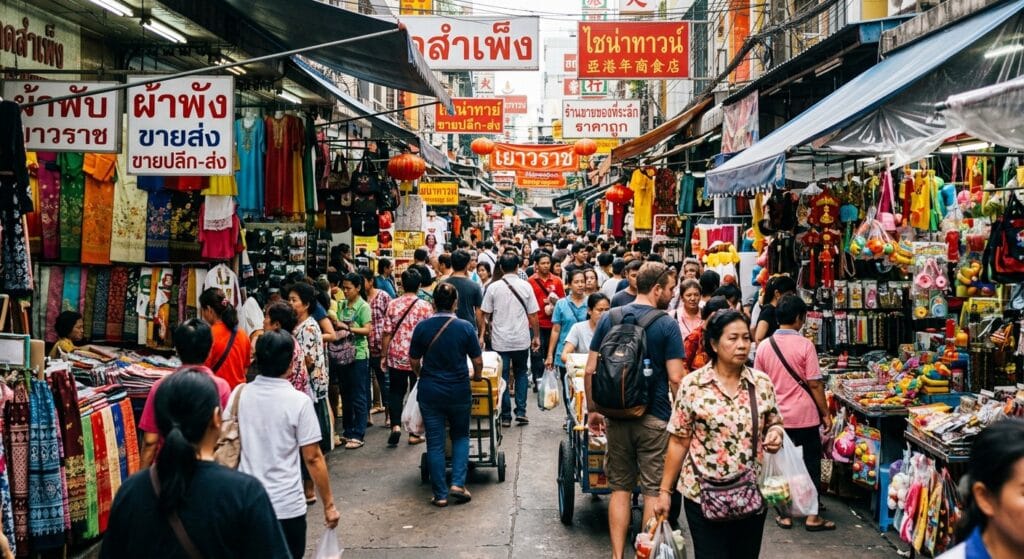
Sampheng Market in Chinatown
Hidden behind Bangkok’s famous Chinatown roads is Sampheng Market, a maze of impossibly narrow alleys filled with wholesale goods and cheap snacks.
Walking here feels like entering another era.
You will find:
- Fabrics
- Jewelry
- Stationery
- Traditional snacks
- Household items
- Toys
- Tiny food stalls
The market is especially beautiful in the late afternoon when golden sunlight hits the old buildings. Bangkok travel guides continue to describe Sampheng as one of the city’s most energetic hidden shopping areas.
Cheap Eats That Locals Actually Love
Bangkok may be one of the world’s greatest street-food cities. Incredible meals can cost less than a taxi ride.
Boat Noodles at Victory Monument
Victory Monument is famous for tiny bowls of intensely flavorful boat noodles.
Traditionally served in small portions, locals often order several bowls at once.
The broth is rich, spicy, and deeply savory. Vendors usually offer:
- Beef noodles
- Pork noodles
- Meatballs
- Crispy pork skin
- Fresh herbs
A bowl may cost only 15–25 baht.
The area around Victory Monument remains one of Bangkok’s most important local food hubs.
Chinatown Night Food
Yaowarat Road transforms every evening into a giant open-air restaurant.
Steam rises from seafood grills while neon signs glow overhead. The atmosphere feels cinematic.
Popular local dishes include:
- Oyster omelets
- Crab fried rice
- Peppery pork soup
- Mango desserts
- Grilled squid
Recent travel stories continue highlighting Chinatown as one of Bangkok’s greatest culinary districts.
The trick is simple:
Follow the longest local queues.
Terminal 21 Food Court
One of Bangkok’s best budget food secrets is hidden inside a shopping mall.
The food court at Terminal 21 serves surprisingly authentic Thai food at local prices. Travel experts frequently recommend Bangkok mall food courts because they combine quality, hygiene, and affordability.
Meals often cost:
- 40–80 baht
- Air-conditioned comfort
- Huge variety
- Fast service
It is perfect for travelers who want local food without the heat or uncertainty of street stalls.
Ratchawat Market
Ratchawat Market is less famous internationally but loved by Bangkok food enthusiasts.
The market specializes in traditional Thai comfort food:
- Roast duck
- Curry rice
- Pork satay
- Rice porridge
- Thai desserts
The atmosphere feels deeply local and far calmer than tourist-heavy food streets.
Ari Neighborhood Cafés and Street Food
Ari has become one of Bangkok’s coolest neighborhoods.
Young locals gather here for:
- Minimalist cafés
- Cheap noodle shops
- Craft coffee
- Fusion restaurants
- Hidden bars
Despite its trendy reputation, Ari still offers affordable local food tucked between modern cafés.
Many Bangkok locals consider Ari the perfect balance between traditional and modern Bangkok life.
Secret Cafés Worth Finding
Bangkok’s café culture has exploded over the past decade. But the best cafés are often hidden inside gardens, old homes, or tiny alleyways.
Nana Coffee Roasters
Nana Coffee Roasters is famous among serious coffee lovers.
Unlike tourist cafés focused mainly on aesthetics, this place prioritizes coffee quality.
Expect:
- Specialty beans
- Excellent espresso
- Skilled baristas
- Industrial-style interiors
Bangkok’s modern coffee culture rivals cities like Seoul and Tokyo, and Nana Coffee Roasters helped lead that transformation.
Patina Bangkok
Hidden inside Chinatown, Patina Bangkok feels like stepping into an old Bangkok movie set.
The café sits inside a beautifully aged building with:
- Wooden staircases
- Vintage furniture
- Soft lighting
- Quiet corners
It combines Bangkok’s old-world atmosphere with modern café culture perfectly.
Mother Roaster
Mother Roaster became popular largely through word of mouth.
Located inside Bangkok’s old town area, the café is known for:
- Strong coffee
- Relaxed atmosphere
- Friendly owners
- Old-school interiors
Many travelers accidentally walk past it because the entrance is so discreet.
Hong Sieng Kong
Located near the river, Hong Sieng Kong combines café culture with antique-shop aesthetics.
The riverside seating is especially beautiful during sunset.
Expect:
- Thai-Chinese architecture
- Antique decorations
- Calm atmosphere
- Excellent desserts
It feels far removed from Bangkok’s traffic and noise.
How to Eat Like a Bangkok Local
The best food strategy in Bangkok is surprisingly simple.
Follow Busy Stalls
If locals are waiting in line, the food is usually excellent. Bangkok food experts repeatedly emphasize following local crowds rather than social media trends.
Avoid Empty Restaurants
An empty restaurant in a busy neighborhood is often a bad sign.
Bangkok locals have endless food options. Busy places stay busy for a reason.
Eat Regionally
Thai food changes dramatically by region.
Look for:
- Isaan food from northeast Thailand
- Southern Thai curries
- Chinese-Thai noodle dishes
- Muslim Thai biryani
Bangkok’s diversity makes it one of the best cities in the world for regional cuisine.
Don’t Fear Mall Food Courts
Bangkok mall food courts are genuinely excellent and incredibly affordable.
Locals eat there regularly.
Neighborhoods Tourists Often Ignore
Talat Noi
Talat Noi is one of Bangkok’s most atmospheric neighborhoods.
Old warehouses, street art, hidden cafés, and Chinese shrines create a unique blend of old and new Bangkok.
It is perfect for slow walking and photography.
Bang Kachao
Known as Bangkok’s “green lung,” Bang Kachao feels completely disconnected from the city.
You can:
- Rent bicycles
- Explore elevated walkways
- Visit local cafés
- See floating markets
- Escape the crowds
Very few first-time tourists visit.
Thonburi Canals
The Thonburi side of Bangkok preserves much of the city’s historical atmosphere.
Canal tours reveal:
- Wooden homes
- Riverside temples
- Local communities
- Quiet waterways
It feels slower and more traditional than central Bangkok.
Budget Tips for Bangkok
Bangkok can be luxurious or extremely affordable depending on how you travel.
Use Public Transport
BTS and MRT trains are:
- Cheap
- Fast
- Air-conditioned
- Easy to navigate
Avoid unnecessary taxi rides during rush hour.
Eat Street Food Often
Street food is not just cheaper — it is often better.
Many famous Bangkok restaurants originally started as street stalls.
Stay Near Transit Stations
Neighborhoods near BTS or MRT stations save time and money.
Good local-friendly areas include:
- Ari
- Phra Khanong
- On Nut
- Silom
Visit Markets Instead of Malls
Bangkok markets offer better prices and more memorable experiences than luxury shopping centers.
The Magic of Bangkok’s Hidden Side
Bangkok rewards travelers who slow down.
The city’s greatest experiences rarely appear on giant billboards. They happen quietly:
- Eating noodles on a plastic stool
- Discovering a hidden café behind an old temple
- Watching canal boats pass at sunset
- Finding a market filled entirely with locals
- Drinking iced Thai tea during a tropical rainstorm
Bangkok is not a city to rush through.
The deeper you explore, the more generous it becomes.
And somewhere between the smoky food stalls, hidden alleyways, and riverside cafés, you begin to understand why so many travelers come for a few days and end up wanting to stay for months.